
A Farewell to Virtual Realms: Reflecting on Minecraft's VR Journey and the Future of Immersive Sandboxes
Minecraft VR support ends in 2026, as Mojang Studios pivots from immersive headset experiences, marking a bittersweet shift for digital worlds.
I remember the first time I stepped into a world of blocks through a lens of pure immersion. It was 2016, and the promise of virtual reality felt like stepping through a portal into the very heart of creation itself. The familiar cubic landscapes of Minecraft gained a profound new dimension, making towering mountains seem truly monumental and deep caves feel genuinely claustrophobic. Now, as 2026 unfolds, I find myself reflecting on a chapter that is closing—Mojang Studios' official end of support for virtual reality headsets, a decision finalized after March 2025. This shift marks not just a technical update, but a poignant moment in the evolving narrative of how we interact with digital worlds.
The announcement, nestled within the changelog for the Minecraft 1.21.40 Bedrock update, felt like a quiet sunset for a certain kind of dream. The list of devices being left behind reads like a roll call of recent immersive history: Oculus Rift, Meta Quest, Windows Mixed Reality. The window for official VR adventures in the bedrock editions has firmly shut. I can still recall the buzz when VR support first blossomed, extending later to PlayStation, offering a new way to experience the game's boundless creativity. This strategic pivot away from VR speaks volumes, suggesting that within Minecraft's vast, sprawling community, the call for fully immersive, headset-based exploration never grew loud enough to sustain its official development.
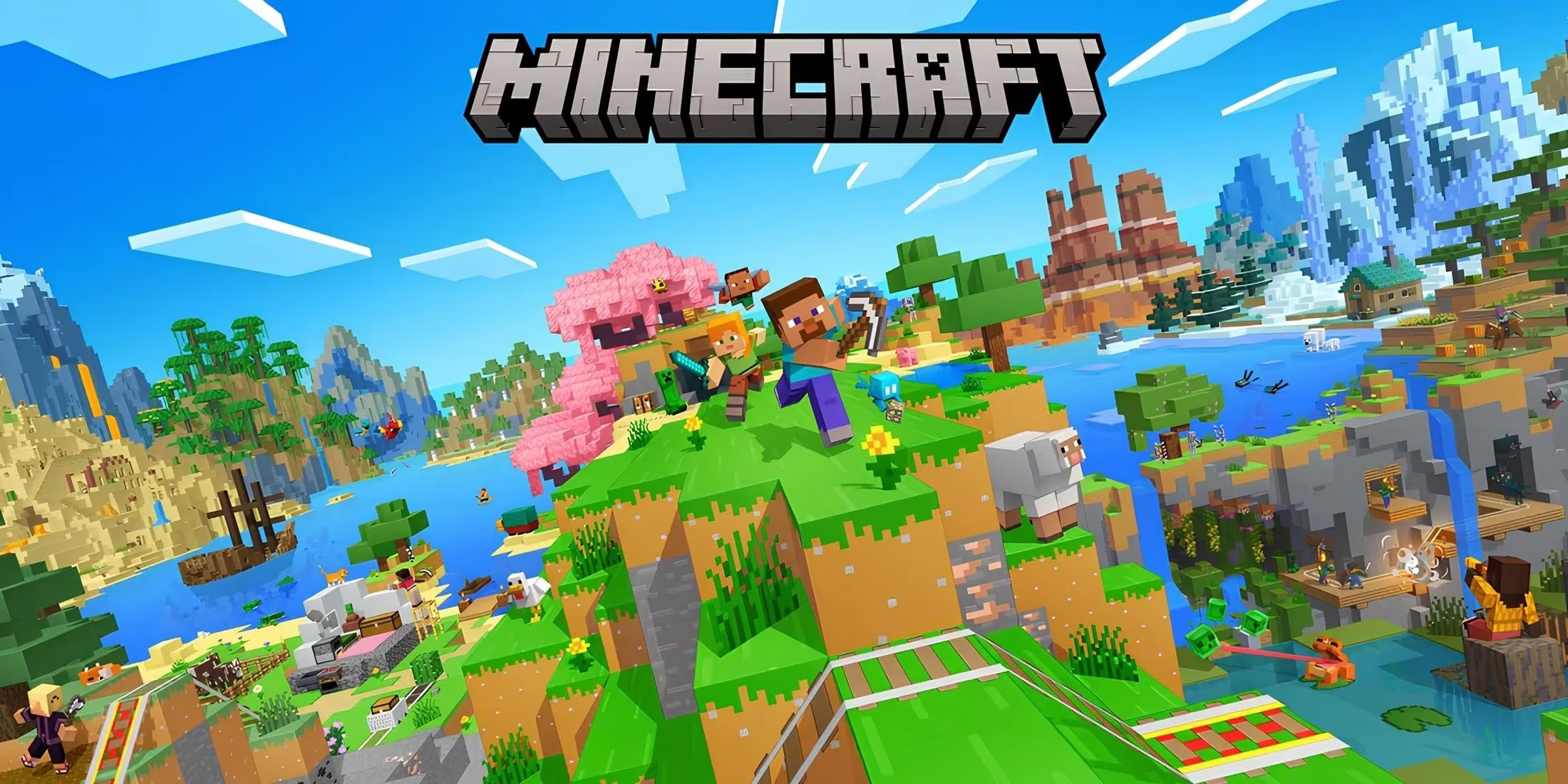
The implications are clear for players like me. After that March 2025 cutoff, the official pathways vanished. The Bedrock versions on PC and console no longer recognize the hardware that once transformed living rooms into blocky frontiers. For PlayStation devotees, earlier hopes that the end of PSVR support might pave the way for PSVR2 compatibility were gently extinguished by this broader withdrawal. It's a full retreat from the platform. Yet, in the spirit of Minecraft's own community-driven ingenuity, a lifeline persists for the tenacious. The Java edition, ever the bastion of modification, remains a haven. Through marvelous community creations like the Vivecraft mod, the dream of VR persists—a testament to player passion where official support has waned.
This decision by Mojang didn't occur in a vacuum. It mirrors a broader, more turbulent climate within the virtual reality landscape itself. The once-unbridled optimism for VR as the unequivocal next frontier of gaming has met the hard granite of market realities. We've witnessed high-profile endeavors falter; titles like Assassin's Creed Nexus VR failing to conjure significant revenue, leading to palpable corporate disappointment. Hardware, too, has struggled. Sony's PSVR2, for all its technical prowess, initially languished until aggressive price reductions spurred interest. This context makes Mojang's recalibration understandable, if bittersweet. Why pour resources into a niche within a niche when the core game's universe continues to expand in so many other vibrant directions?
So, where does this leave those of us who cherished that unique sensation of being inside the world we built? The void left by Minecraft's official VR departure is palpable, but it is not an empty one. The ecosystem of immersive sandbox experiences has flourished, offering new territories to explore:
-
The Forest: Swapping cubic serenity for visceral survival horror in VR, where every rustle in the trees feels intensely personal.
-
Garry's Mod: The pure, unadulterated physics-based chaos of this classic takes on a wonderfully hands-on feeling in virtual reality.
-
No Man's Sky: Perhaps the most spiritual successor in scope, offering an infinite universe to explore from the cockpit of a starship or on the surface of alien worlds, all in stunning immersion.
These worlds stand ready, each capturing a facet of that creative, exploratory spark that first drew us into Minecraft.
| Aspect | The Official Minecraft VR Era (2016-2025) | The Post-Support Landscape (2025+) |
|---|---|---|
| Primary Access | Official Bedrock/PlayStation support | Java Edition with mods (e.g., Vivecraft) |
| Platform Focus | Oculus, Meta Quest, PSVR, Windows MR | Community-driven mod support |
| Industry Context | High hopes for VR market expansion | Market consolidation & tempered expectations |
| Player Experience | Curated, official immersion | Community-powered, legacy-fueled immersion |
As I look at my headset gathering a fine layer of dust, I'm not filled with regret, but with gratitude for the journey. Minecraft's foray into virtual reality was a brave experiment, a several-year-long proof of concept that our beloved block universe could live and breathe in three dimensions around us. Its conclusion isn't a failure, but a natural evolution. The core heart of Minecraft—its creativity, its community, its endless capacity for renewal—beats as strongly as ever. The virtual reality chapter may be closed in the official ledgers, but the sensations it gifted us, the memories of looking up at a blocky sun through a virtual sky, remain etched in my mind. The game moves forward, as it always has, and we move with it, carrying the echoes of past wonders into whatever new horizons await, be they flat or fantastically deep.