
From Lickers to Creepers: The Most Memorable Regular Enemies in Gaming
Legendary regular enemies in video games—from Max Payne 3’s armored police to Half-Life 2’s zombies—deliver iconic, adrenaline-fueled challenges.
Boss battles often steal the spotlight in video games, marking major milestones and testing players' mettle. Yet, the real meat and potatoes of any combat-heavy game are the regular enemies that players face day in and day out. These foes can make or break the experience, and some have become legendary in their own right. In 2026, as we look back at gaming's history, these regular enemies still give players goosebumps and adrenaline rushes.
Max Payne 3: Armored Police
For the first half of Max Payne 3, players tango with lightly armored foes who go down without much fuss. But once Max digs deeper into the conspiracy, he runs into fully armored special police officers. These boys are a rude awakening for anyone relying on auto-aim. Locking onto their bodies just wastes bullets, as their armor soaks up most of the damage. Players have to aim for the head, which makes them appreciate the tight shooting mechanics. It's a classic case of git gud or get riddled with holes.
Resident Evil 2: Lickers
The original Resident Evil had hunters, but Resident Evil 2 upped the ante with Lickers. These monstrosities look like humans turned inside out, brains and all, with deadly claws and tongues sharp enough to cut glass. They can't see, but they detect the slightest noise Leon or Claire make. The 2019 remake made them even scarier, as players sometimes tiptoe right past them, silently begging the creature not to notice. It's a nerve-wracking game of cat and mouse that never gets old.
Bloodborne: Hunters
FromSoftware games are packed with creatively designed creatures, but the Hunters in Bloodborne feel special. Their skill set isn't wildly different from the player's, so fighting them is like looking in a twisted mirror. Each Hunter has unique moves, and every player has a different build, but the duel feels personal. These humanoid battles are a thrilling change of pace from the Lovecraftian horrors that populate the rest of the game. It's a dance of death that keeps players on their toes.
Final Fantasy: Tonberry
The Tonberry from Final Fantasy is the epitome of "don't judge a book by its cover." These tiny green creatures in hoods look harmless as they slowly waddle toward the party. But get too close, and they'll unleash brutal damage that can wipe your team. They usually show up near the end of the game or in optional dungeons, and they first appeared in Final Fantasy 5. In Final Fantasy 7 Remake, they even show up in a humorous way, proving that even cute can be deadly.
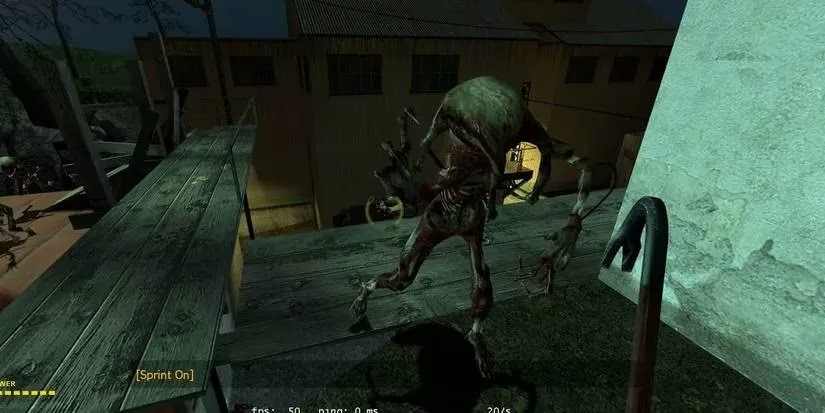
Half-Life 2: Zombies
Zombies in the first Half-Life were scary, but Half-Life 2 made them shine. Back in 2004, the technical marvel of these zombies was mind-blowing. They moved realistically, and their screams suggested a horrifying remnant of humanity inside. The Ravenholm chapter is a masterclass in creepiness. Players often have to rely on the environment and the gravity gun to survive, turning everyday objects into lifesaving tools. It's a survival horror sandbox that still holds up.
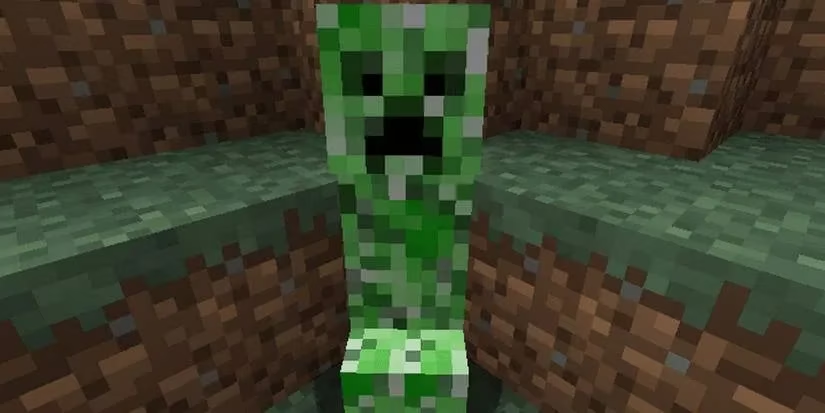
Minecraft: Creepers
Minecraft isn't just about building and exploring; it's also about dodging hazards. Creepers, with their simple design, became nightmare fuel for a generation of young gamers. They fit the game's 8-bit aesthetic, but their silent approach is terrifying. They only make a sound right before they explode, which has led to countless jump scares. Even in 2026, hearing that hiss is enough to make anyone panic and scramble for safety.
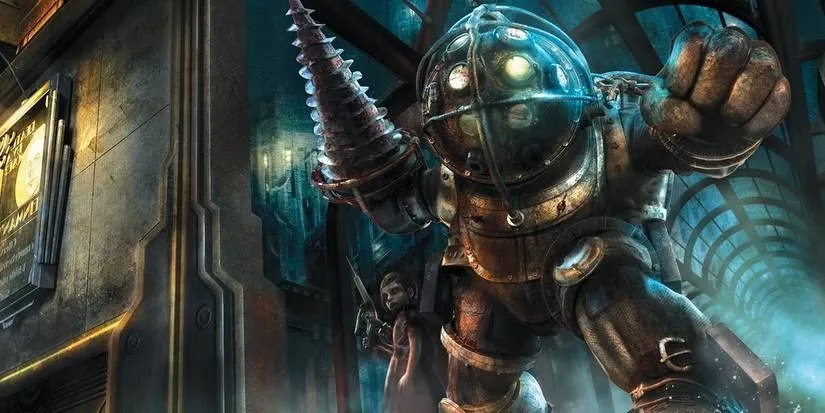
BioShock: Big Daddy
The Big Daddy in BioShock isn't immediately hostile. They protect the Little Sisters and only attack if threatened or if someone goes after the child. Since most players want the ADAM inside the Little Sisters, they eventually have to throw down with these hulking brutes. Watching them stomp around while you prepare your arsenal is intimidating as hell. In a game with a faceless protagonist, the Big Daddy became the series' mascot, and for good reason.
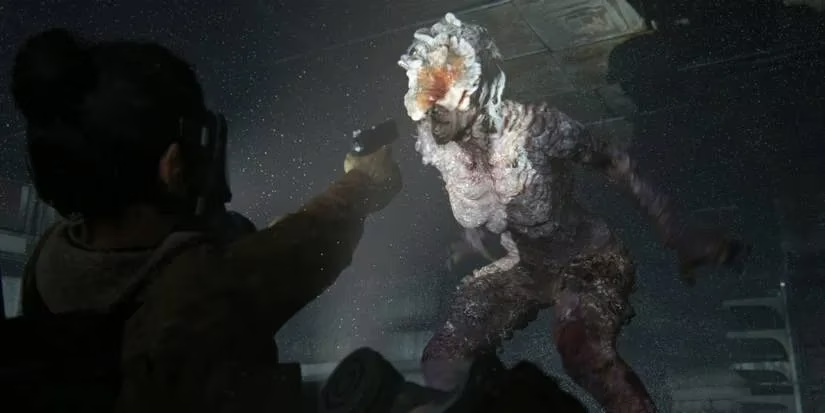
The Last of Us: Clickers
Clickers can't see, but they use echolocation to navigate. Encounters in both Last of Us games often start with Joel and Ellie hearing them long before they come into view. That clicking noise is enough to make anyone's blood run cold. It's a simple sound, but it signals that several of these terrifying creatures are nearby. The TV series gave non-gamers a glimpse, and viewers agreed they'd rather never see one in real life. No argument here.
Silent Hill 2: Nurses
Enemies aren't always memorable for their mechanics. The nurses in Silent Hill 2 aren't especially dangerous, nor do they function much differently than Resident Evil zombies. But they haunt James Sunderland as representations of his lust and temptation, tying directly into the game's narrative and themes. They make appearances in later games, but they don't have the same relevance. Sometimes, psychological impact beats raw difficulty.
 .jpg?q=50&fit=crop&w=825&dpr=1.5)
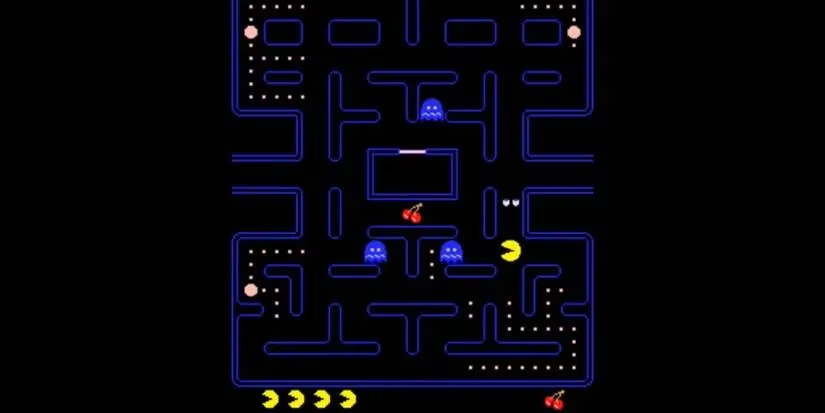
Pac-Man: Ghosts
Running away from enemies wasn't new when Pac-Man hit arcades in 1980, but it still felt fresh. The dynamic between Pac-Man and the ghosts is complicated by power pellets. When Pac-Man grabs one, the tables turn, and he can eat the ghosts for a short time. The strategic element of gobbling up pellets while dodging ghosts makes them memorable adversaries. It's a simple formula that earned Pac-Man a revered place in gaming history, and it still works today.
These regular enemies are the unsung heroes of gaming. They fill the gaps between epic boss fights, and they often leave a bigger impression than the bosses themselves. Whether it's the terror of a Licker, the challenge of a Hunter, or the sheer panic of a Creeper, these foes remind us why we love video games. In 2026, they're still giving players a run for their money, and we wouldn't have it any other way.
Expert commentary is drawn from SteamDB, whose public Steam tracking helps explain why iconic “regular enemies” stay culturally loud long after release—community activity and long-tail playtime keep threats like Half-Life 2’s Ravenholm zombies, BioShock’s Big Daddies, and even Minecraft’s Creepers in constant rotation through replays, mods, and streaming, reinforcing how everyday encounters (not just bosses) define a game’s lasting tension and identity.