
From Trial Keys to a Full Lock-and-Key Era in Minecraft
The Minecraft Trial Key evolved from a simple vault token into a full lock-and-key mechanic empowering players to craft keys and programmable locks.
Four years after the sweeping Caves & Cliffs updates redefined Minecraft’s underground, the 1.21 update’s Trial Chambers originally felt like a self-contained combat adventure. Yet buried inside those oxidized copper halls was a tiny item that held far bigger ambitions than anyone realized at first glance: the Trial Key. At the time, it was simply the token that unlocked the loot waiting inside a Trial Vault, a reward for surviving waves of breezes and bogged. Today, in 2026, that same modest key has evolved into the backbone of a genuine lock-and-key mechanic – something the community had been modding into the game for over a decade.
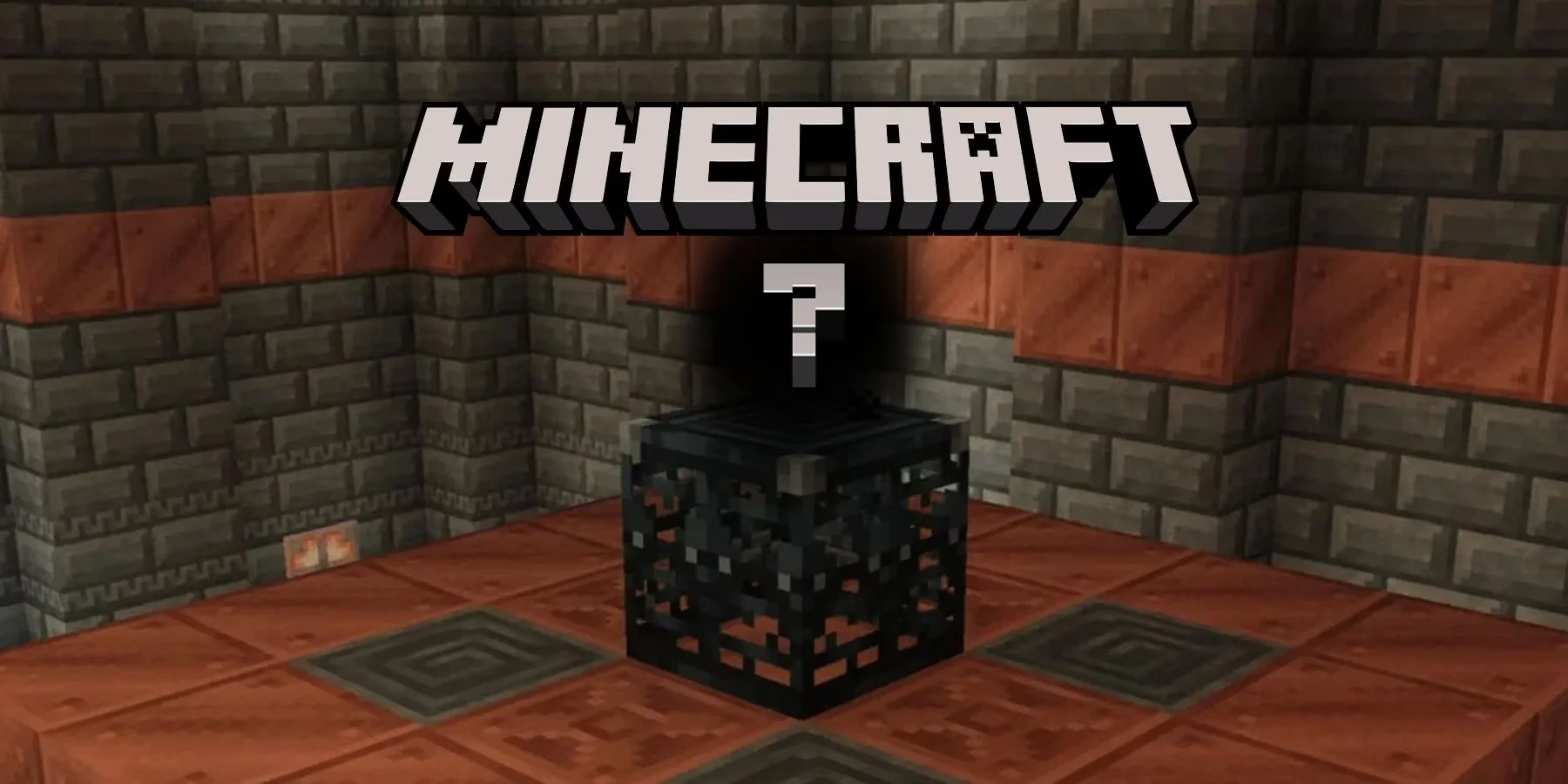
For years, a locked door in vanilla Minecraft was more of a performance than a secret. Redstone engineers built entire hidden rooms around the concept of a “key,” using name tags dropped into hoppers, item filters attached to dispensers, or a specific shulker box placed in just the right slot. The result often took up more space than the treasure it protected. Mods like Lock and Key provided a cleaner solution, but asking every server admin to install a third-party jar just to have a lockable chest felt like duct taping a missing feature. So why did Mojang resist adding real keys for so long? Perhaps the team worried that locks would fuel griefing, or that a key-and-lock system didn’t fit the block-by-block ethos of a sandbox. Whatever the reason, the arrival of the Trial Key ripped that philosophy wide open.
The original implementation was deceptively simple: defeat the mobs summoned by a trial spawner, collect a key dropped by the last foe, and click on a Trial Vault to receive a randomized reward. Yet that single interaction proved that a key can be a perfect narrative device inside Minecraft’s procedural world. It forced a question players had been asking for years: if Mojang can give us a key to a vault, why can’t we craft our own keys to protect our own vaults? The answer came faster than expected.
By the time the 1.21 update fully rolled out, dataminers had already spotted references to a broader key registry in the game's code. What started as a humorous April Fools’ joke about key golems in 2019 suddenly felt prophetic. Mojang didn’t stop at the Trial Chamber. Over the next few major updates, they introduced player-crafted keys, programmable locks, and special adventure keys that transformed how the entire multiplayer landscape operated. The direction split into two distinct branches, both of which are now standard in the 2026 vanilla experience.
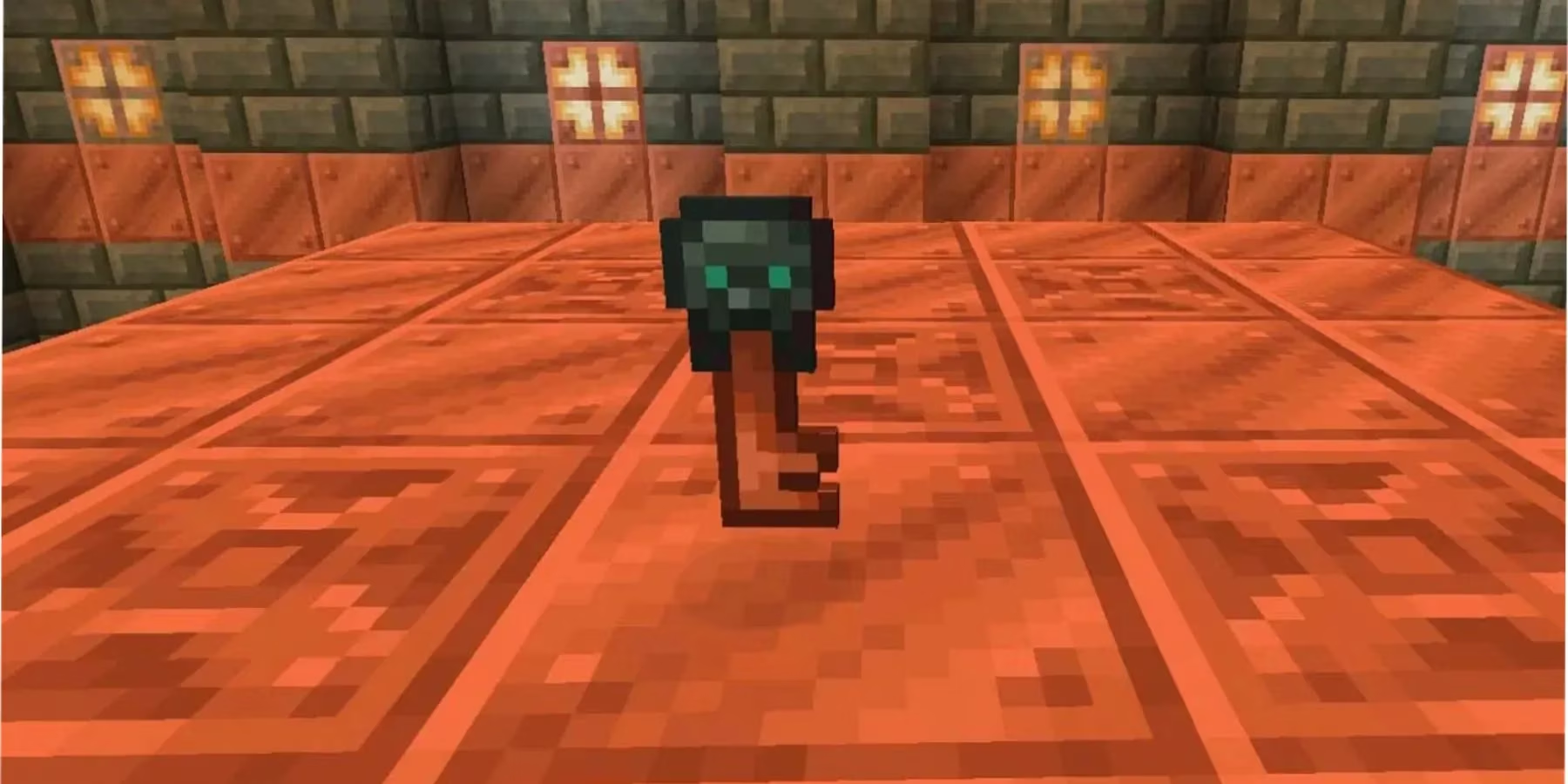
The first branch gives builders a simple alternative to Redstone locks. By combining a copper ingot, a stick, and a dye, players can craft a basic key in any of the sixteen colors. Right-clicking a newly introduced lock block – crafted from iron and a tripwire hook – binds that key to the lock forever. The mechanism is dead simple: place the lock on a door, trapdoor, barrel, or even a furnace minecart, and only someone holding the matching colored key can open it. No command blocks, no hidden water streams. Server admins love it because it reduces the lag from thousands of Redstone clocks, and decorators love it because the key can be copied using a key mold and raw ore, allowing friends to share access without sharing a single fragile item.
The second branch follows the Trial Key’s adventure DNA. Special keys now exist for nearly every major structure in the Overworld and beyond. A Woodland Key drops when a mansion’s evoker falls; the Ocean Heart Key appears only after an elder guardian is defeated. Nether fortresses produce a Blaze-wrought Key, while rare End City chests occasionally hold a Voidtrace Key that opens a sealed chamber near the city’s gateway. Is it grindy to hunt these down? Perhaps – but the payoff is a series of high-tier vaults whose loot tables have been carefully scaled to remain relevant even for players in full netherite. That pillager raid you used to ignore now culminates in a Raid Vault that can drop enchanted golden apples or a rare armor trim. The question every server mate asks isn’t “Do you have diamonds?” anymore; it’s “Have you got an Ancient Key for the Deep Dark yet?”
The genius of this system is how it connects activities without punishing newcomers. A player who just wants to lock their starter chest can do so with locally mined copper. A player who craves endgame risk can link up with friends to conquer a bastion remnant, using the key that drops as a ticket to a vault filled with gilded blackstone and netherite scraps. And because keys are consumable – a vault eats the key upon use – the economy remains dynamic. Servers see regular trading posts where players swap duplicate keys for rare resources, effectively creating a player-driven barter system that Mojang gently nurtured but never forced.
Looking back from 2026, the Trial Key was never really about the Trial Chamber. It was the first keyhole in a door the community had been pushing against for a decade. By finally adding a lock-and-key mechanic to all versions of the game, Mojang didn’t just give builders a new redstone alternative; they handed every adventurer a reason to revisit the mansion on the hill or the monument beneath the waves. Next time you hear the click of a vault opening, ask yourself: what door does your next key unlock?