
Gloriously Broken: The Enduring Charm of Buggy Video Game Masterpieces
Discover the captivating charm of video game bugs in iconic titles like Cyberpunk 2077 and Sonic Heroes, where technical flaws transform into beloved quirks. This article explores how these beautifully broken games, including No Man's Sky, forged legendary legacies through their endearing imperfections. Embrace the paradoxical allure of digital glitches that elevate gameplay into unforgettable experiences.
In the meticulously curated digital landscapes of 2026, where polish and performance are often paramount, there exists a paradoxical love for the beautifully broken. Video game bugs—those digital gremlins that warp physics, corrupt logic, and defy programming intent—are typically harbingers of frustration. Yet, for a select pantheon of titles, these very flaws have become woven into their legendary tapestries. They transform from signs of a flawed product into endearing quirks, the je ne sais quoi that elevates a game from merely functional to unforgettably charismatic. These are the games where the jank isn't a dealbreaker; it's part of the sauce, an irreplaceable vibe that fosters cult-like devotion long after their rocky launches fade into memory.
10. Cyberpunk 2077: Saved By Its Soul

Once the poster child for disastrous launches, Cyberpunk 2077's journey is a modern fable. At its inception, it was a hot mess—a dazzling, neon-drenched world that would frequently unload itself from existence. Yet, beneath the floating coffee cups, the T-posing NPCs, and the phantom traffic, beat the heart of a genuinely passionate RPG. Fast forward to 2026, and the narrative has flipped entirely. Thanks to relentless post-launch support and the cultural rocket fuel of its anime adaptation, players now arrive in Night City asking, \"Wait, this was supposed to be bad?\" The bugs, while smoothed over, never fully vanished. They became part of the city's chaotic charm, a testament to the sheer ambition of a world so dense that even its glitches have personality. The core experience—a story of identity and rebellion—proved so fundamentally solid that it rose, phoenix-like, from its own technical ashes.
9. Sonic Heroes: The Blue Blur's Janky Joyride
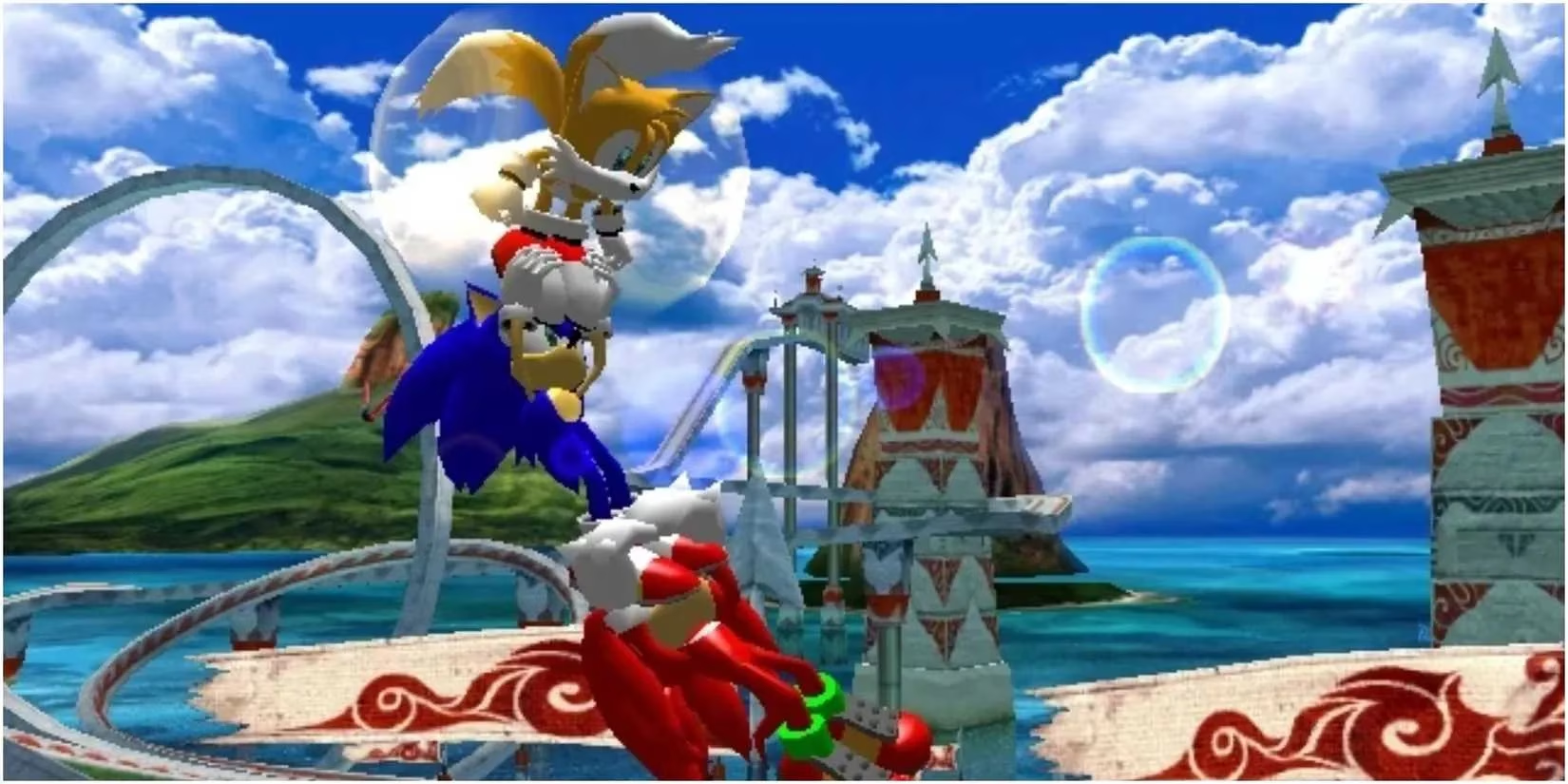
The Sonic franchise is no stranger to physics-defying chaos, but Sonic Heroes stands as a monument to \"so bad, it's good.\" Why include this over the infamous '06? Because Heroes embodies the pure, unadulterated heart of the series. Yes, you can clip through a wall and instantly game over. Sure, scripted sequences might break and send you to a watery grave. But damn, it's got heart! It captures that specific, early-2000s sauce—an upbeat, irreverent energy that makes its technical shortcomings feel like part of the reckless fun. It's a top-selling Sonic title for a reason: its vibrant levels and team-based gameplay created an experience where the bugs felt less like failures and more like unpredictable co-stars in a high-speed cartoon. It's the epitome of loving something despite its flaws, or perhaps, in a weird way, because of them.
8. No Man's Sky: The Universe's Greatest Redemption Arc
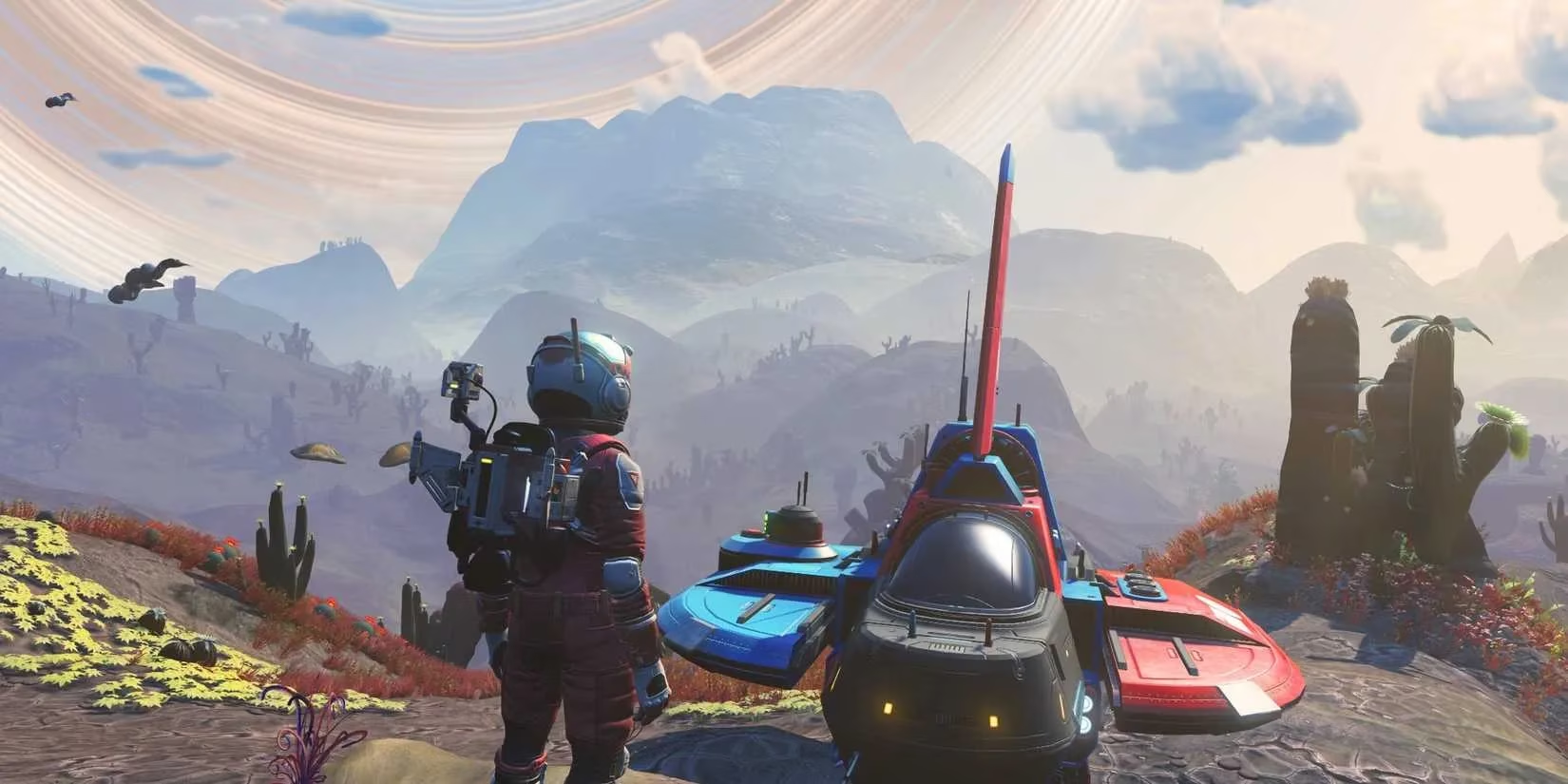
If any game has earned the phrase \"trust the process,\" it's No Man's Sky. Its launch was a masterclass in overpromising and underdelivering—a vast, empty universe plagued by bugs. Yet, Hello Games embarked on what can only be described as gaming's most incredible redemption arc. Through years of free, massive updates, they not only fulfilled every initial promise but built a universe brimming with life, multiplayer, base building, and unique worlds. In 2026, it's still a buggy game—each new update inevitably introduces fresh quirks alongside banger content—but the context has utterly changed. The bugs are now minor anomalies in a genuinely fun, expansive, and awe-inspiring cosmos. The goodwill generated by this turnaround is immense, transforming the game's legacy from a cautionary tale into a testament to developer perseverance. The journey itself became part of the lore.
7. Pokémon Legends: Arceus: A Beautiful, Broken Revolution
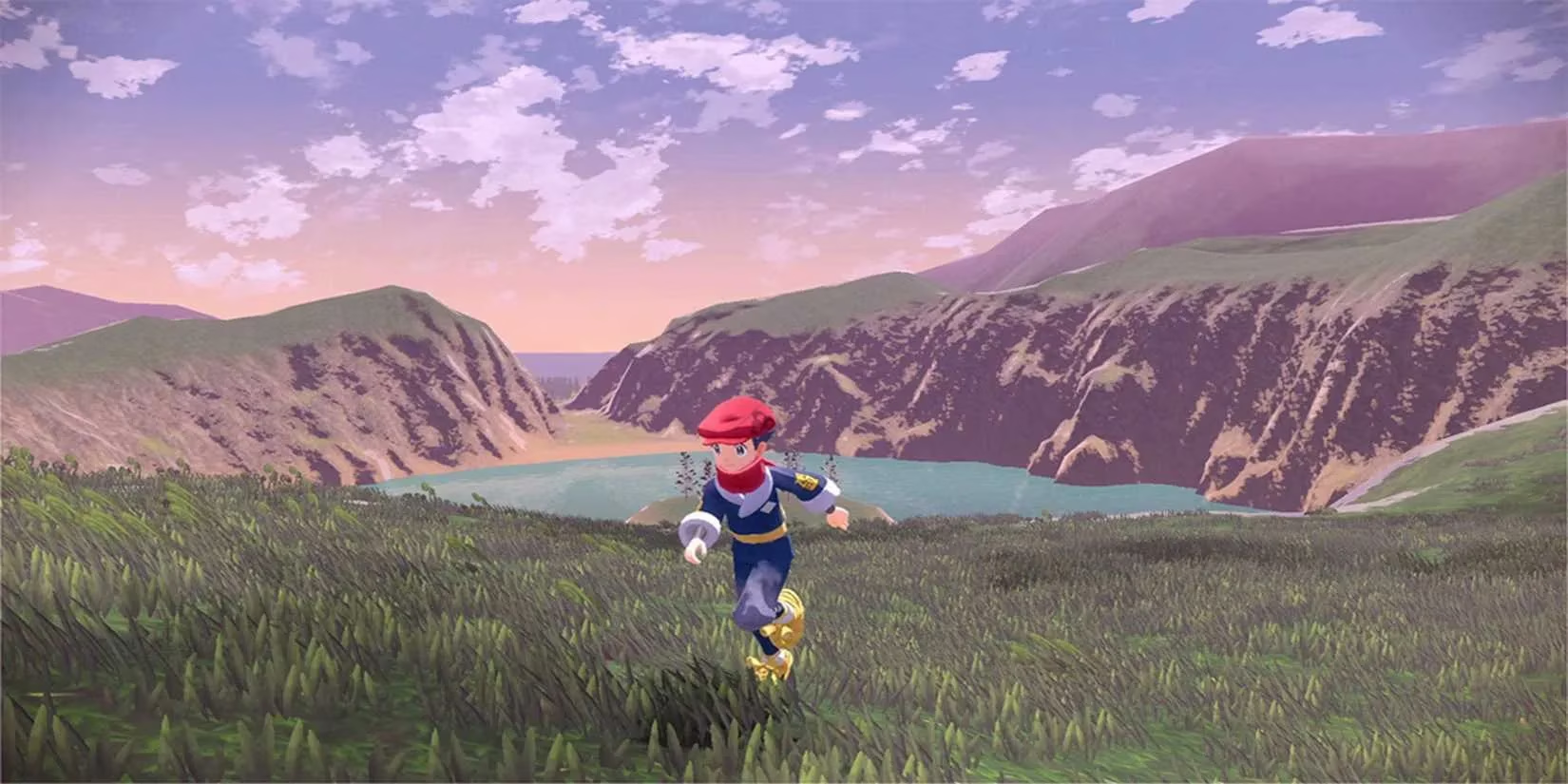
The modern Pokémon era has been, to put it mildly, a bit of a rough ride. The transition to full 3D on the Switch has exposed glaring technical shortcomings. Pokémon Legends: Arceus, however, proved that a brilliant idea can shine through even the roughest presentation. This game is visually janky: pop-in is rampant, textures struggle to load, and animations can be hilariously out of sync. But it did something revolutionary—it changed the core Pokémon gameplay loop for the first time in decades. The thrill of sneaking through tall grass to catch Pokémon in real-time, the sense of danger and discovery, was a game-changer. It rekindled the flame for countless fans. By ditching the tired dual-release strategy and focusing on a bold, solo adventure, it embraced its own janky identity and delivered one of the most beloved (and technically messy) experiences the franchise has ever seen.
6. The Legend of Zelda: Ocarina of Time: The Jank Beneath the Perfection
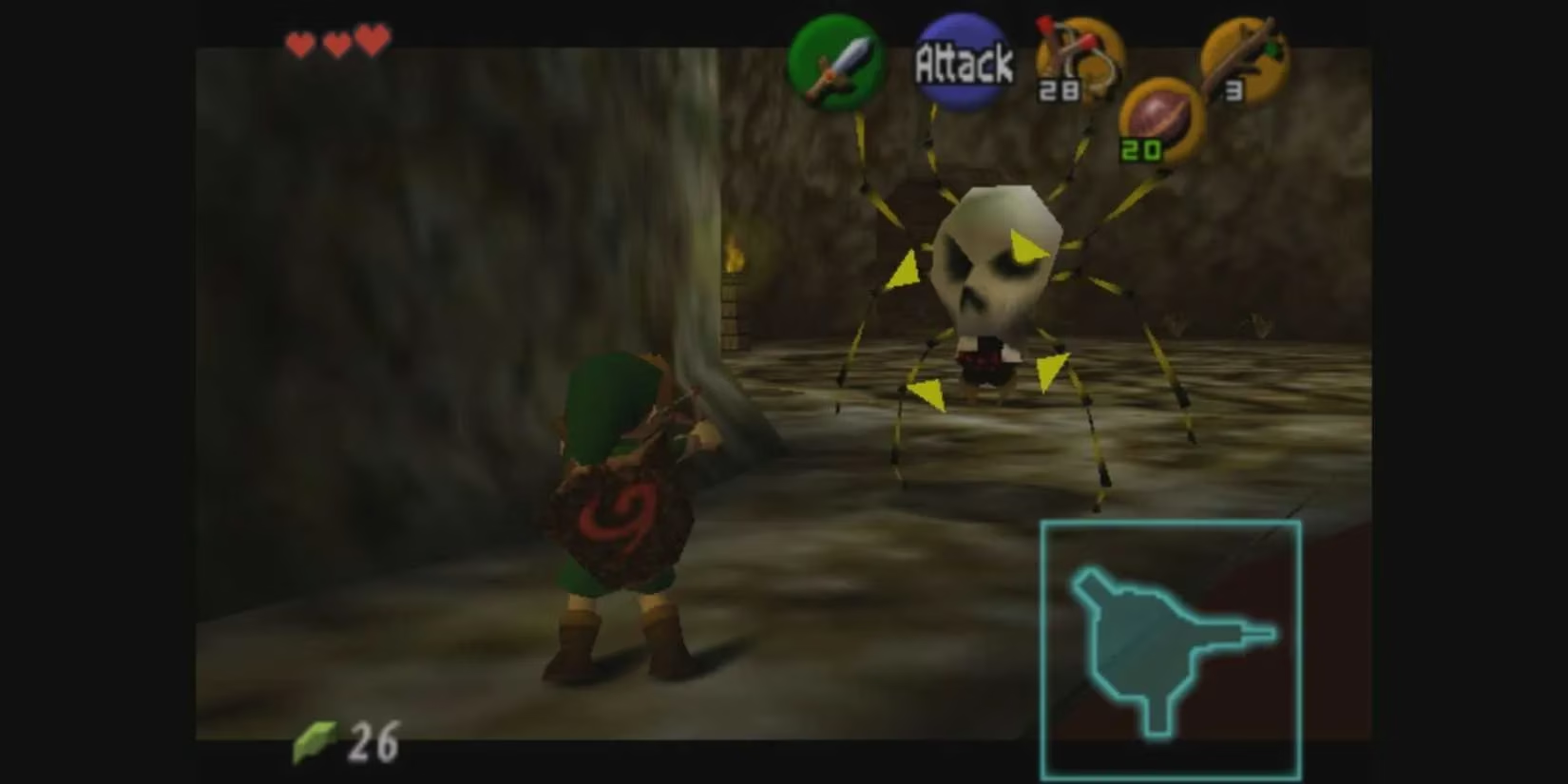
Here lies a beautiful contradiction: one of the highest-rated games of all time is also a treasure trove of glorious bugs. The Legend of Zelda: Ocarina of Time's timeless design and captivating world are so powerful that its technical quirks become charming features rather than flaws. This isn't just speedrunner territory—though the ability to execute arbitrary code via glitches has created legendary speedruns. This is about playing the Ocarina while standing in lava, falling through the world after collecting a Gold Skulltula, or using the Magic Lens for free with a well-timed Song of Storms. Every glitch feels like a secret the game is winking at you about. Nintendo themselves seemed to acknowledge this in the 3DS remake, preserving some of these beloved quirks. The bugs in Ocarina don't break the immersion; they deepen the mythos, creating a world that feels alive and slightly unpredictable.
5. Minecraft: The Quirky Foundation of a Universe
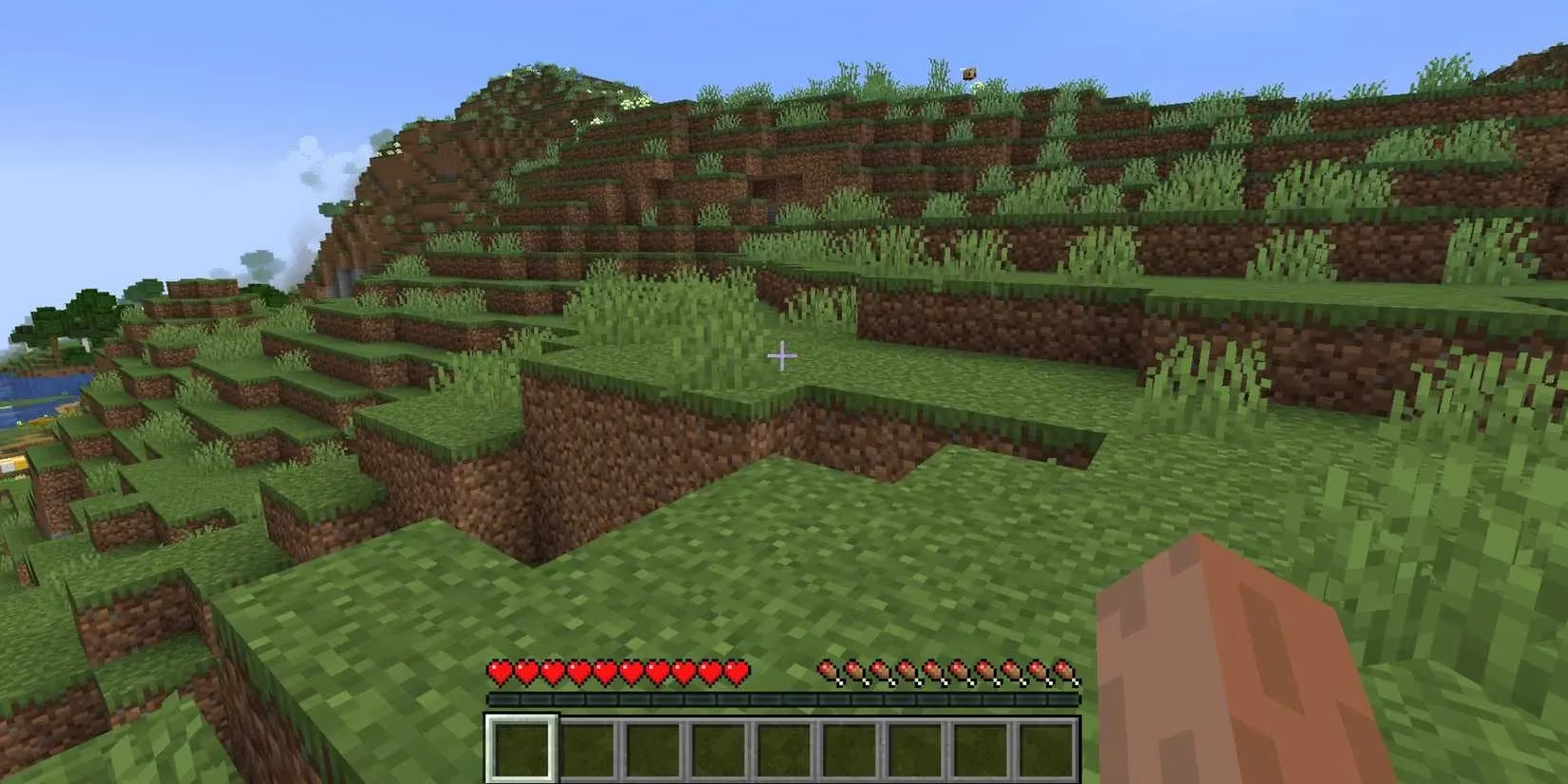
The best-selling game in history is also a wonderfully weird machine held together by community love and bizarre internal logic. Minecraft's bugs aren't just tolerated; they're canonized. On Java Edition, the community fiercely defends the \"intended\" weirdness of Redstone mechanics and BUD powering—quirks that are essentially glorified bugs. On Bedrock Edition, the experience can be even more unpredictable, with mysterious deaths and graphical oddities. Yet, this cavalcade of unintended behavior is what fuels creativity. Players don't just build within Minecraft's rules; they build with and around its bugs, turning programming oversights into essential gameplay mechanics. The game's success is proof that in a truly open-ended sandbox, a bug is just another type of block to play with.
4. Half-Life: The Relic That Refuses to Die
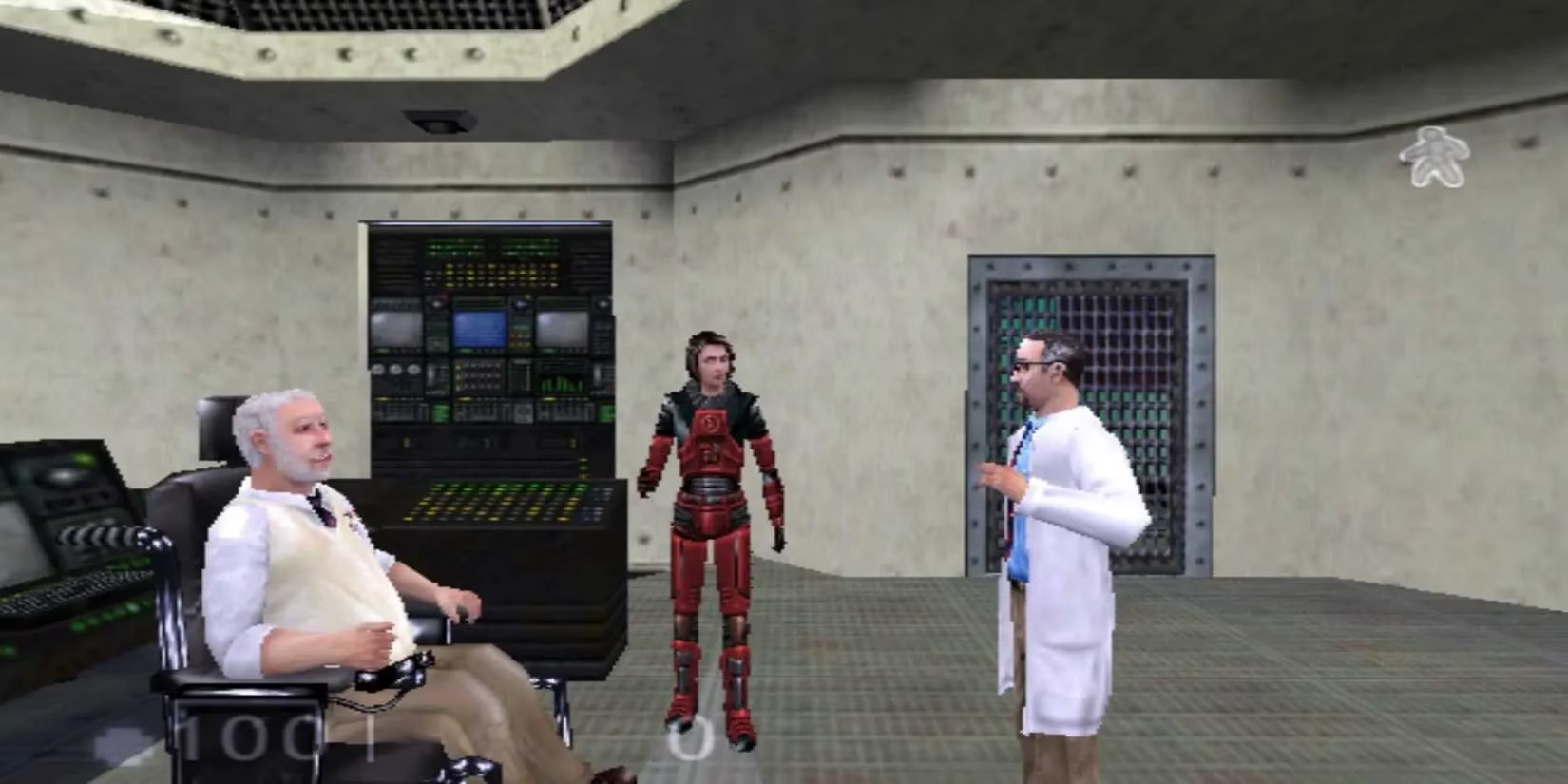
Aging is rarely kind to pioneering PC games, but Half-Life wears its years with a distinctive, janky grace. While the ill-fated Half-Life: Source remake famously added more bugs than it fixed, the original GoldSrc version remains a masterpiece of its era, quirks and all. The ability to bunny-hop to ludicrous speeds, the way objects can be manipulated to clip through geometry, the occasional NPC that just decides not to cooperate—these aren't just bugs; they're part of the game's tactile, physical language. Valve, to their credit, has preserved much of this in modern patches, understanding that the game's feel is inextricably linked to its slightly broken physics. It's a game where the line between skilled play and exploiting the engine's whims is beautifully, gloriously blurred.
3. The Elder Scrolls V: Skyrim: A Mountain of Glorious Nonsense
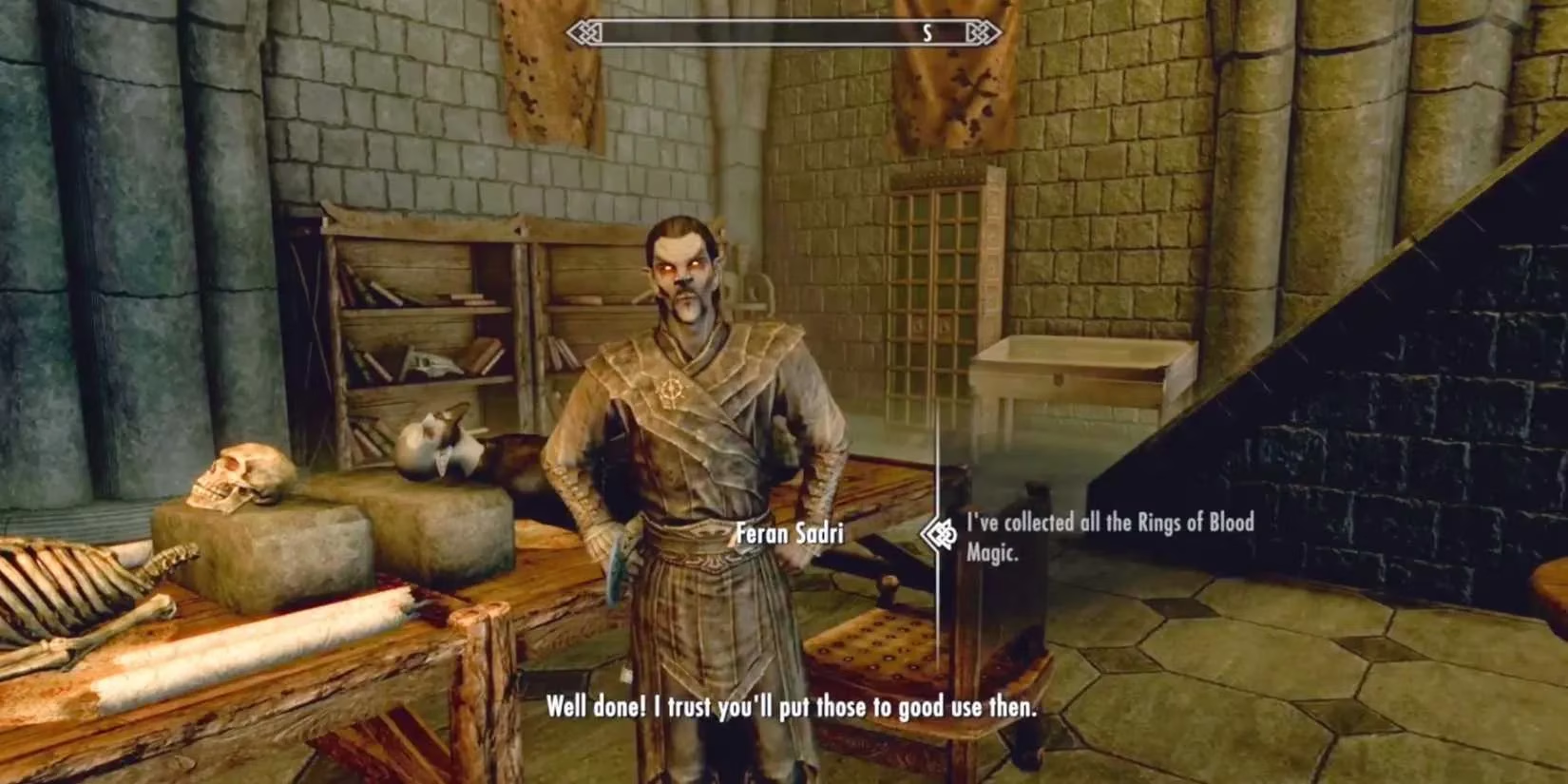
Skyrim is as famous for its bugs as it is for its dragons. Bethesda's philosophy has long been to leave in bugs that are \"hilarious,\" and Skyrim is their magnum opus in this regard. It's a world where horses defy physics to scale mountains, where placing a bucket on a shopkeeper's head makes you invisible, and where giants can launch you into low orbit. This unpolished, emergent chaos is arguably a massive reason for the game's enduring success. Every player has their own \"Skyrim moment\"—a story of bizarre, unintended behavior that feels uniquely theirs. While less fun bugs like save corruption or quest-breaking glitches exist, the collective memory is dominated by the hilarious and the absurd. It created a shared cultural language of jank that, for better or worse, has defined Bethesda's design ethos for over a decade.
2. Super Smash Bros. Melee: The Glitch That Built a Dynasty

Born from a brutal development cycle, Super Smash Bros. Melee is a competitive titan whose cracks have become its foundation. What appears on the surface as a tight party fighter reveals, under high-level play, a deeply broken and beautiful engine. Techniques like wave-dashing (arguably intended) and exploits like phantom hits or the endless hitbox on Link's nair are not bugs to be patched out; they are the meta. They are the advanced tech that has sustained a vibrant competitive community for over two decades. The game's jank is its depth. Every tournament holds the potential for a never-before-seen interaction, a fresh piece of chaos emerging from the game's stressed code. It's a game where the glitches are the gameplay, creating a skill ceiling that is literally built on unintended behavior, making it endlessly fascinating to play and watch.
1. Fallout: New Vegas: Held Together By Dreams and Duct Tape
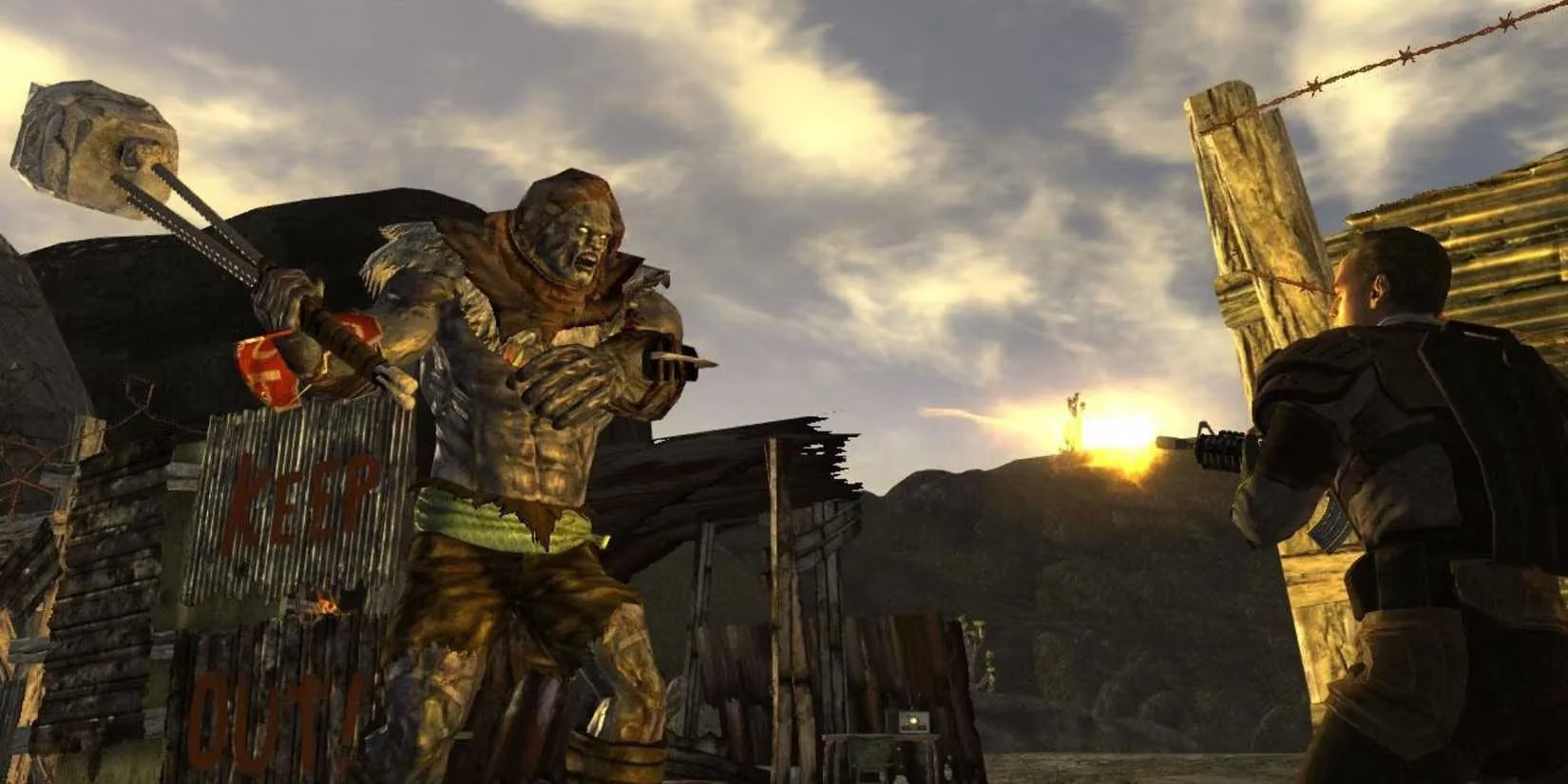
And at the summit sits Fallout: New Vegas, the ultimate testament to brilliant design triumphing over technical disaster. Crafted in a mere 18 months on a shoestring budget using Bethesda's famously temperamental Creation Engine, this game is quite literally held together by duct tape. It's a miracle it runs at all. In 2026, it still requires community patches to launch on modern PCs. Its Pip-Boy can flashbang the player, quests can break in spectacular fashion, and the Mojave Wasteland is prone to tearing at its poorly threaded seams. Yet, none of that matters. Why? Because the writing, the player agency, the faction politics, and the sheer density of choice and consequence are peerless. The world feels more open-ended and interesting than any Fallout before or since. The bugs become part of the post-apocalyptic aesthetic—a fitting, if frustrating, layer of chaos in a world that has already ended. To play New Vegas is to embrace the jank, to look past the flickering textures and crashing scripts, and see one of the greatest RPG narratives ever told, stubbornly shining through the cracks. It's not just a game with bugs; it's a game that is lovable because of them, a cult classic defined by its beautiful, broken soul.