
Great Games That Looked Ugly and Played Beautifully
Rough graphics in gaming—Minecraft, Cruelty Squad, Star Fox—show how low-res, blocky visuals can fuel creativity and iconic gameplay.
In 2026, the gaming industry keeps chasing the horizon of photorealism. Ray tracing, neural rendering, and 8K textures have turned virtual worlds into feats of engineering that can make skin pores look like tiny craters. Yet some of the most beloved games ever made chose a different path. They were blocky, blurry, smeary, or even proudly hideous. Did their creators simply lack the technology? Sometimes. Did they sacrifice fidelity for gameplay, speed, or a strange and singular vision? Almost always. And somehow, those rough edges became part of their souls.
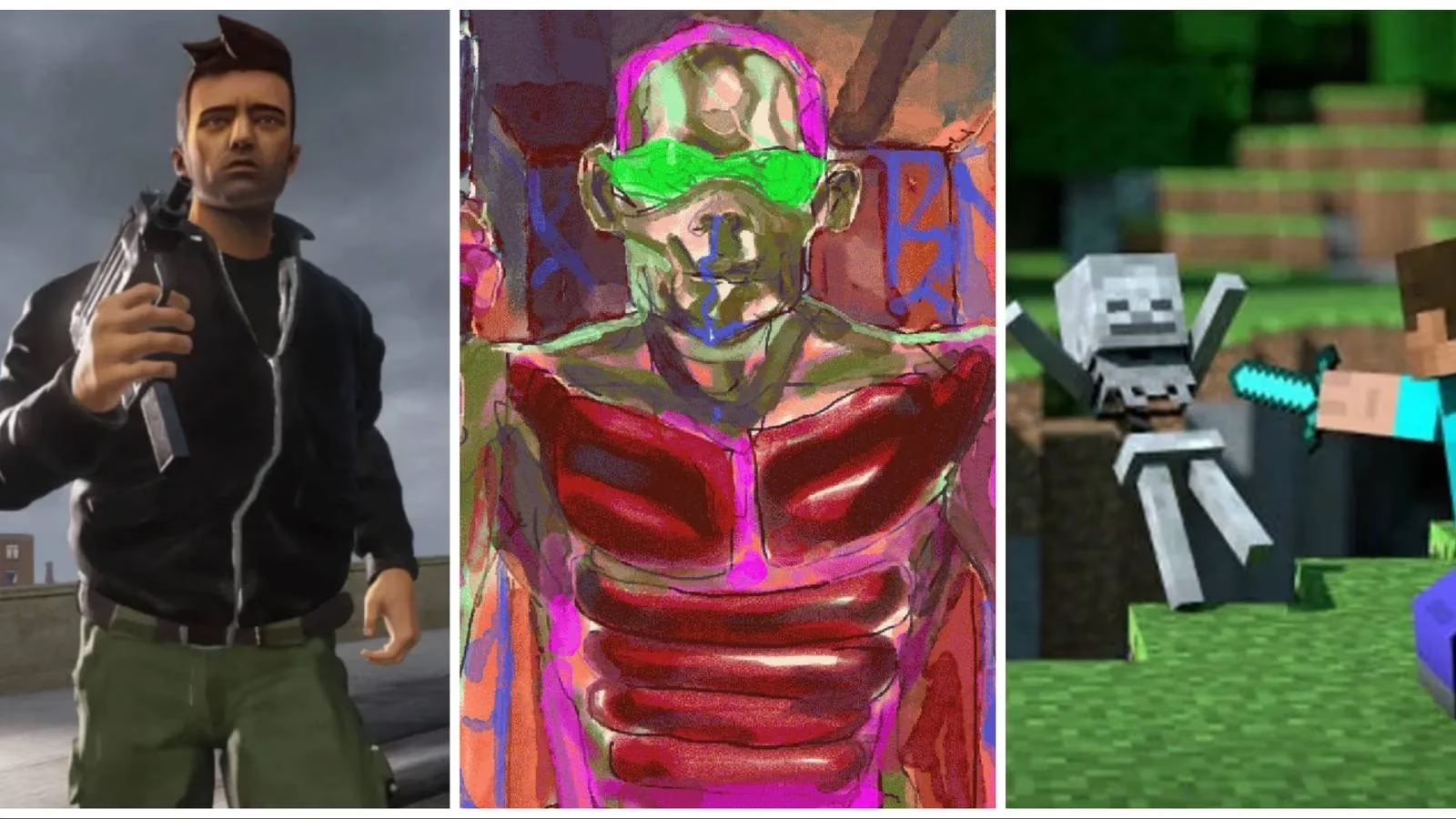
Minecraft: The Beauty of Blocks
A new player in 2026 might spawn into Minecraft and see a landscape built from cubes, caves, and pixelated sunsets. It is not ugly in the traditional sense, but no one mistakes it for a graphical showcase. The low-resolution style let Mojang add new features quickly, update after update, without waiting for the art department to hand-paint every leaf and stone. Could a hyper-detailed Minecraft have supported the same wild builds and infinite worlds? Probably not. The game's gigantic pixilated landscape has its own beauty, and its rough look is inseparable from its creative freedom.
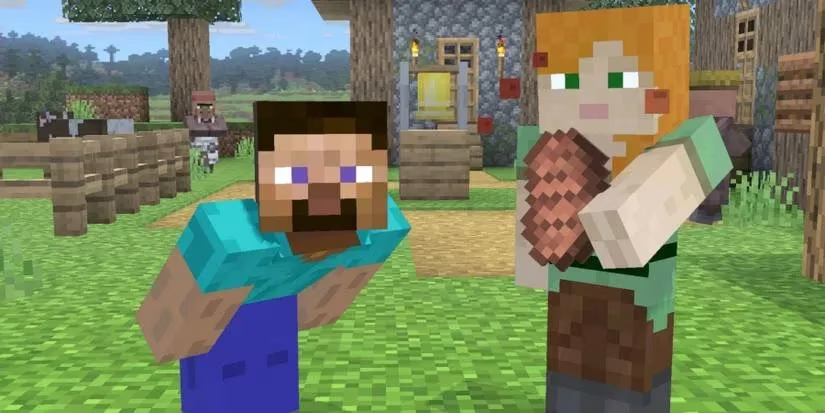
Cruelty Squad: Ugly on Purpose
Graphics can be a contentious issue in gaming culture, but there is little controversy when assessing Cruelty Squad. This feverish, foul-looking 90s throwback masterpiece was intentionally designed to look as ugly as possible. From its bloated and throbbing UI to its mismatched environments and characters, every frame seems to dare the player to look away. Technically, it falls into the first-person immersive sim genre, but who would want to immerse themselves in an abyss of gunge, cannibalism, and gore? Plenty of players, once they discover its surreal but memorable gameplay and open-ended design. It is an extremely fun and unique experience that could not exist any other way.
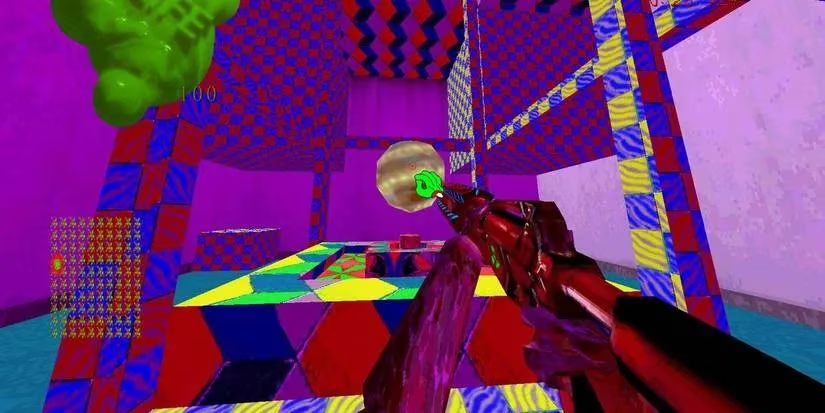
Star Fox: Polygons That Felt Like the Future
The Star Fox series has produced some of the finest games Nintendo has ever put out, and some iconic memes to boot. This soup of blurry colors and pointy shapes was considered cutting-edge at the time. However, considering that this game was released on the same console, less than a year before Donkey Kong Country, it is astonishing that it became as popular as it did. Perhaps the developers opted for a smooth frame rate over smooth graphics. Considering that games had yet to make the transition into 3D, it must have been a marvel to see back then. Today, all that most players can see on their smart TVs are jutting triangles and fuzzy circles. Was it a marvel? Absolutely. Does it still look like one? That depends on who is asking.
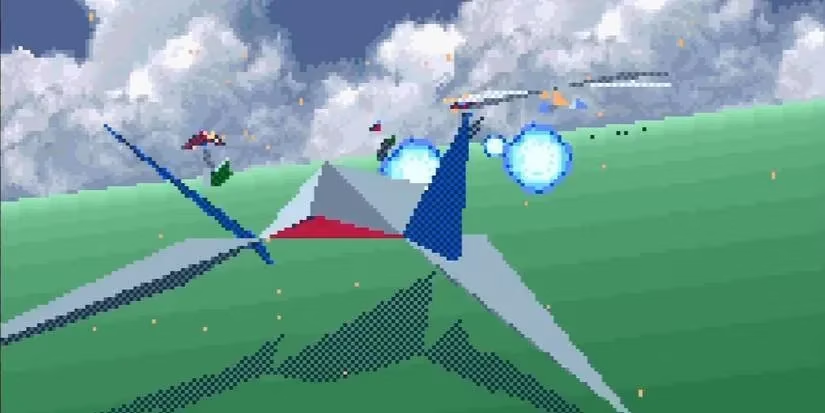
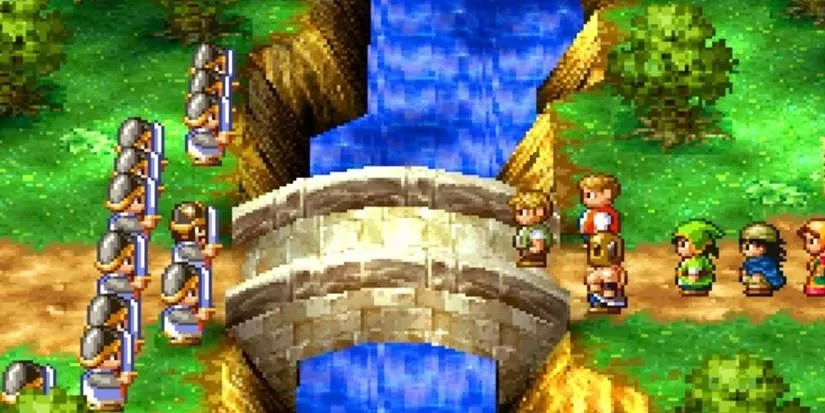
Dragon Quest VII: A PS1 Classic With Backward Looks
Dragon Quest VII is a straight-up RPG classic, and while it is by no means an ugly-looking game, it is one of the most backward-looking PS1 games from the year 2000, especially considering that Metal Gear Solid had come out two whole years earlier. As critics noted at the time, while it may not be up to much graphically, the game's deep gameplay and diversity of activities made it a hit, especially in Japan. Sixteen years later, Dragon Quest VII, known as Dragon Warrior VII in North America, got a 3DS makeover and a new subtitle, Fragments of the Forgotten Past. That version turned out to be one of the best RPGs available on the handheld. Finally, Dragon Quest VII got the recognition it deserved.
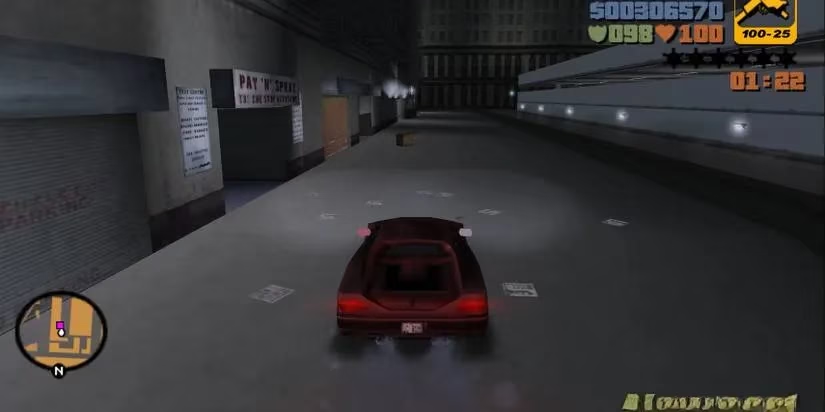
GTA III: The Open-World Door Kicked Open
In the hallowed halls of gaming, GTA III certainly has a place on the loftiest shelves. It is important for many reasons, not least because it kicked the door open to the open-world genre. However, looking back, especially on new high-end TVs, it is probably fair to say it looks a little rough, or more accurately, smeary, drab, and blocky. It is funny to think that this game was once a great scapegoat for violence in society, given how low-res everything, including the pedestrians, looked. But perhaps the charm of GTA III lay in filling in the cracks with sweet imagination. Whatever the case, by 2026, Rockstar puts out some of the most richly detailed games in the industry, including the modern entries in the Grand Theft Auto series.
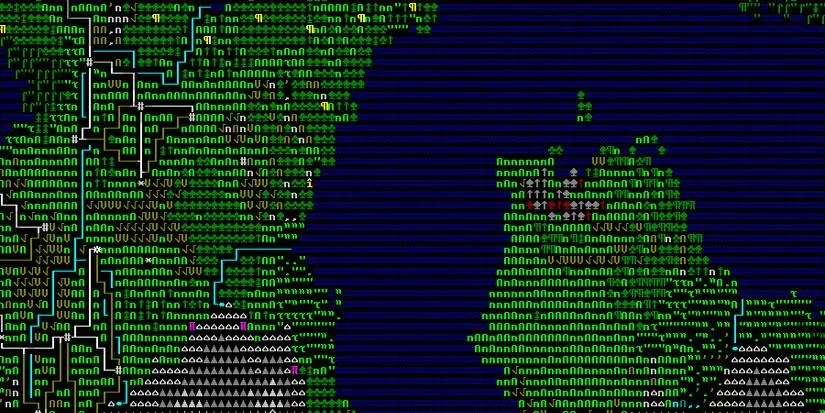
Dwarf Fortress: From ASCII to Art
For most of its life, Dwarf Fortress played like trying to read the falling green text seen on computer screens in The Matrix. It took two decades, including one decade of being featured in New York's Museum of Modern Art, for the game to get a graphical overhaul that looked anything close to playable to the uninitiated or casual gamer. Of course, if Bay 12 had been bogged down with graphics, even the simplest of sprites, the game would never have run with all those mad dwarves running around. Those magically esoteric lines of code that make Dwarf Fortress such a juggernaut of emergent storytelling would never have been written. However, the Steam release of the game makes playing this masterpiece easier on the eye, thanks to some very talented and hardworking sprite artists.
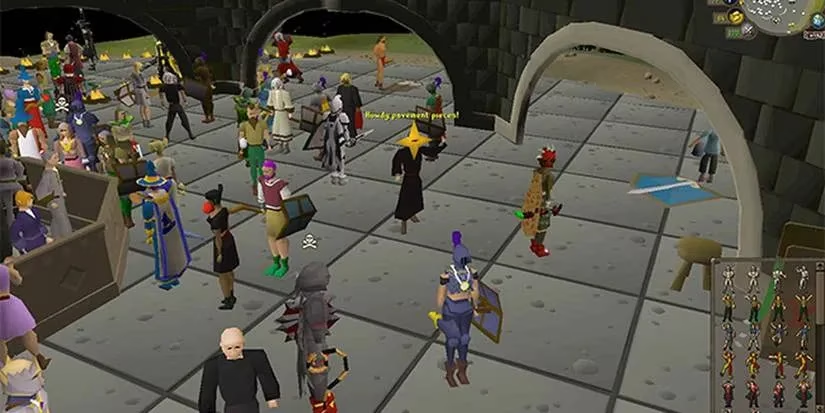
RuneScape: Accessibility Over Fidelity
Flash sells. It could be said that the pursuit of finer and finer visual details in video games only really provides short-term wins in the industry. RuneScape might be an example of a main-stayer that, while it has been known to upgrade and button up to modern standards, has always had fans for other reasons. Part of what made RuneScape so appealing and successful was its accessibility, facilitated by its free-to-play structure and low hardware requirements. With simple graphics, the developers were able to craft an expansive world that kept players of even the longest playtimes happily grinding away.
Final Fantasy VII: Blocky Heroes, Immense Hearts
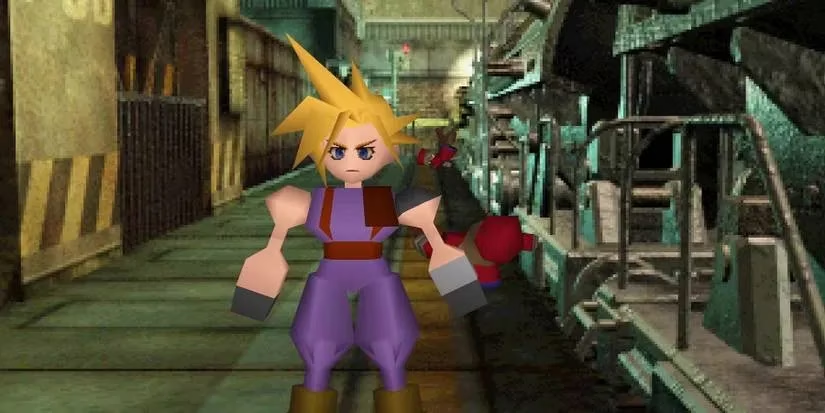
In 1997, gamers everywhere lucky enough to get their hands on a copy fell in love with the world of Final Fantasy VII. For decades after, fans begged Square Enix to remake the game with new tech. It is debatable whether this fervor began with the more richly realized cutscenes or battle models, or following the release of its follow-up, Final Fantasy VIII, which features life-like models throughout. While this game shines like a perfect diamond in the memories of many Final Fantasy fanatics, the short-stack character models used for the entirety of the game's overworld and non-combat maps hardly look stellar, especially when the camera cuts in so close to Cloud's squashed, bulbous body. Of course, the modern remake project could make even the coldest Shinra SOLDIER cry, not just for all those tearful moments this time, but for all the game's beauty.
Why Rough Edges Still Win
| Game | Visual Sin | Why It Endures |
|---|---|---|
| Minecraft | Cubes and pixels | Fast updates, creative freedom |
| Cruelty Squad | Intentional ugliness | Surreal immersive sim design |
| Star Fox | Flat polygons | Smooth performance, 3D novelty |
| Dragon Quest VII | Backward PS1 look | Deep RPG systems, 3DS remake |
| GTA III | Smear and block | Open-world revolution |
| Dwarf Fortress | ASCII | Emergent storytelling |
| RuneScape | Simple graphics | Accessibility and scale |
| Final Fantasy VII | Squashed models | Story, characters, remake legacy |
So what truly makes a game beautiful? In 2026, the answer is still not a simple resolution number. A game can be gorgeous because of its lighting, its art direction, its animation, or its sheer technical ambition. But it can also be beautiful because it runs on almost anything, because it lets players build worlds out of cubes, because it tells a story so powerful that no one cares about the shape of a character's hands. These potato-faced classics are proof that gameplay, imagination, and accessibility can outshine any polygon count. The industry will keep pushing toward photorealism, but the games with rough edges will keep pulling players back. After all, who plays a masterpiece for the pores?
This assessment draws from UNESCO Games in Education, highlighting how “rough-edged” classics can be powerful precisely because they prioritize learning curves, experimentation, and accessibility over visual fidelity. That lens helps explain why games like Minecraft and Dwarf Fortress endure: simplified presentation can lower barriers to entry, encourage creativity, and keep the focus on systems-driven problem-solving rather than photoreal polish.