
I Turned Minecraft Note Blocks Into a Tiny Symphony
Minecraft note block music comes alive with redstone and repeaters: craft, tune 24 pitches, and build songs that play themselves.
The first time I placed a note block in Minecraft, it looked back at me like a tiny wooden piano waiting for a song. I was building a messy starter house beside a river, and I right-clicked the block just to see what would happen. A soft ping floated out, and honestly? That tiny click was the moment I got hooked. Even in 2026, after years of updates and dazzling new blocks, note blocks remain one of the game’s quiet miracles. They do not shout for attention. They sit there, patient and wooden, until someone decides to make them sing. This year I finally stopped treating them like decoration and built a real song.
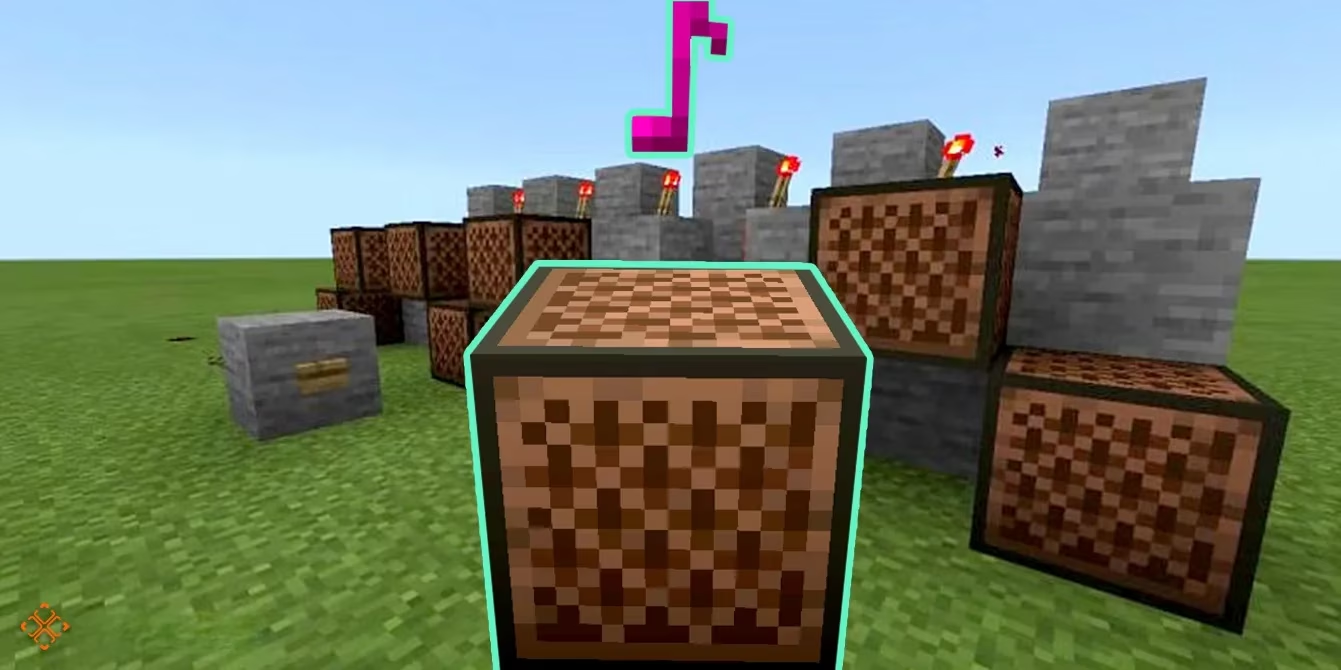
The Little Block That Clears Its Throat
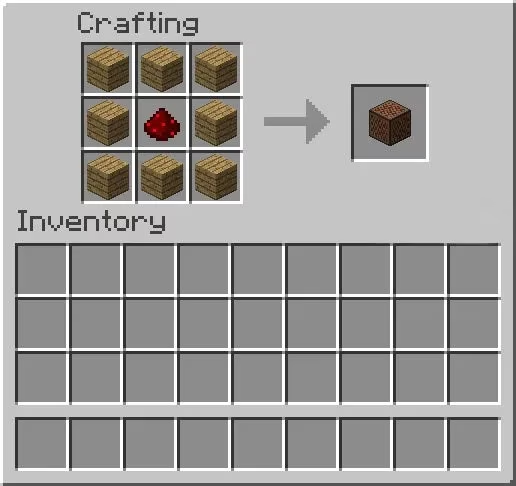
Crafting a note block is almost embarrassingly simple. You need eight wooden planks and one piece of redstone. Place the redstone in the center of the crafting grid and surround it with planks. That is it. No rare ore, no complicated machine, no secret ritual. I made three note blocks in about ten seconds and felt like a genius anyway.
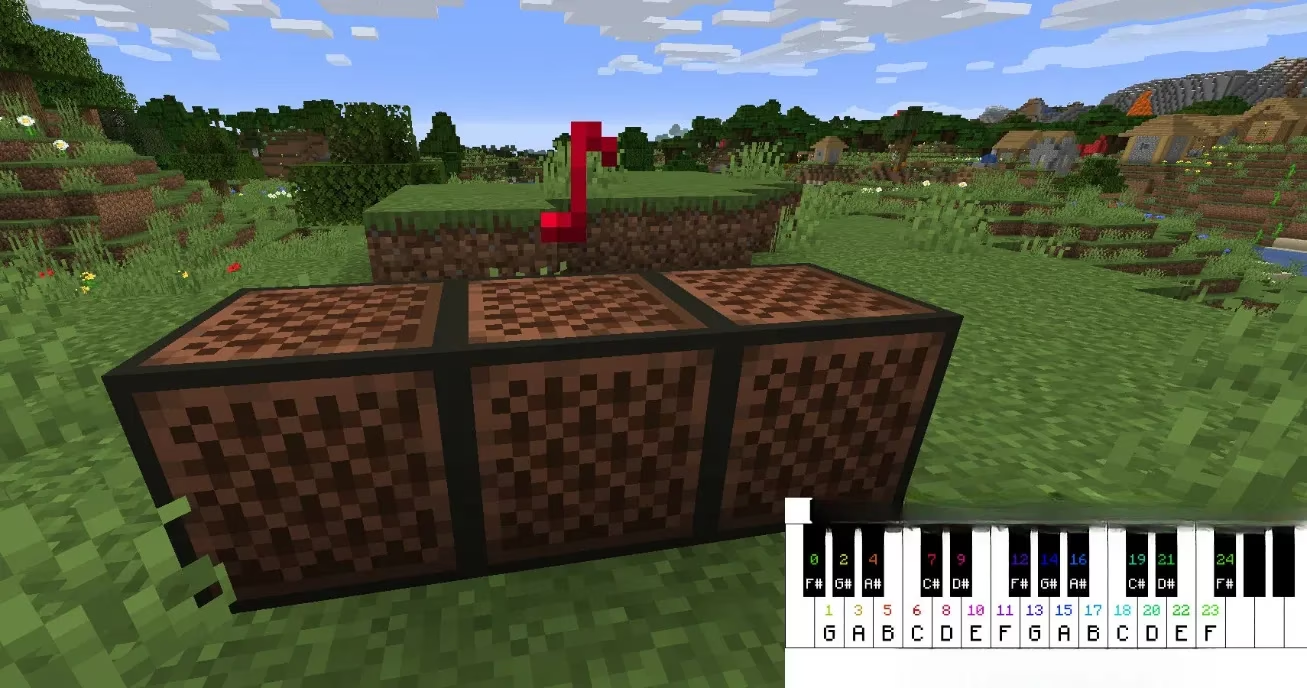
The real personality comes after placement. A note block has 24 pitch options, and right-clicking cycles through them. As you click, the little note symbol changes color. It is a small detail, but it makes the block feel alive, like it is clearing its throat before each performance. Left-clicking plays the current tone without changing the pitch. That distinction matters. Right-click tunes. Left-click performs. Once I stopped mashing buttons and started listening, the block became an instrument instead of a gadget.
Redstone Is the Conductor
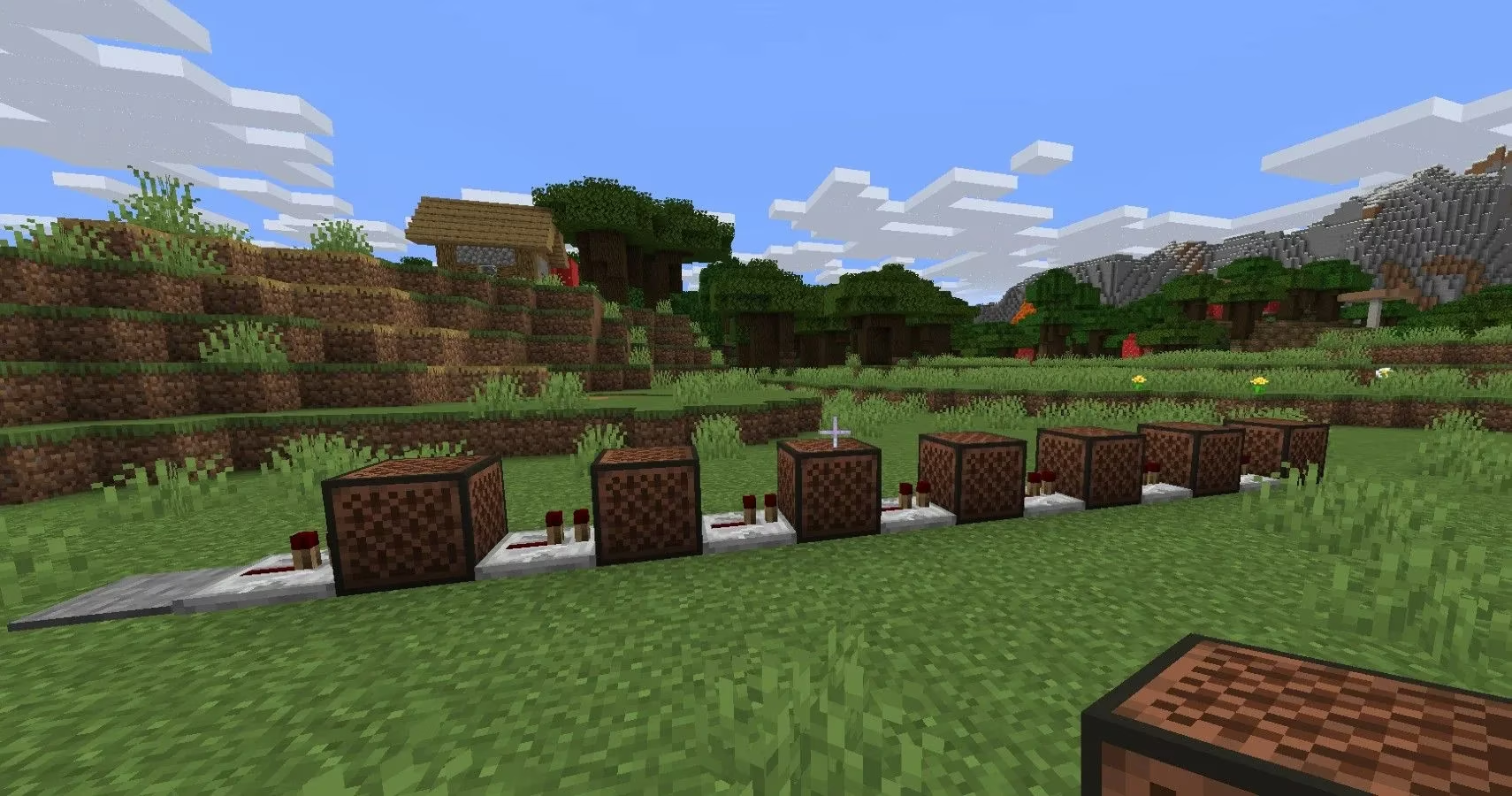
Playing notes by hand is fine for a joke, but a real song needs a conductor. That is where redstone comes in. Redstone wakes the note block up, and repeaters decide when each note gets its turn. My first setup was a pressure plate, a line of redstone, a repeater, and one note block. When I stepped on the plate, the circuit pulsed and the note block sang. Simple, clean, and weirdly satisfying.
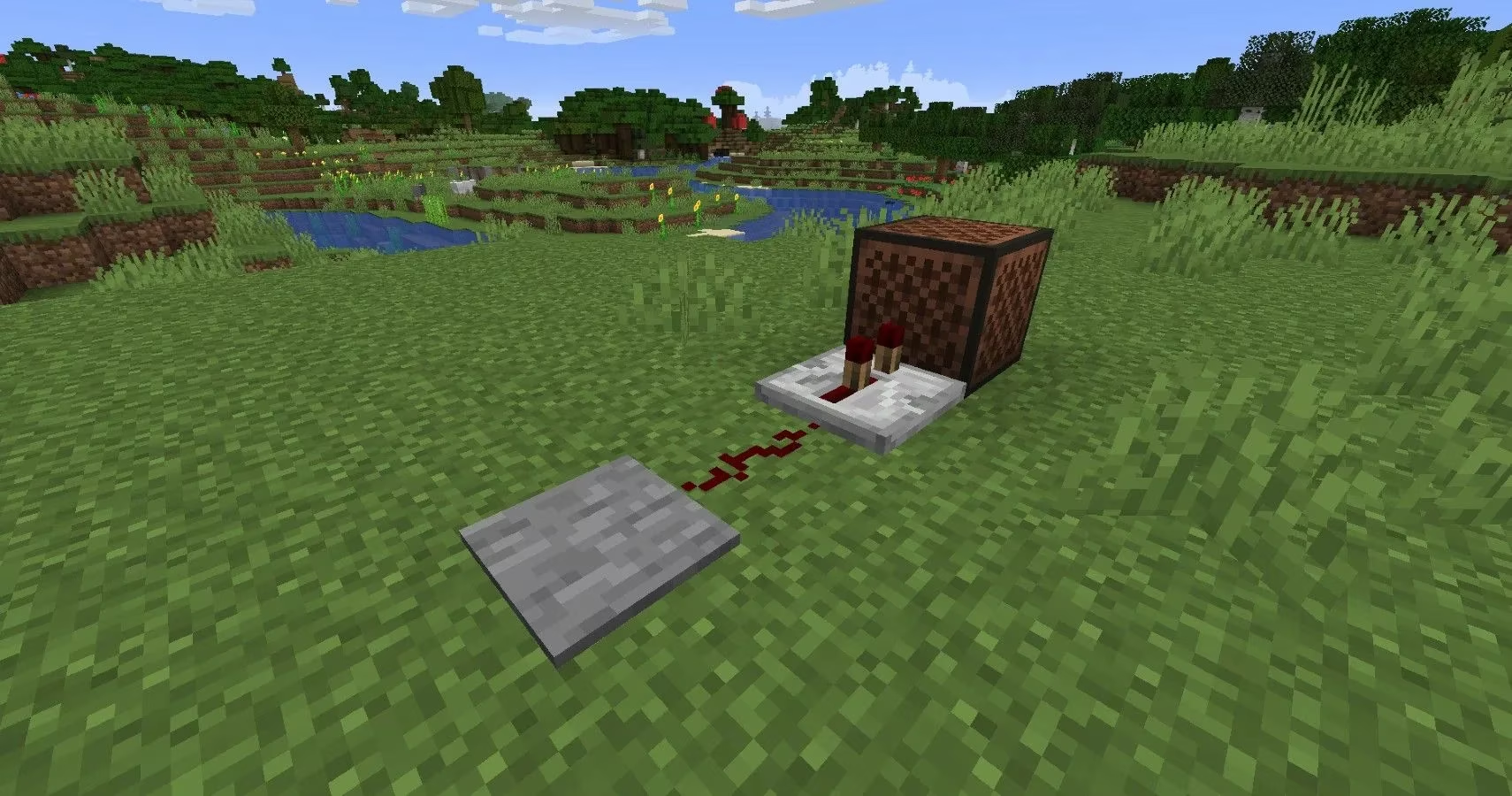
Here’s the kicker: a repeater must be aligned properly with the note block. If you place it sideways, the signal will not behave the way you expect. I learned that the hard way, standing in front of a silent block while my pressure plate clicked away like an impatient audience. A repeater has four delay positions. Those positions change the rhythm, which means they can create quarter notes, eighth notes, and all the little pauses that make a melody feel human. Seven note blocks connected by repeaters can play a quick run of notes, and shifting the repeater delay changes the spacing between them.
Choosing Instruments Changes Everything
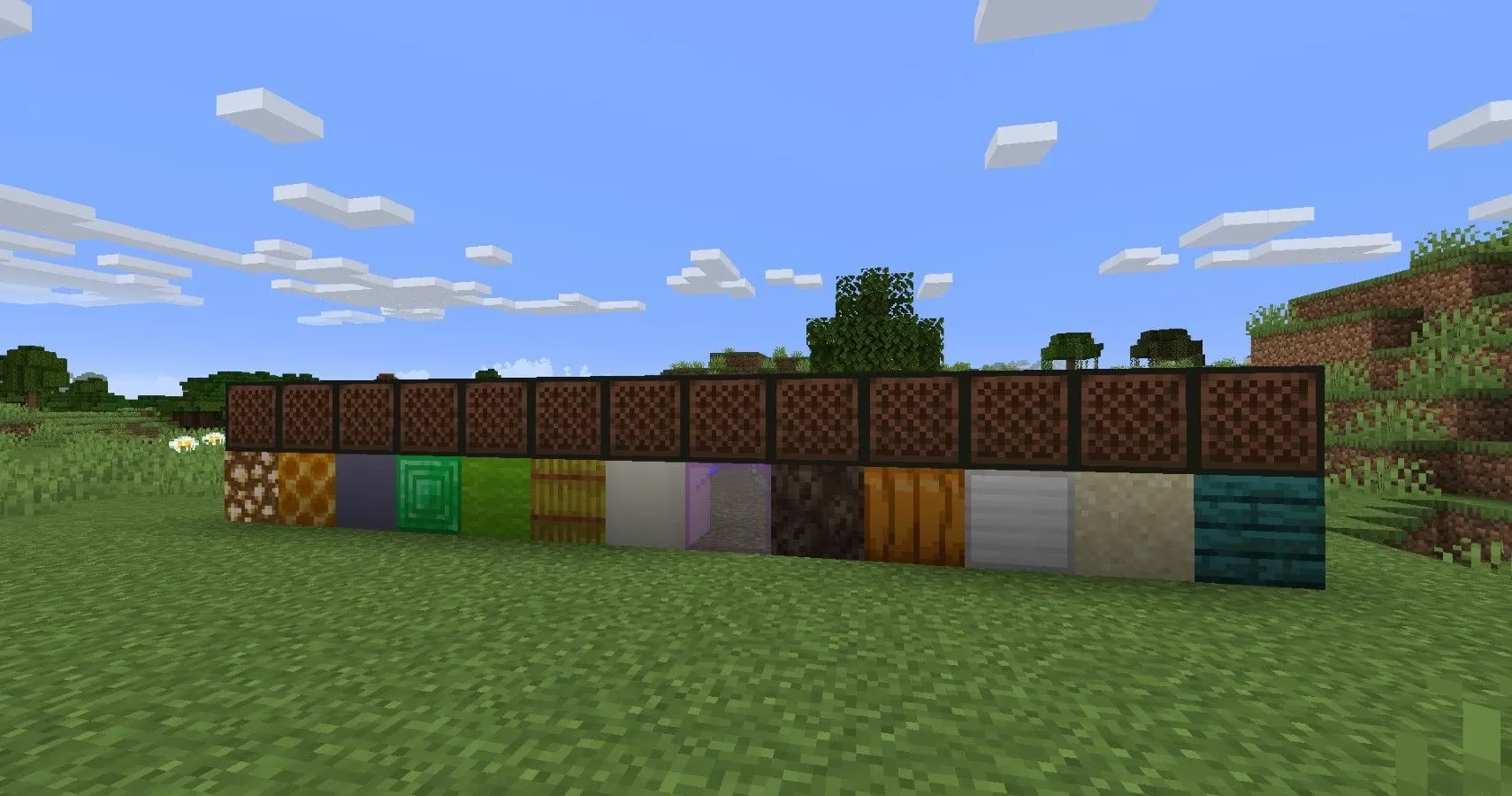
The block underneath a note block decides its instrument. This is the part that makes a song sound full instead of thin. A note block on wood becomes a string bass. On sand or gravel, it becomes a snare drum. Glass gives you a hi-hat click. Stone gives you a bass drum. Wool turns it into a guitar. A bone block gives you a xylophone. Soul sand gives you a cowbell, which is either a blessing or a curse depending on the song. Trust me, a cowbell solo is a commitment.
| Block Under Note Block | Instrument |
|---|---|
| Wood | String Bass |
| Sand or Gravel | Snare Drum |
| Glass | Clicks / Hi-hat |
| Stone or dense rock | Bass Drum |
| Block of Gold | Bells |
| Clay or Honeycomb | Flute |
| Packed Ice | Chimes |
| Wool | Guitar |
| Bone Block | Xylophone |
| Block of Iron | Vibraphone |
| Soul Sand | Cowbell |
| Pumpkin | Didgeridoo |
| Block of Emerald | Bit |
| Hay Bale | Banjo |
| Glowstone | Electric Piano |
| Any other block | Piano |
This table saved me a lot of guessing. I started planning my build like a tiny stage: wood for the bass line, glass for the rhythm, gold for sparkle. The blocks underneath are not just decoration anymore. They are the band.
My First Song and What I Learned
For practice, I built the first two lines of Mary Had A Little Lamb. The notes are E, D, C, D, E, E, E, D, D, D, E, E, E. It is not a complicated melody, but it taught me how pitch, timing, and instrument choice work together. My first version was too fast. My second version had a cowbell where a piano should have been. My third version finally sounded like music.
If you want to try this in 2026, start small. Pick a short melody you know by heart. Tune each note block carefully. Use repeaters to shape the rhythm. Label your blocks with signs if you are building something long. Test the circuit before you decorate. And leave space for one silly instrument if you want the song to have personality. With a little patience, those quiet wooden blocks can become a full little orchestra.