
Microsoft’s Hardest Open-World Games Are Still Tormenting Gamers in 2026
Microsoft's hardest open-world games and Xbox Game Studios titles challenge players with relentless AI, tough bosses, and unforgiving worlds.
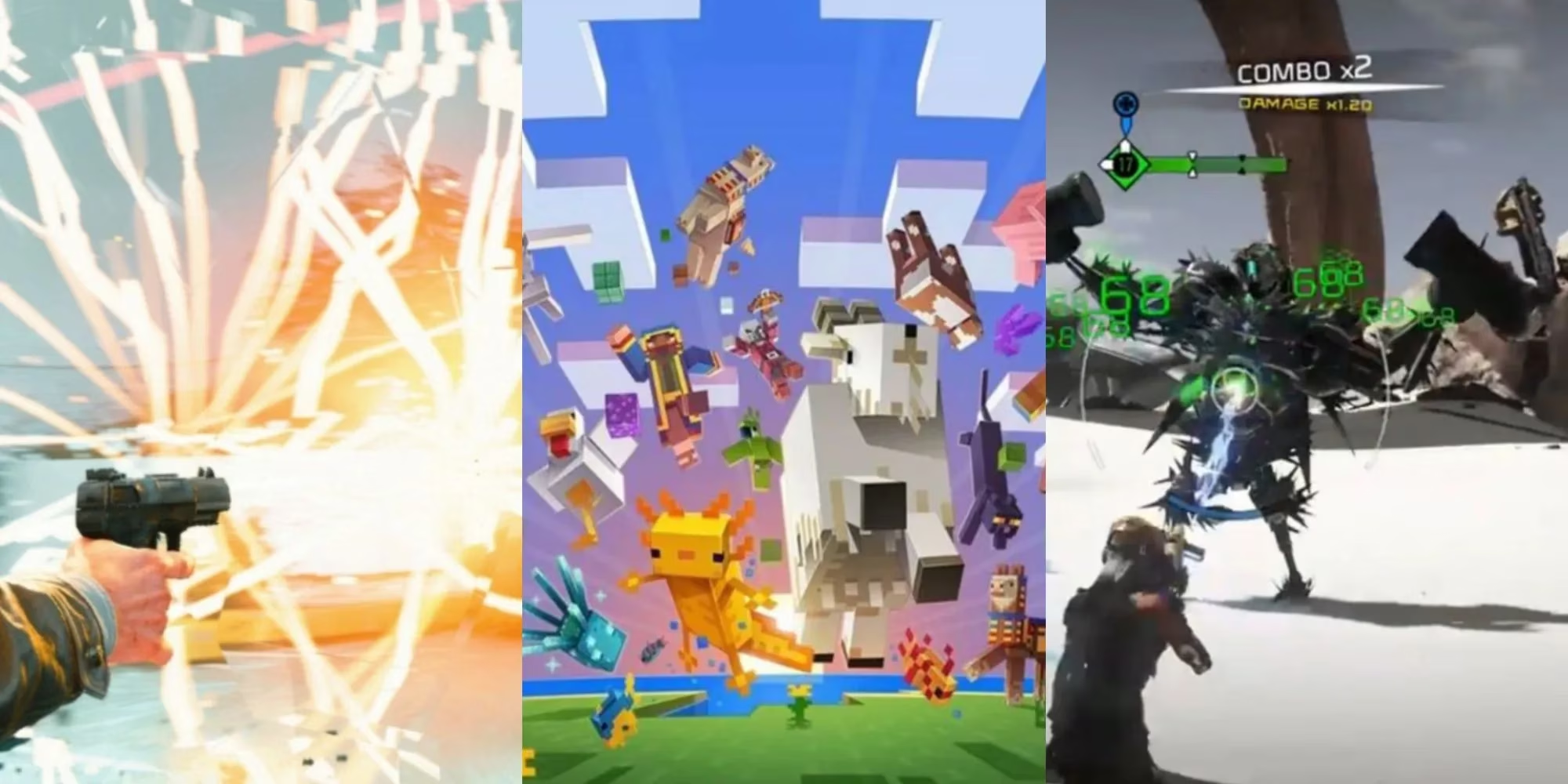
Under the broad umbrella of Xbox Game Studios, Microsoft has unleashed a cabal of open-world titles that back in 2024 were already making gamers question their life choices. Fast-forward to 2026 and these sprawling digital sandboxes have only gotten more devious. Whether through AI updates, fresh content patches, or just the eternal stubbornness of their core design, they continue to turn casual playthroughs into epic sagas of perseverance — or broken controllers. Here’s a tour of the beautifully brutal open worlds that Microsoft published and that still haven’t learned the meaning of mercy.
Crackdown: The Kingpin Hunt That Swallows Afternoons Whole
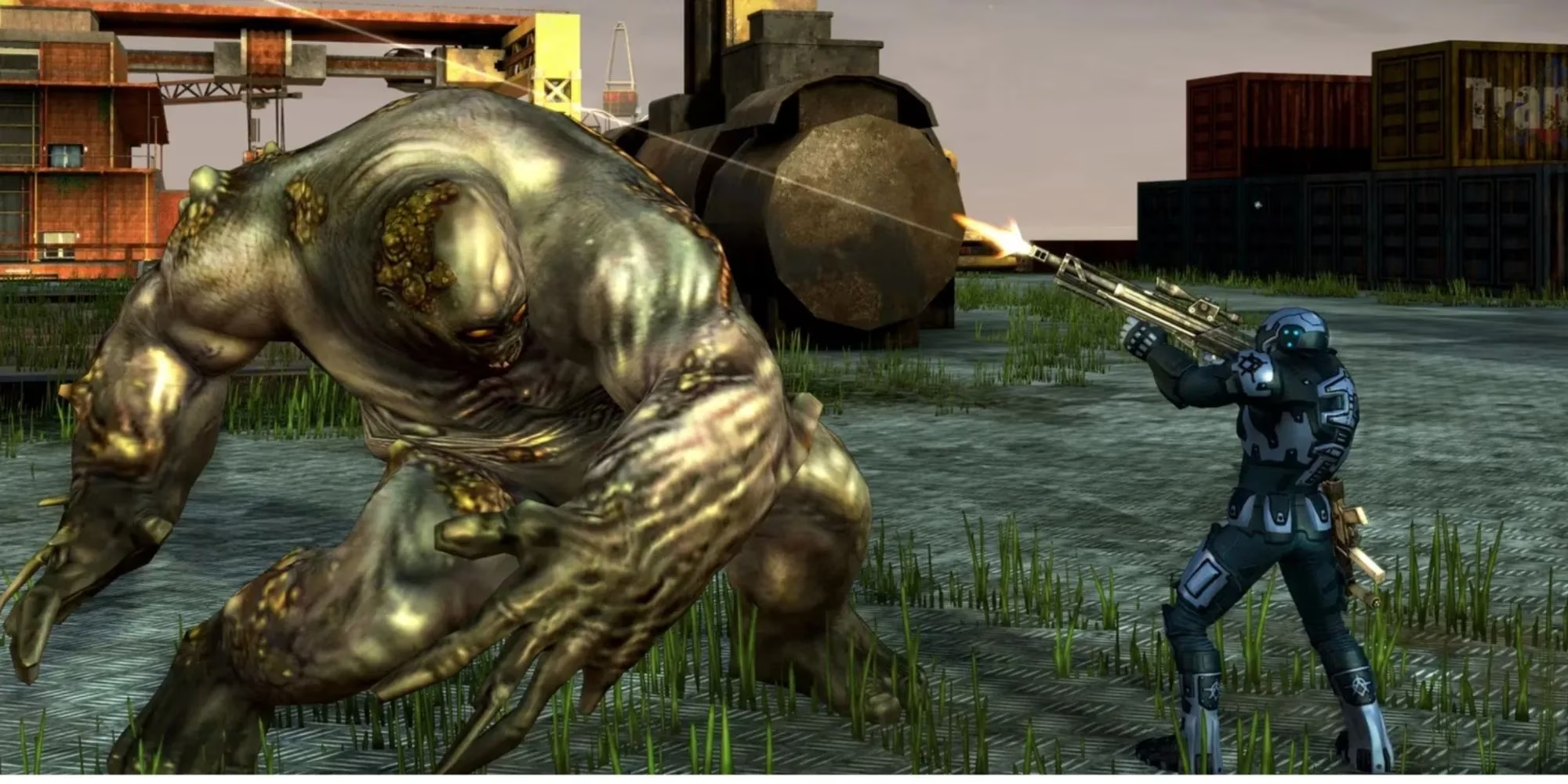
In the Crackdown franchise, players are super-powered agents tasked with dismantling Pacific City’s criminal empire one boss at a time. Sounds straightforward? It isn’t. First, you have to actually find each kingpin’s lair, a process that often feels like a GPS was deliberately excluded from this dystopian future. Then, because raw talent isn’t enough, you must scour the city for agility orbs — hundreds of glowing collectibles — just to leap high enough to reach the next crime lord’s doorstep. In 2026, even with all the tutorials available on every streaming platform, newcomers still find themselves stuck on rooftops, staring at a boss icon that remains stubbornly out of reach.
Full completion is where Crackdown truly earns its grey hairs. Between car chases that can go hilariously wrong, street races against rubber-banding AI, and a treasure hunt that demands forensic-level attention, this game tricks you into thinking you’re merely goofing around. In reality, you’re signing up for a sprawling, orb-powered puzzle box that absolutely refuses to be rushed.
Fable: Where a Single Moral Choice Can Haunt You for Hours
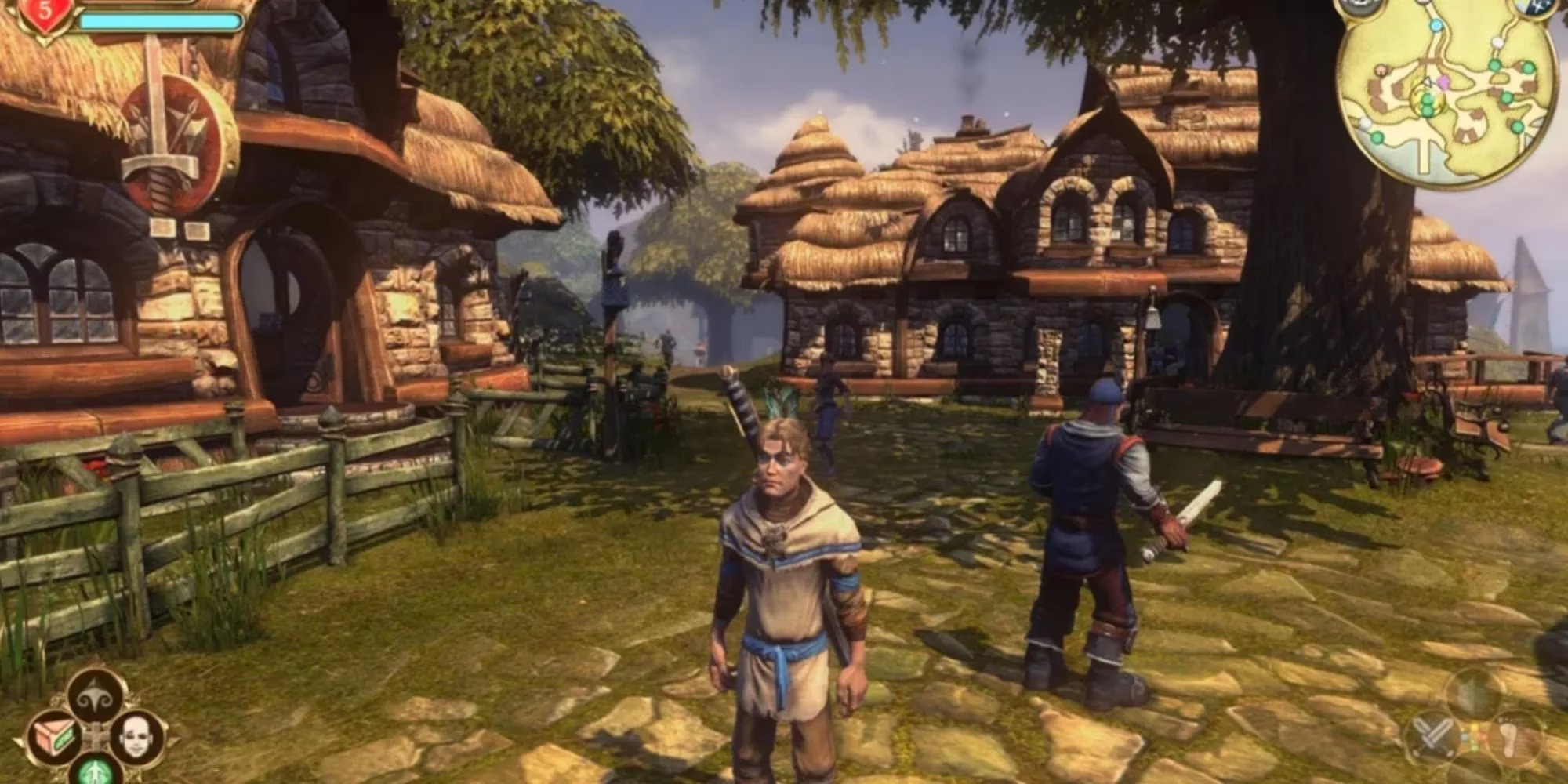
Albion might look like a fairy-tale realm, but don’t be fooled — the Fable series packs a sneaky difficulty curve under its charming exterior. The moment a player’s village is torched by bandits in the opening chapter, the game establishes that no whim is without consequence. Make a flippant moral choice early on, and later quests can morph into considerably steeper climbs, as if the world itself has decided to judge you. Combat adds its own slice of agony; enemy attack animations can be so brief — sometimes just a handful of frames — that anticipating a strike feels more like clairvoyance than skill. Even in 2026, fans still argue over whether the combat is deliberately reactive or simply ancient code that never learned to telegraph.
The true breadth of Fable reveals itself when you abandon the main plot entirely and decide to become a full-time pie merchant or prizefighter. The map is vast, and seeing everything can consume weeks of real time. It’s a game that rewards — and frequently punishes — curiosity with equal enthusiasm.
Forza Horizon Series: When Your AI Opponent Drives Like a Simulated Racing God

The Forza Horizon franchise has always blended automotive beauty with open-road freedom, but beneath that shiny veneer lurks an AI with a merciless streak. Players who jumped from FH4 to FH5 famously complained that AI drivers suddenly achieved unerring perfection, cornering as if guided by a divine tire spirit. In 2026, with the community still dissecting telemetry data from Forza Horizon 6, the pattern hasn’t changed: you can be powering the exact same car as your digital rival, yet they’ll somehow pull away on a straight as though gravity forgot about them. It’s sublime encouragement to become a better racer — or to develop an intimate acquaintance with the rewind button.
The open-world maps, now modeled with near-photorealistic fidelity on real cities, demand hundreds of hours to clear every event. And because you’re free to choose your path, the game will politely wait until you’ve avoided a particular race style for dozens of seasons before forcing you to master it for completion. If that’s not a lesson in adaptability, nothing is.
Sea of Thieves: A Pirate’s Life, Unless You’re Solo and Boarded
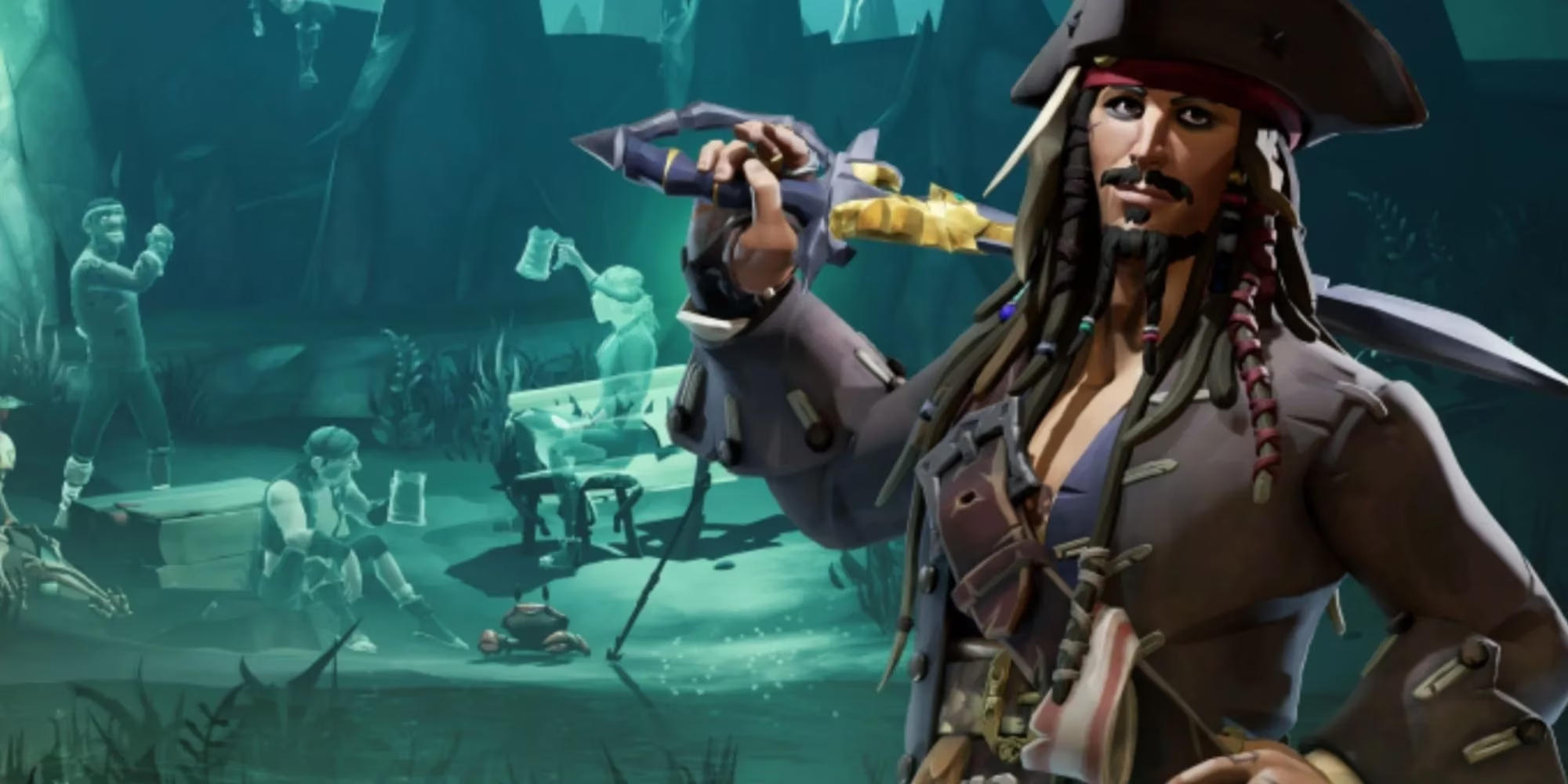
Sea of Thieves has sailed far from its rocky launch, evolving into a pirate fantasy so compelling it regularly swallows weekends whole. Yet its particular flavor of punishment lies not in static quests but in the unpredictable fury of multiplayer interactions. Solo swashbucklers quickly learn that a single mispositioned sloop against a fully crewed galleon can turn a peaceful trading run into a watery grave in seconds. The core horror? Boarding actions. If an enemy crew grapples onto your ship, you’re effectively fighting a gang ambush in a phone booth, and the game provides exactly zero sympathy. The 2026 seasonal updates have only added more diabolical tools for boarding enthusiasts, ensuring that solo players must treat ship positioning as a life-or-death art form — and even then, an exceptional enemy crew can still make you walk the plank.
For those who master the chaos, Sea of Thieves rewards with some of the most exhilarating team-based PvP in existence. Just be prepared to sink. A lot.
Minecraft: The Blocky Abyss That Eats Afternoons
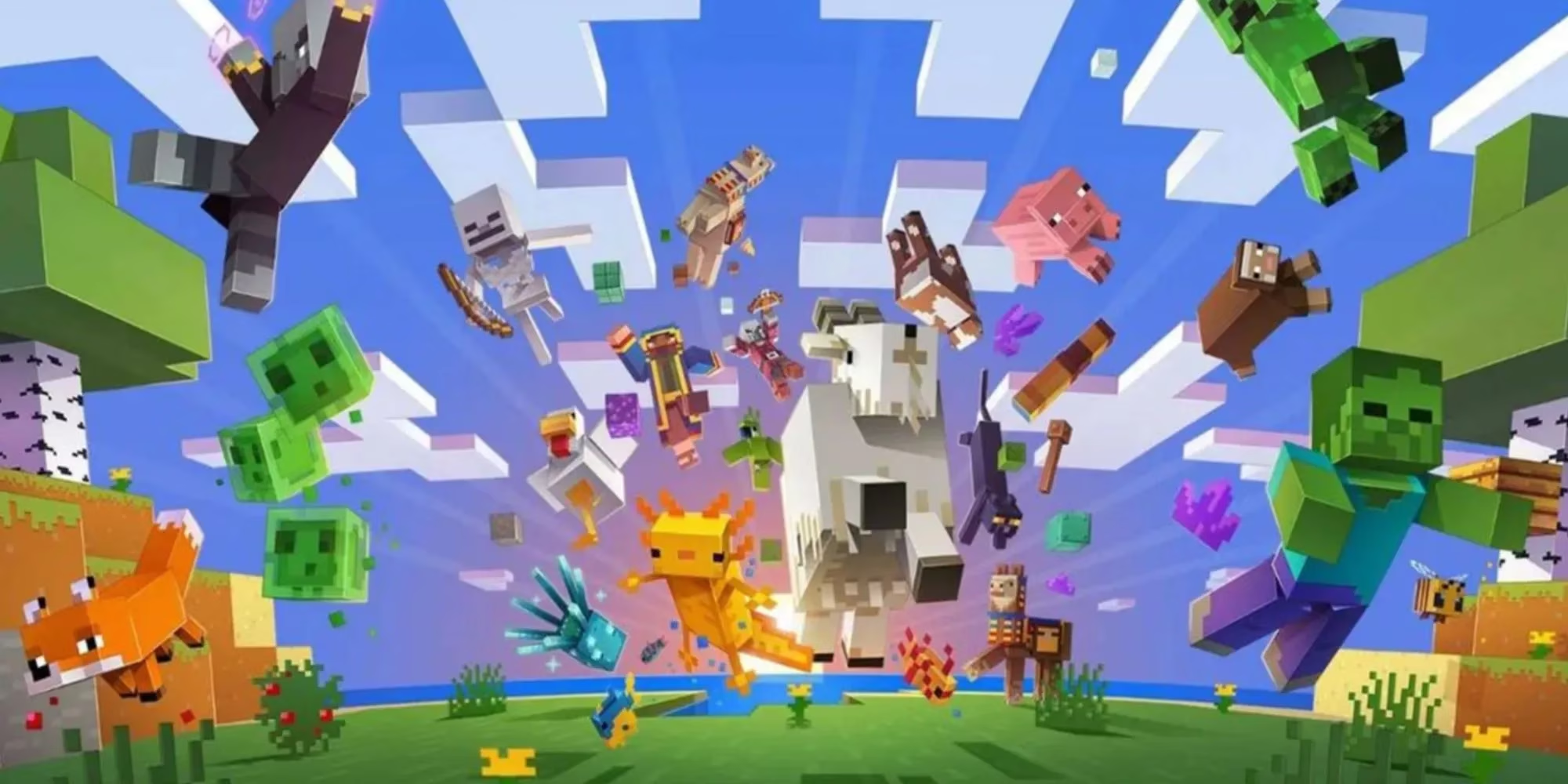
On the surface, Minecraft is a harmless world of cubes. Underneath, it’s a psychological labyrinth. The depth here is not in twitch reflexes but in resource management, crafting dependency chains that could baffle an industrial engineer, and the sheer scale of what a player can attempt. Trying to build an underwater dome in survival mode, for example, is an exercise in liquid despair — one misplaced bucket and you’ll be swimming for your life while drowned zombies applaud.
The real danger, still claiming victims in 2026, is the false sense of security. Players get so fixated on finding a diamond vein that they step backward into lava, or miss the creep-hiss of a creeper until it’s too late. And if a player dares to experiment with Minecraft’s script engine, they enter a whole new dimension of suffering where logic errors can undo hours of work with a single syntax mistake. It’s difficulty of the sneakiest kind: you don’t realize you’re being challenged until your inventory spills into the void.
ReCore: Jumping Puzzles That Demand Jedi-Level Precision
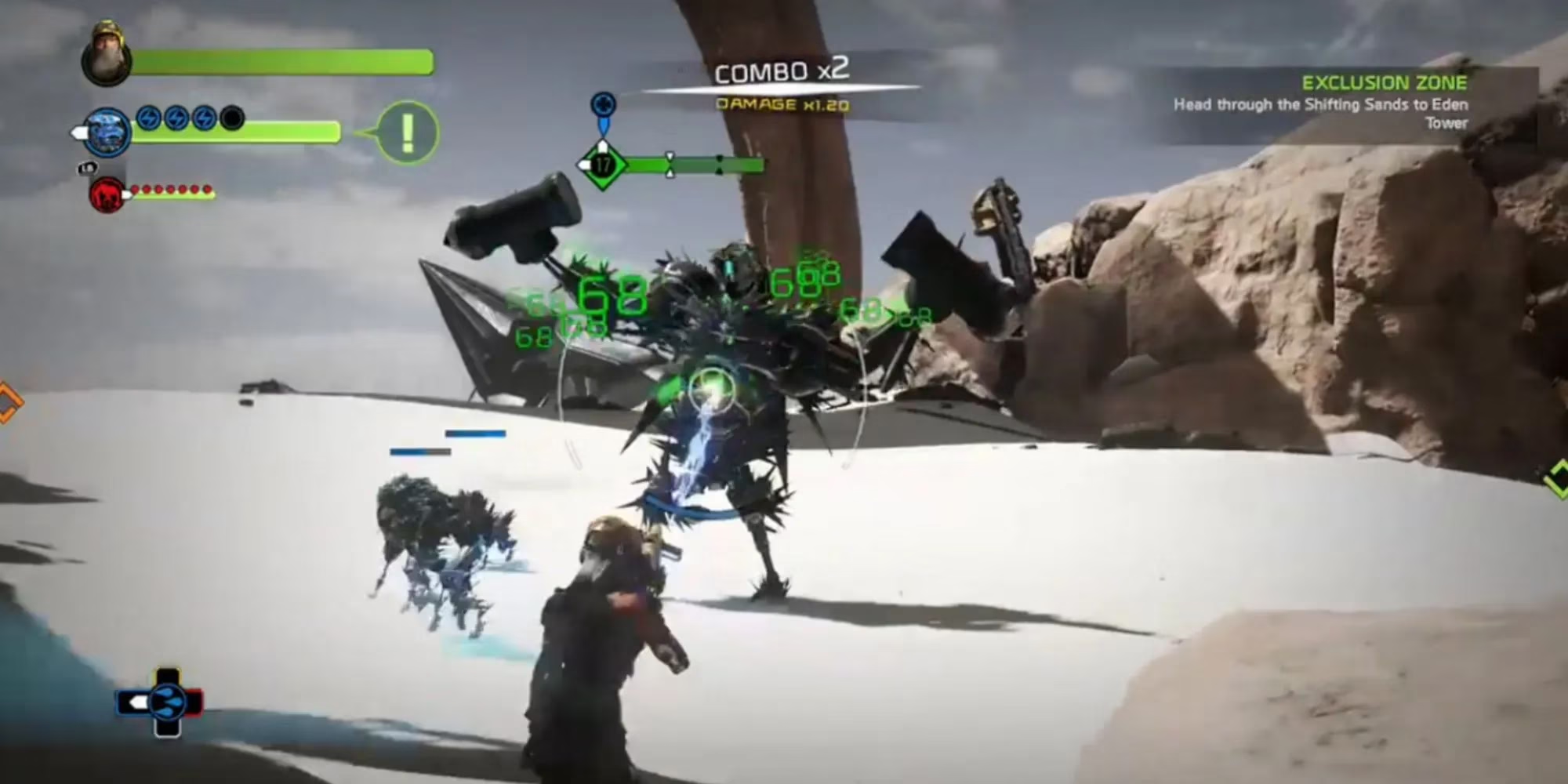
ReCore presents itself as an open-world adventure on the colony of New Eden, but instead of unchecked freedom, it throws platforming gauntlets and logic puzzles at anyone hoping to see the sights. Players who struggle with spatial reasoning will find the world’s gates firmly closed until neurons are properly rearranged. The experience reaches its zenith — or nadir — with the final tower climb. Platforms must be jumped with an accuracy that would shame a metronome, and one mistimed leap returns you to the bottom as if the game is whispering, “Try again, maybe next decade.”
Even standard platform sections feel like they were designed by someone who never forgave the player for starting the game. In 2026, with guides and walkthroughs flourishing online, the puzzles remain genuine brain-benders, which makes ReCore a cult favorite for masochists who think precision jumping is a form of meditation.
State of Decay: Where Permadeath Is Your Permanent Companion
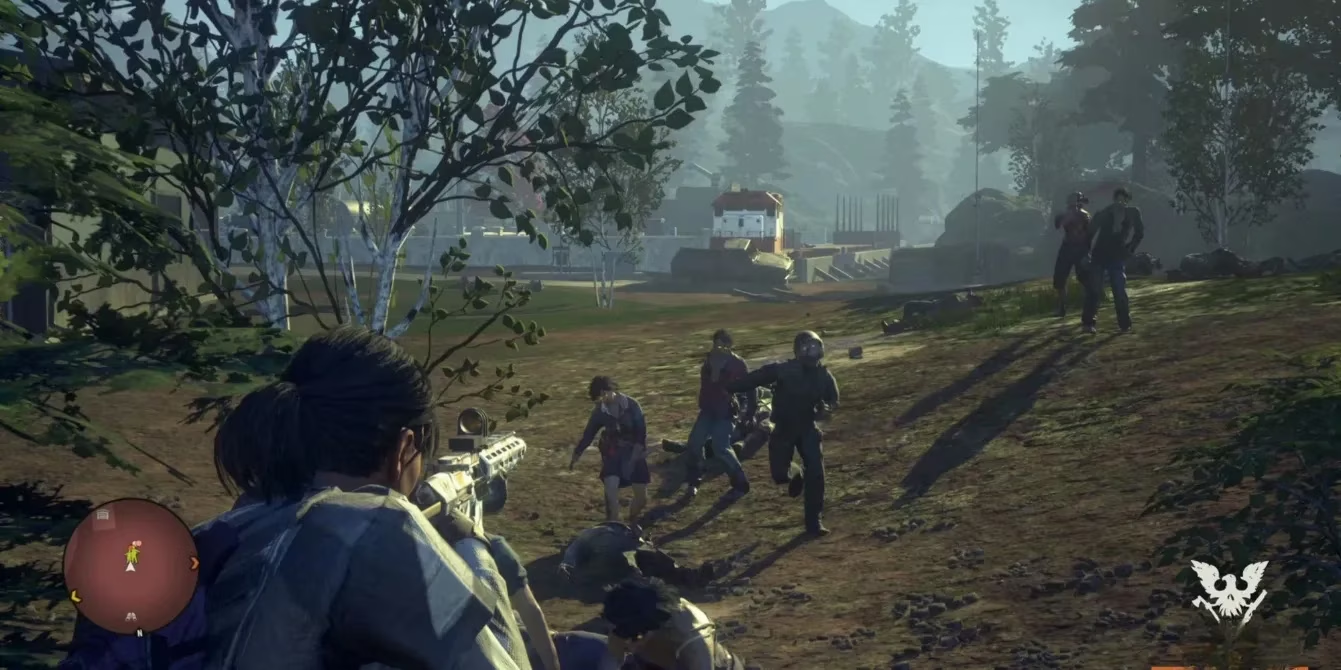
If the word “zombie” doesn’t immediately make your stress levels spike, State of Decay will fix that. This franchise deviates from the usual survivor fantasy by demanding meticulous base management while simultaneously throwing hordes at your fledgling community. The early game is a crucible of micromanagement torture: one lone survivor, few resources, and a map full of undead that view you as a walking happy meal. Many have argued the game doesn’t respect the player’s time, and they’re not entirely wrong — every choice carries weight, and a single slip can mean permanent character loss. Yes, permadeath. In a cruel twist, that veteran survivor you’ve been grooming with the best gear can be gone forever because a feral zombie decided today was the day.
By 2026, the sequel’s four-player co-op mode has definitely spiced up the fun, but it hasn’t made the game softer. Coordinating with friends turns base defense into a frantic opera of shouted instructions and last-ditch molotovs. It’s a high-stakes open-world experience where even a well-stocked fortress feels about as safe as a cardboard box in a hurricane, and that’s precisely why fans keep coming back for more punishment.
Each of these games wears its difficulty like a badge of honor, and in an era of endless hand-holding tutorials, they stand as monuments to the principle that true exploration should sometimes leave you stranded, exasperated, and oddly satisfied. Microsoft published them, but the real cost is borne by the players — measured in retries, lost survivor epilogues, and the quiet sound of a controller hitting the couch in frustration.