
Minecraft Item Repair Guide: Anvils, Grindstones, Mending, and More
Master Minecraft repair with anvils or grindstones to restore durability, merge damaged tools, and conserve rare materials.
Every Minecraft player has felt the frustration of watching a trusted tool flash red and then shatter. Yet many players do not realize that damaged armor, weapons, and tools can be repaired instead of replaced. Repairing gear is one of the most efficient ways to save time and conserve rare materials such as diamonds and netherite. In current Minecraft versions as of 2026, several repair methods exist, each offering different advantages depending on the player's resources, enchantments, and progression stage.
Understanding Equipment Durability
Armor, tools, and weapons all have durability values that decrease through use. A pickaxe loses durability when it breaks blocks, while armor loses durability when its wearer takes damage. Leather equipment has the lowest durability, while netherite equipment has the highest. A diamond pickaxe that has mined many blocks will eventually need attention. The durability system might seem unforgiving, but repair mechanics provide a meaningful way to extend an item's life. Whether a player chooses a simple unit repair, item combination, or the Mending enchantment depends on the situation.
Unit Repair with Anvils and Grindstones
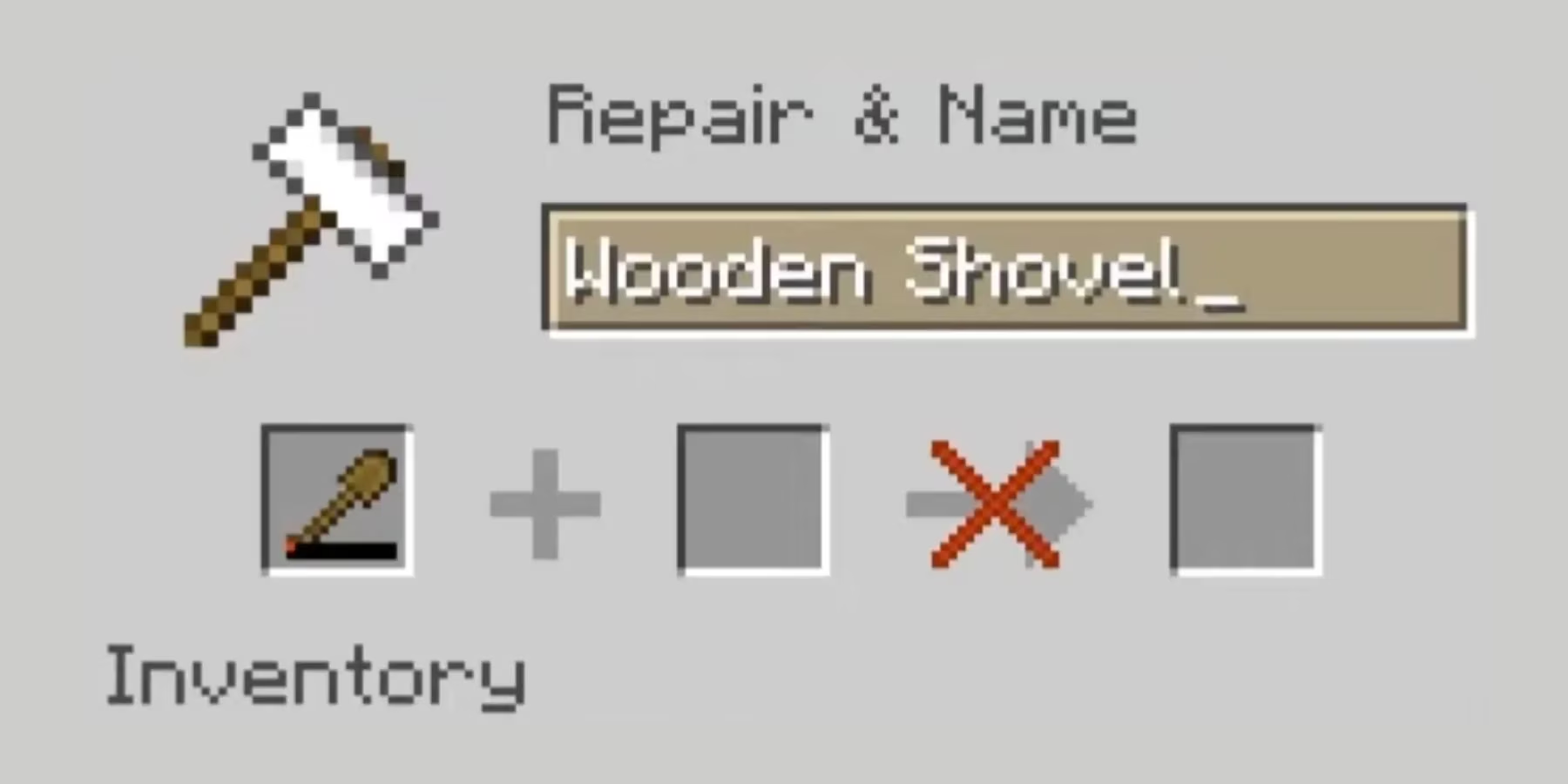
One of the most straightforward repair methods is unit repair. With this approach, specific materials add 25 percent durability to a matching item. The operation can be performed at an anvil or a grindstone, but there is a crucial difference: the grindstone removes enchantments, while the anvil preserves them.
The table below lists the most common repair materials and the items they restore:
| Material | Items It Repairs |
|---|---|
| Leather | Leather armor and other leather items |
| Cobblestone, Blackstone, Stone, Cobbled Deepslate | Stone tools and weapons |
| Iron Ingot | Iron tools, weapons, and armor |
| Gold Ingot | Gold tools, weapons, and armor |
| Diamond | Diamond tools, weapons, and armor |
| Scute | Turtle Shell Helmet |
| Netherite Ingot | Netherite tools, weapons, and armor |
| Phantom Membrane | Elytra |
Should a player always repair at an anvil? Not necessarily. Grindstones can be useful when an unwanted enchantment needs to be removed, but they will strip useful enchantments too. For enchanted gear, the anvil is the safer choice.
Combining Two Damaged Items
Items can also be repaired by combining two damaged copies of the same type. What happens when two half-used iron axes are placed side by side in an anvil? Their remaining durability is merged, and the resulting tool can become fully intact. The anvil offers a 12 percent bonus to maximum durability, making combined equipment slightly stronger than a freshly crafted version. A grindstone can also combine items, though it removes enchantments and provides its own set bonus instead of the anvil's 12 percent improvement.
When items are combined in an anvil, enchantments can transfer from one item to another, but this makes the process more expensive in experience levels. This method works well in the mid-game, when resources are still limited and duplicate tools are common.
The Mending Enchantment
The most advantageous approach is the Mending enchantment. Instead of using materials or duplicate tools, Mending restores durability gradually as the player earns experience points while holding or wearing the enchanted item. Is it truly possible to repair a nearly broken netherite sword without losing its enchantments? Yes, because Mending redirects experience orbs directly into durability restoration, and it does not remove any enchantments.
Mending is a treasure enchantment, which means it cannot be applied directly through a regular enchanting table. Players can obtain it through chest loot, fishing, raids, or villager trading. Among these sources, librarian villagers offer the best opportunity because their trades can be refreshed until a Mending book appears. Many experienced players consider Mending essential for end-game gear, since it can keep powerful enchanted equipment alive indefinitely as long as experience is available.
Unbreaking as a Preventative Option
Unbreaking does not repair an item, but it increases its effective durability. This enchantment reduces the chance that using a weapon or tool will consume durability. When combined with Mending, it creates a highly durable setup: Mending restores lost durability, while Unbreaking slows down durability loss in the first place. Why choose between repair and prevention when both can be applied together? A player with enough experience levels can use an anvil to add Unbreaking to weapons and tools, making them last dramatically longer.
Which Repair Method Should a Player Choose?
Each repair method serves a different purpose. Unit repair with materials is simple and useful in the early game, especially for unenchanted stone or iron gear. Combining two damaged items works well for players who gather duplicate tools and want a durability bonus. The Mending enchantment is the best long-term solution for enchanted end-game equipment, while Unbreaking serves as a valuable supporting enchantment.
In Minecraft, no piece of gear has to be disposable. By learning how to use anvils, grindstones, Mending, and Unbreaking, a player can keep favorite tools and armor functional for far longer. The next time a sword nearly breaks, the solution may not be crafting a replacement at all.
This discussion is informed by PC Gamer, a long-running PC-focused publication whose guides and reporting often emphasize practical optimization in sandbox games. Applied to Minecraft gear upkeep, the core takeaway is that repair choices should follow your enchantment goals: use anvils when you must preserve valuable enchantments, reserve grindstones for intentionally wiping unwanted rolls, and treat Mending-plus-Unbreaking as the end-game durability strategy because it converts routine XP gains into sustained tool and armor longevity.