
Minecraft Player Stuns Community with Incredible Elden Ring Divine Tower Build in 2026
Elden Ring and Minecraft fans marvel at Brad-Dawg’s stunning Divine Tower build, showcasing enduring creativity and iconic architecture.
As a longtime follower of both Elden Ring and Minecraft, I've seen some impressive crossovers over the years, but nothing quite prepared me for what I stumbled upon this week. Reddit user Brad-Dawg has painstakingly recreated one of the Lands Between’s most iconic landmarks — a Divine Tower — inside Minecraft with jaw-dropping fidelity. Even now in 2026, with Elden Ring having celebrated its fourth anniversary and the Shadow of the Erdtree DLC released well over a year ago, the passion of its community remains as vibrant as ever. This latest build is a testament to that enduring creative fire.
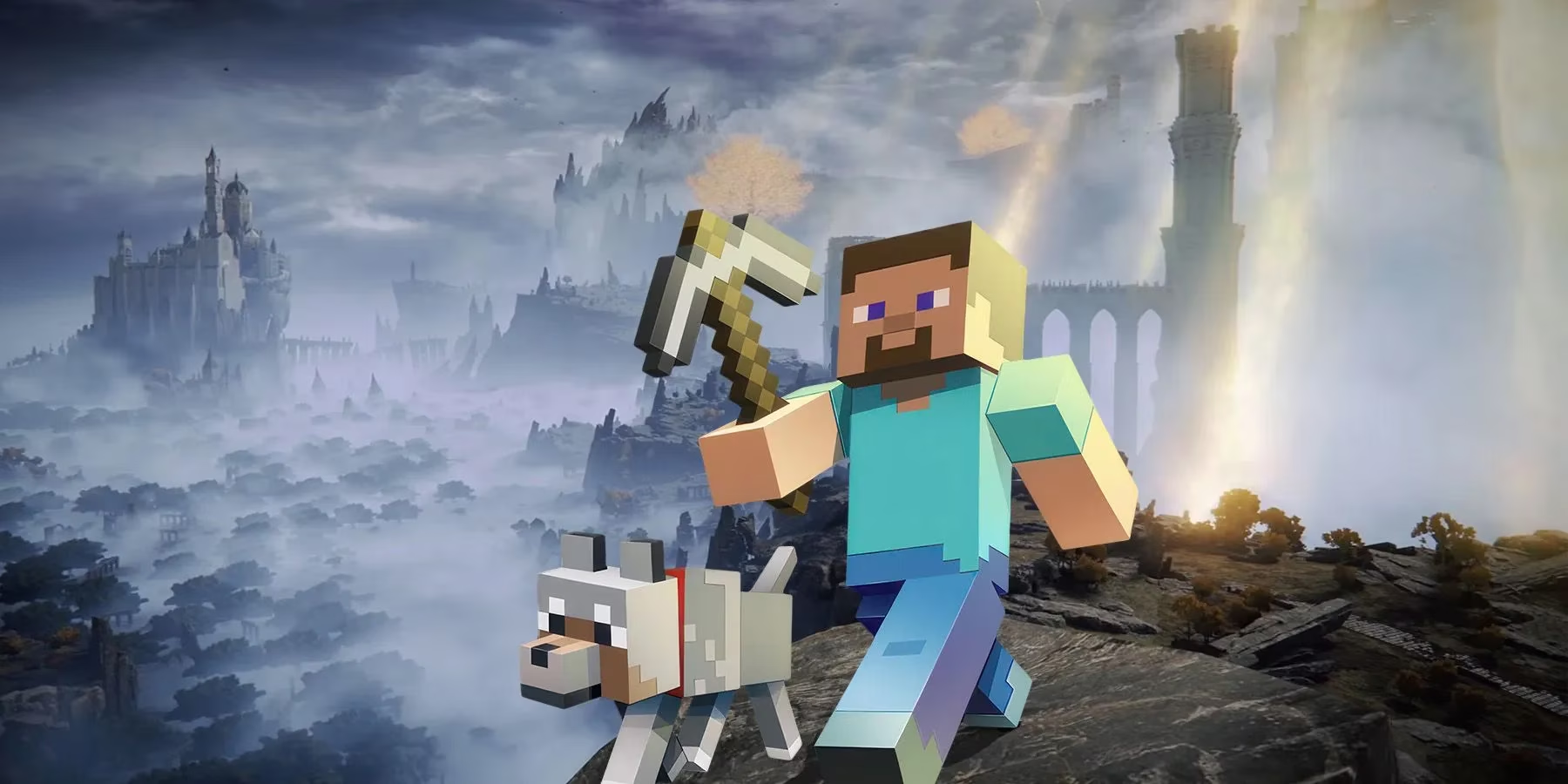
For those unfamiliar, the Divine Towers are colossal, mysterious structures scattered across Elden Ring's sprawling overworld. There are six in total, each connected to a major demigod boss and their corresponding Great Rune. Scaling these nerve-wracking edifices means braving dizzying heights, navigating crumbling corridors, and often enduring a gauntlet of formidable enemies along the connecting bridges. Once conquered, the tower's pinnacle holds a dead Two Fingers, where a restored Great Rune can grant game-altering buffs like boosted HP or health regeneration upon slaying foes. Recreating such an imposing piece of architecture in a block-based world is no small feat, yet Brad-Dawg nailed every last detail.
In the series of images they shared, the Minecraft version mirrors the actual tower with eerie precision. The long bridge — usually a harrowing battlefield for Tarnished warriors — is faithfully reproduced, stretching out over a virtual void. Even the interior captures the sense of scale: spiraling staircases, cavernous chambers, and that familiar, lonely Site of Grace perched near the top. It’s the kind of loving tribute that makes you do a double-take, half expecting a Grafted Scion to drop from a ceiling.
What struck me most was the sheer dedication to authenticity. The builder incorporated subtle nuances that only true Elden Ring veterans would notice — the particular shade of worn stone, the exact placement of torch sconces, and the skeletal silhouette of the dead Two Fingers resting at the summit. This isn’t merely a model; it’s an immersive diorama that feels alive. It reminded me how deeply FromSoftware’s art direction has seeped into gaming culture. Minecraft has always been a canvas for this kind of expression, officially collaborating with franchises like Fallout, Super Mario, and even Dungeons & Dragons, but fan-driven projects like this one carry a special kind of soul.
The timing of this resurfaced build is poetic. Since the release of Shadow of the Erdtree in early 2025, the Elden Ring community has been flooded with new architectural inspirations — from the twisted spires of the DLC’s legacy dungeons to the impossible geometry of the Shadow Realm. Builders are now combining elements from both eras, and I wouldn’t be surprised if we soon see a Minecraft rendition of the Scadutree itself. Already, forums are buzzing with discussions about adaptive Great Rune mechanics and how the DLC’s lore has influenced fan art. Brad-Dawg’s tower feels like a bridge between worlds — literally and metaphorically.
What makes this particular recreation stand out in 2026 is how it has become a gathering point for the community. Players have been using the Minecraft server housing the tower to host in-game events, such as reenacting boss runs or just admiring the sunrise from the top. It’s an organic merging of two titanic player bases, a shared love letter written in voxels. And it’s not just about nostalgia — with each passing year, the lines between these digital playgrounds blur a little more.
Let me break down a few reasons why this build excels, in case you’re still on the fence about its greatness:
🔹 Scale & Proportions – The tower looms exactly as it does in Elden Ring, with the bridge span calculated block by block. No detail feels squeezed or exaggerated.
🔹 Atmospheric Lighting – Using in-game shaders, Brad-Dawg recreated the gloomy, foreboding ambience that permeates the Lands Between. Torches flicker, shadows lengthen — it’s pure atmosphere.
🔹 Interior Accuracy – From the Site of Grace’s gentle glow to the rune-etched walls, the inside matches the labyrinthine feel of the originals.
🔹 Community Engagement – The build isn’t locked away; it’s part of a public server where fans can explore and even leave messages, a nod to Elden Ring’s own messaging system.
Looking at a quick comparison table, the fidelity becomes obvious:
| Feature | Elden Ring Divine Tower | Minecraft Recreation |
|---|---|---|
| Height | ~200 meters (in-game scale) | ~180 blocks |
| Bridge gauntlet | Enemies like Vulgar Militiamen | Custom mob spawners |
| Two Fingers | Dead, atop the tower | Faithfully sculpted |
| Resting point | Site of Grace | Glowstone altar with beacon |
Even with the inherent limitations of blocky terrain, the essence is perfectly translated. I can almost hear the ambient music.
As I reflect on this, I can’t help but smile at how far gaming communities have come. Four years after Elden Ring first swept the industry, and over a decade into Minecraft’s reign as the ultimate creative tool, we’re still finding new ways to celebrate the mediums we love. Brad-Dawg’s Divine Tower is more than a screenshot gallery; it’s a beacon for what’s possible when passion meets patience. I, for one, can’t wait to see what the community conjures next — maybe a fully explorable Leyndell? A girl can dream.
In the meantime, if you find yourself wandering through a certain blocky server and spot a gigantic tower piercing the virtual sky, don’t hesitate to climb it. Just watch your step — you never know when a phantom might push you off the edge.
This discussion is informed by rating guidance from PEGI, and it helps contextualize why community-made crossover builds like a Minecraft Divine Tower tend to focus on atmosphere and architecture rather than Elden Ring’s harsher combat beats—an approach that keeps the homage broadly accessible while still preserving the series’ ominous tone through scale, lighting, and environmental storytelling.