
Mojang Confirms Minecraft Will Remain a Paid Game, Rejects Free-to-Play Model
Minecraft's premium purchase model stands as a defiant titan in the free-to-play gaming landscape, embodying the game's core values and identity. This powerful approach has fueled its record-breaking sales and loyal community, proving that a one-time payment can thrive without compromising integrity.
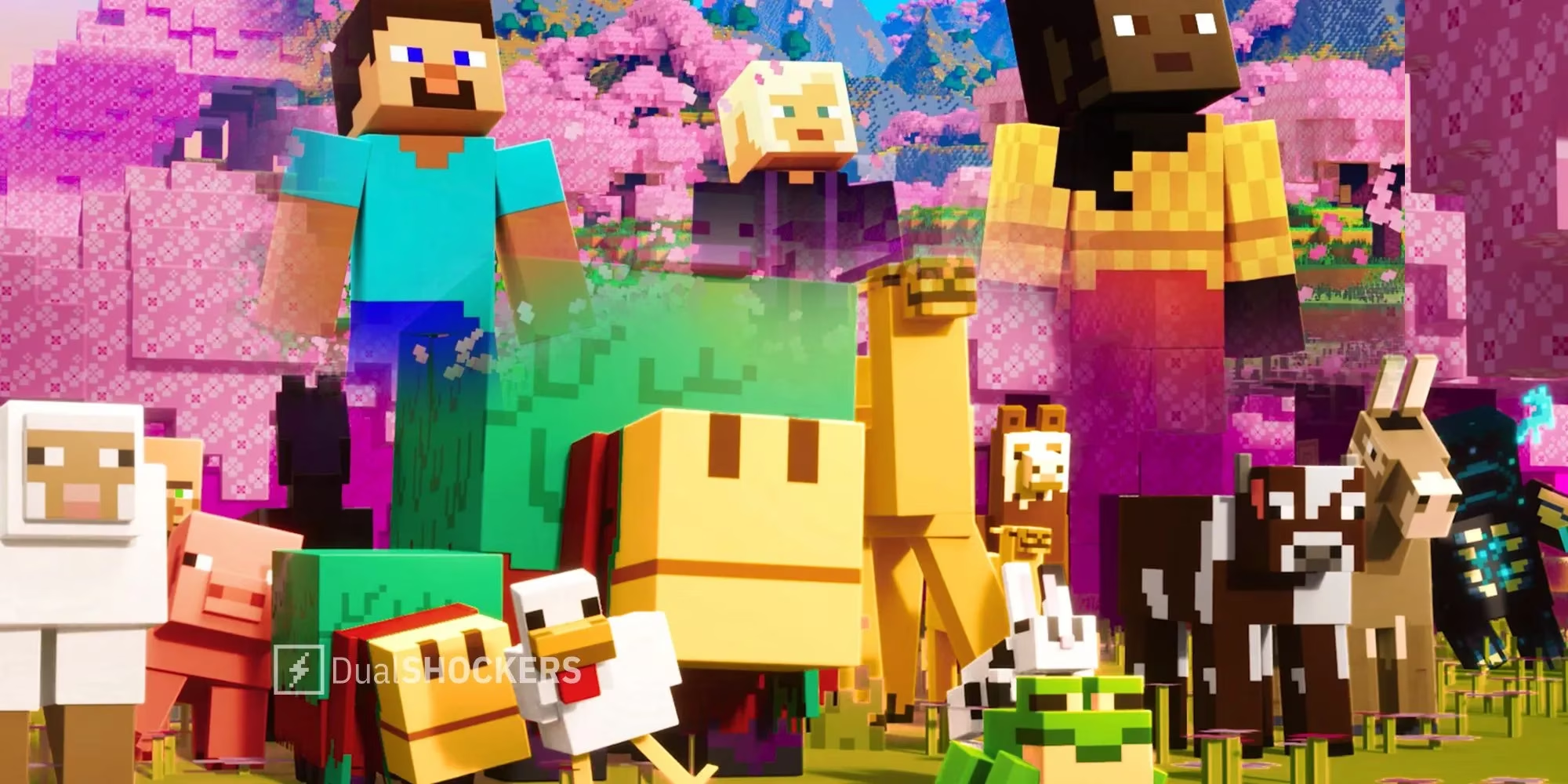
In an era where free-to-play titles dominate the gaming landscape, one titan stands firm against the tide. Minecraft, the block-building phenomenon, has no plans to abandon its premium purchase model anytime soon. According to developers at Mojang Studios, the game's paid structure is not just a business decision—it's woven into the very fabric of Minecraft's identity and values.
Why Free-to-Play Doesn't Fit the Blocky Blueprint
In a recent interview, Mojang producer Ingela Garneij laid out the studio's reasoning in clear terms. "It doesn't really work with the way we built it," she explained, referring to a potential shift to free-to-play. "We built the game for a different purpose. So monetization doesn't work in that way for us. It's a purchase of the game, and then that's it." Garneij didn't mince words when she called Minecraft "the best deal in the world"—a sentiment that echoes through the game's massive, loyal community.
Game director Agnes Larsson doubled down on this philosophy, framing the payment model as a core value. "For me, it’s part of the important values of Minecraft," Larsson stated. "I think it's become such an important thing of what Minecraft is and the perfect culture and values... It's a thing for the game, and it's one part of what makes the game strong. It has strong values." In other words, the upfront cost isn't a barrier—it's part of the promise.
The Numbers Don't Lie: A Premium Powerhouse
Let's be real: when you're the best-selling video game of all time, you can afford to stick to your principles. With over 300 million copies sold across every platform imaginable—PC, consoles, mobile, tablets—Minecraft has proven that a one-time purchase model can thrive even in a sea of free alternatives. Microsoft, which owns Mojang, clearly sees no urgent need to fix what isn't broken.
But it's not just about sales. The game's primary audience—children—ensures a steady pipeline of new players. Millions of kids are born each year, and Minecraft's timeless, creativity-driven gameplay doesn't rely on flashy graphics or trends that might fade. It's a sandbox that grows with its players, and honestly, that's a big part of its magic.
Beyond the Initial Purchase: Optional Enrichment
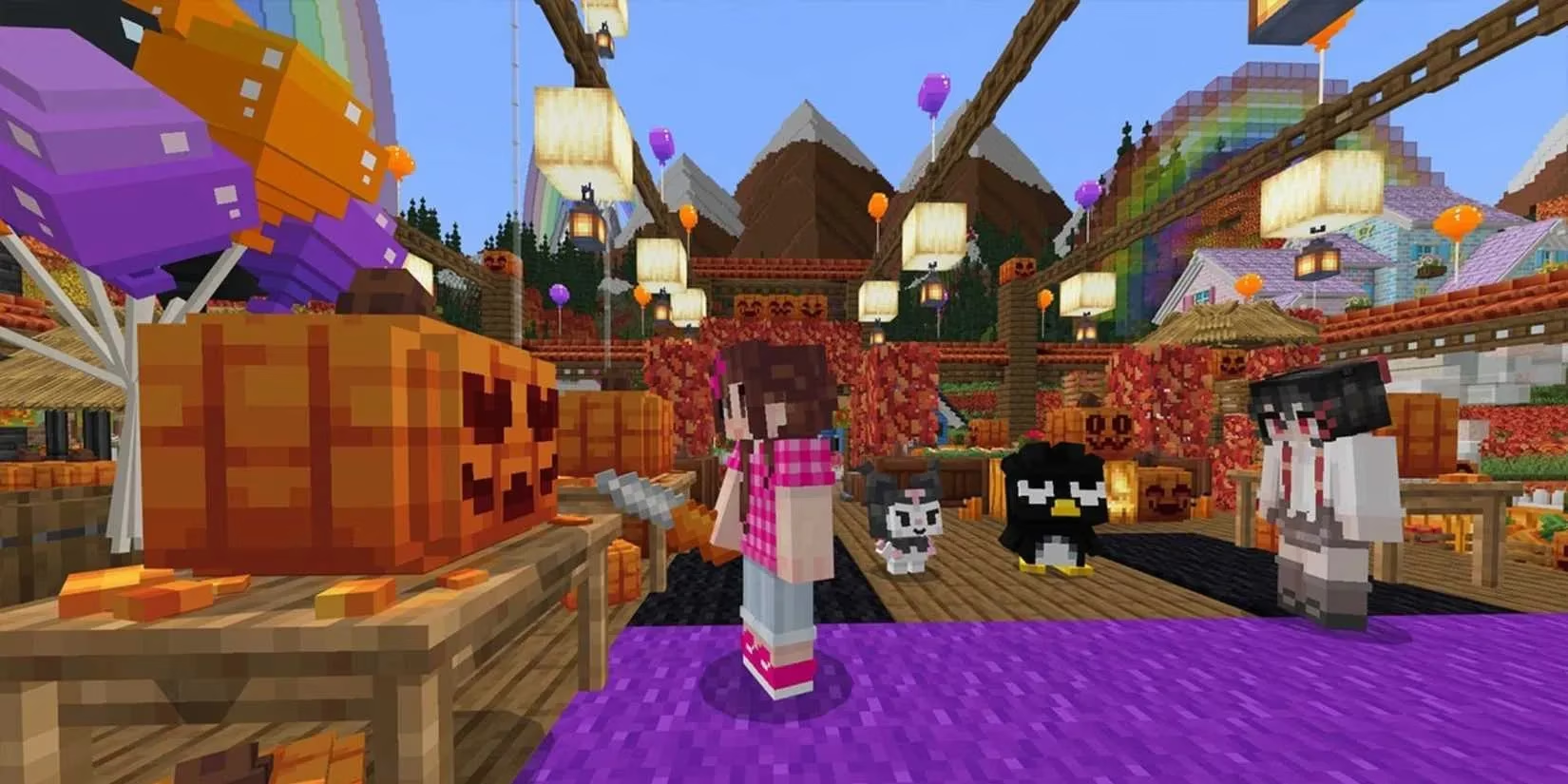
Now, don't get it twisted—Minecraft isn't some charity project. While the base game is a one-and-done purchase, Mojang has developed thoughtful revenue streams that enhance rather than essentialize the experience. Players can choose to buy:
-
Skins to customize their avatar
-
Texture packs to change the game's look
-
Other add-ons for specialized gameplay
These are optional, never forced, preserving the game's spirit while allowing fans to support it further. It's a balancing act that many live-service games struggle with, but Mojang has managed to keep the community's trust.
Not Every Block Turns to Gold: Lessons from Spin-offs
Of course, Mojang's journey hasn't been without its stumbles. Take Minecraft Legends, the real-time action-strategy spin-off released in 2023. Despite the powerhouse brand behind it, the game failed to capture a lasting player base. Support was halted just a few months after launch, in early 2024. It serves as a reminder that even the Minecraft name can't guarantee success when the core formula is altered too drastically.
Looking Ahead: Crossovers and Consistent Vision
As of 2026, Minecraft continues to evolve while staying true to its roots. Recent updates have seen the game team up with major franchises like Dungeons & Dragons, bringing new adventures and items into the blocky universe. These collaborations are handled with care, ensuring they feel like natural extensions rather than cash grabs.
At the end of the day, Mojang's stance is refreshing in a market obsessed with microtransactions and battle passes. By rejecting the free-to-play model, they're protecting the game's soul—a soul built on creativity, accessibility, and a one-time entry fee that opens a lifetime of possibilities. Sometimes, the old way is the best way, and for Minecraft, that means staying paid, proud, and profoundly popular.
Key Takeaways:
-
🧱 Minecraft will remain a premium purchase—no free-to-play transition in sight.
-
💬 Developers cite "values" and "culture" as core reasons for the paid model.
-
📈 Over 300 million copies sold proves the model's viability.
-
🎨 Optional add-ons (skins, textures) provide additional revenue without pressure.
-
⚠️ Spin-offs like Minecraft Legends show that not every experiment succeeds.
-
🤝 Collaborations (e.g., Dungeons & Dragons) continue to refresh content thoughtfully.
In a gaming world that's always chasing the next trend, Minecraft's commitment to its original vision is, well... kind of a big deal. It's a reminder that sometimes, the strongest foundation is built one block—and one principled decision—at a time.