The Cubist Conundrum: VFX Artists and Fans Respond to the Aesthetic of A Minecraft Movie
The Minecraft movie trailer's VFX and fan reception ignited a fiery debate on adapting digital worlds, as visual effects artists critiqued its blocky inconsistencies while the fandom's collective disappointment echoed widespread disapproval.
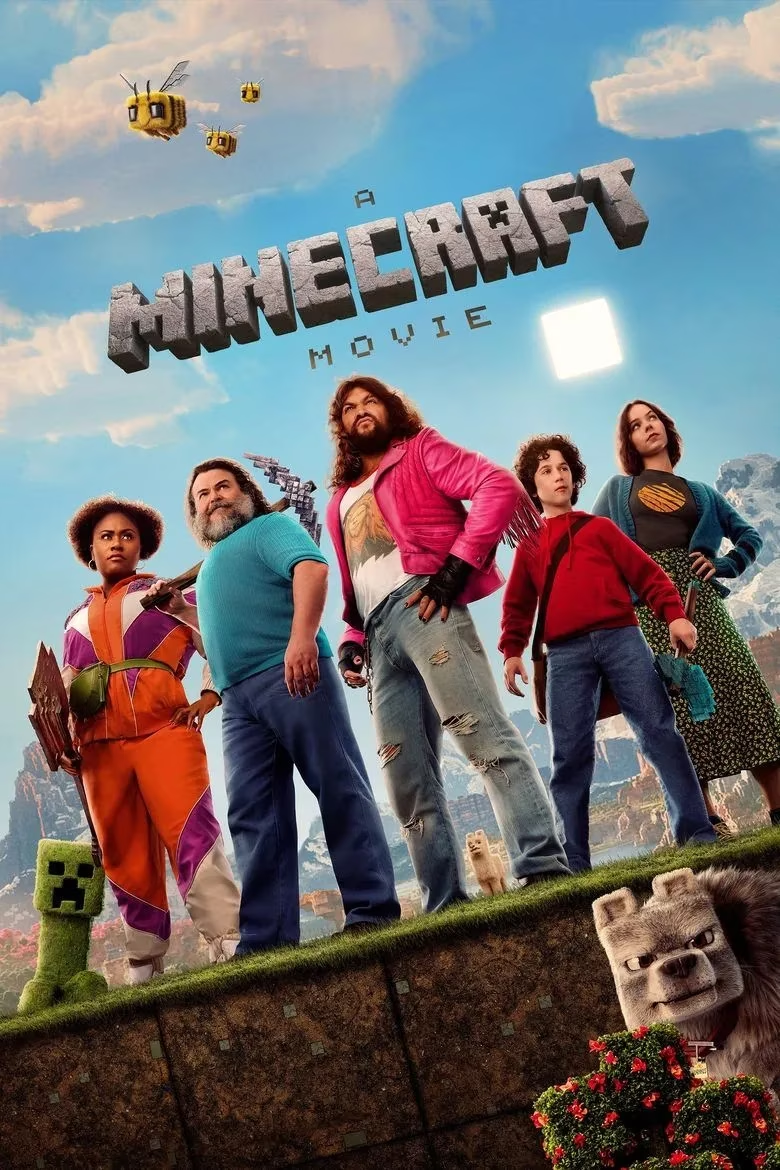
The first shimmer of digital sunlight on a blocky horizon, the curious grain of a pixelated leaf—these are the sacred textures of a generation's imagination. Yet, when the inaugural trailer for A Minecraft Movie materialized in 2024, it did not land with the soft thud of placed dirt, but with the jarring clatter of dissonant expectations. This CGI and live-action hybrid, boasting a constellation of stars like Jason Momoa and Jack Black, became an unexpected Rorschach test for visual effects artistry and fan fidelity. Directed by Jared Hess and slated for an April 2025 release, the film's preview sparked a conversation that extended far beyond mere anticipation, probing the very soul of adapting a world built from digital dreams.
The VFX Lens: A Critique from the Craft's Inner Sanctum
The reaction from the esteemed artists of Corridor Crew was a masterclass in professional whiplash. Their initial impressions were deceptively positive, describing the visuals as "super clean" and praising the backgrounds. But this admiration soon curdled into bewildered amusement, a sentiment crystallized in their collective disbelief that "this is the real movie." They peered behind the curtain of spectacle and saw, to their surprise, a mechanism of surprising simplicity. One artist remarked that many shots looked as if they "could be filmed on a tiny green screen in your garage," highlighting the straightforward, almost stage-like blocking that kept the star-studded cast huddled closely together.
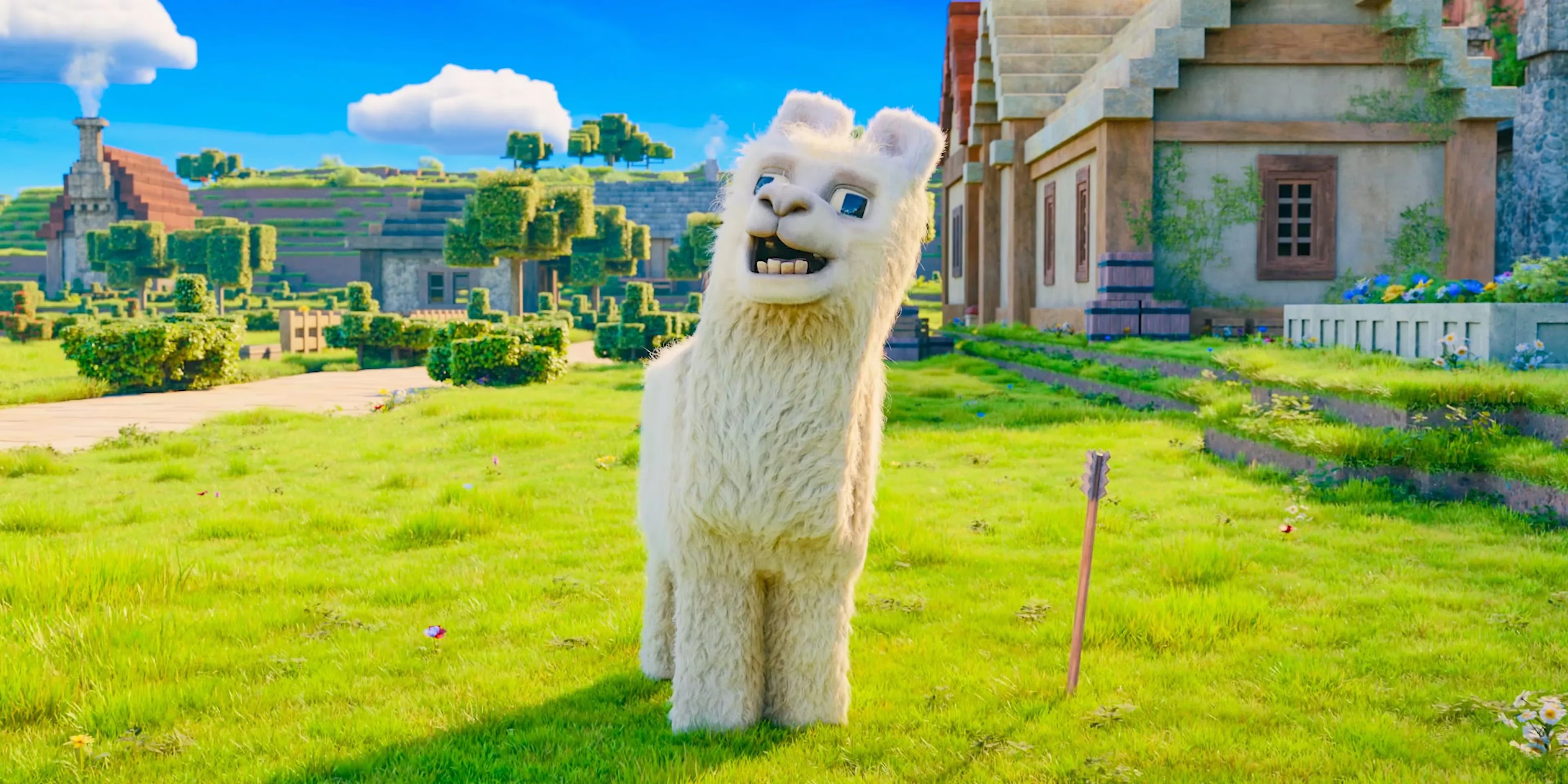
Their most technical—and poetic—critique centered on the film's titular element: the blocks. Rendering the game's iconic, jagged geometry for a cinematic universe proved a treacherous path. The artists noted a peculiar softening, a rounding of edges on creatures that should embody digital rigidity, making the animated animals seem less like native entities of a cubic realm and more like plush toys tossed into a computer simulation. Furthermore, they identified a profound inconsistency in scaling, where the fundamental logic of the block—its unwavering, predictable size—seemed to warp and bend without reason. It was as if the movie's visual language was an unstable dialect, forgetting its own grammatical rules.
The Fans' Forge: Where Disappointment is Crafted
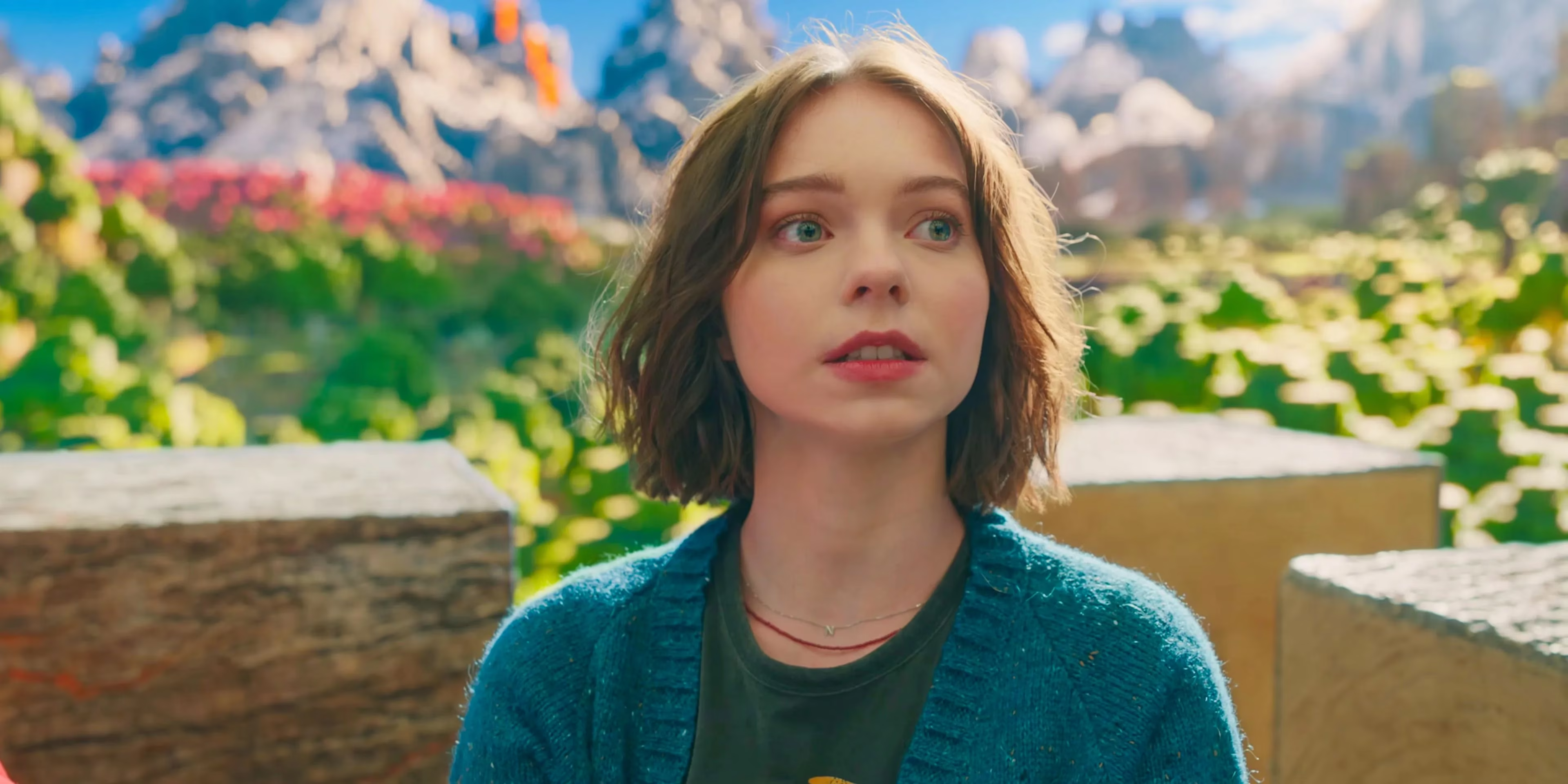
The Corridor Crew's analysis was not an isolated echo in a silent chamber; it resonated deeply within the cavernous halls of the game's fandom. Upon the trailer's release, social media platforms ignited with a fervor typically reserved for failed portal jumps or surprise Creeper encounters. The collective sentiment leaned heavily toward distaste. A common, and damning, comparison emerged: many viewers equated the film's aesthetic and perceived tone to the critically maligned 2024 video game adaptation, Borderlands. This was not a compliment but a shorthand for a shared failure to capture a game's essence.
Others took aim at the animation style itself, drawing unfavorable parallels to the early, uncanny designs of Sonic the Hedgehog that famously spurred a redesign. The peril of "realistic" animation, they argued, had struck again, sanding down the charming, abstract edges of Minecraft into something that felt neither authentically blocky nor convincingly alive. The film's world, for these fans, was like a meticulously detailed diorama seen through slightly warped glass—recognizable yet fundamentally off.
A Broader Canvas: CGI Adaptations and the Uncanny Valley of Expectation
The tumultuous reception to A Minecraft Movie's trailer is a single frame in a much longer, and often troubled, cinematic reel. It speaks volumes about the precarious state of CGI-heavy adaptations. One is reminded of the polarized response to 2019's photorealistic The Lion King, where breathtaking technical achievement was met with criticism for leaching the original's cartoonish heart and whimsy. While the projects differ, they share a core challenge: translating a pre-existing, beloved visual language—be it the hand-drawn savanna or the procedurally generated voxel—into a new medium.
This translation process is a high-wire act over a canyon of fan expectation. Every creative choice, from block texture to character movement, is scrutinized. The backlash against A Minecraft Movie began not with the final product, but with its first glimpse, a pre-release phenomenon that has become increasingly common. It underscores a growing tension between Hollywood's pursuit of high-fidelity realism and the specific, often stylized, art forms it seeks to emulate.
Cast and Creative Vision: The Human Elements in a Digital World
Amidst the debate over pixels and polygons, the human elements of the production offer their own intrigue. The film assembles a notably eclectic cast, a strategy that itself feels like crafting a tool from unexpected materials.
| Actor | Role | Noted For |
|---|---|---|
| Jason Momoa | Garrett | Action-hero physicality & charismatic intensity 🗡️ |
| Jack Black | Steve | Comedic genius & musical exuberance 🎸 |
| Emma Myers | Unknown | Rising star from Wednesday 👧 |
| Jennifer Coolidge | Unknown | Iconic, scene-stealing delivery 💅 |
The central premise—four misfits transported into the Overworld on a quest guided by Steve—suggests a classic fish-out-of-water adventure. The potential lies in the clash between the actors' distinct energies and the game's rule-based environment. Will Momoa's ruggedness feel as out of place as a diamond sword in a wooden hut? Can Black's humor thrive within the square confines of this universe? These performances could be the redstone circuitry that brings life to the CGI shell, or they could highlight its artificiality further.
Conclusion: An Unfinished Structure
As of 2026, with the film now released, the initial trailer's controversy serves as a fascinating pre-history. The journey of A Minecraft Movie from its first revealed frame reflects the immense challenges of modern adaptation. It must satisfy:
-
The Purists, who hold the game's aesthetic as sacred.
-
The General Audience, seeking a coherent and entertaining fantasy adventure.
-
The Studio, needing a visually impressive blockbuster.
Balancing these forces is akin to trying to build a intricate castle while the ground beneath it is constantly shifting between creative modes. The VFX artists' critique and the fans' fiery feedback were not merely about good or bad graphics; they were about authenticity, consistency, and the preservation of a unique digital soul. Whether the final construction stood firm or crumbled under the weight of its own ambitions is a story for the viewers who ventured into its cinematic Overworld. The trailer, in the end, was just the first block placed—a foundation upon which hopes and fears were equally built.