
The Hollow Echo of Blockbuster Ambition: How a Minecraft Film Stumbled in Another's Footsteps
A Minecraft Movie review unearths a misguided adaptation, echoing Super Mario Bros.' formula but lacking creative spark and narrative cohesion.
In the sprawling, pixelated landscape of 2026, where digital worlds are routinely transposed onto the silver screen, a peculiar artifact emerged: A Minecraft Movie. Its journey to the multiplex was a decade-long odyssey of development, a testament to the turbulent alchemy of adapting a generation-defining game. Yet, what finally materialized felt less like a crafted narrative and more like a frantic assemblage, a creation born from the echoes of another's success rather than its own creative spark. The film's jarring tonal shifts and narrative dead-ends whispered of countless rewrites, a story mangled by the hands of six credited writers, each perhaps trying to solve the same impossible puzzle. Was it a desire to honor the source, or was it a desperate, calculated grab for blockbuster glory? The answer, etched into every frame, pointed overwhelmingly to the latter.
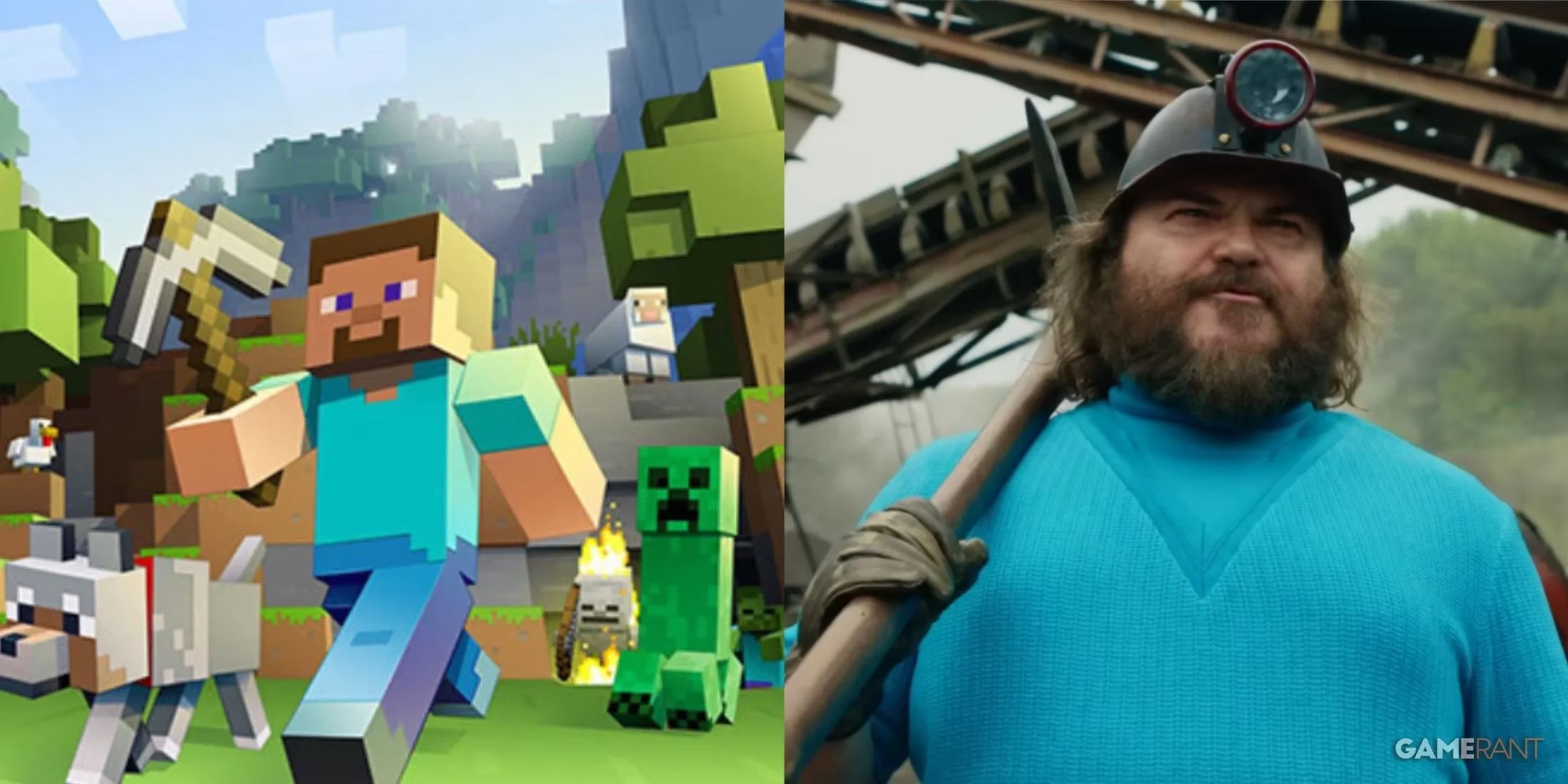
On the surface, the strategy seemed sound. Why not take cues from the reigning champion, the film that proved video game adaptations could print money? The 2023 The Super Mario Bros. Movie stood as a gargantuan financial behemoth, a cinematic power-up that resonated with audiences worldwide despite a tepid critical reception. But to confuse its commercial victory for a creative blueprint was a fundamental misstep. Super Mario Bros. itself was a compromised adaptation, a film that struggled to forge a coherent story from decades of beloved lore, caught in the eternal tug-of-war between fan service and mass appeal. Its success was undeniable, but its artistic merits were... debatable. Did A Minecraft Movie see a path to follow, or merely a formula to copy?
One of the most perplexing legacies it inherited was the use of jarring, nostalgic needle drops. In Super Mario Bros., the unmotivated barrage of 80s pop tunes felt like a strange, grating anachronism—a tenuous link to the era of the original game's release, yet utterly alien to the franchise's own iconic sonic identity, pioneered by Koji Kondo. The intent was clear: evoke a ready-made nostalgia, much like the Guardians of the Galaxy films did for Chris Pratt's filmography. Yet, the execution was hollow. Astonishingly, A Minecraft Movie pilfered this very trick. But where was the logic? Minecraft, born in 2011, shares no inherent bond with 80s synth-pop. The choice rendered the involvement of a genuine musical talent like composer Mark Mothersbaugh almost tragic, as his original score was frequently drowned out by these uninspired, era-mismatched musical intrusions. It was imitation at its most thoughtless.
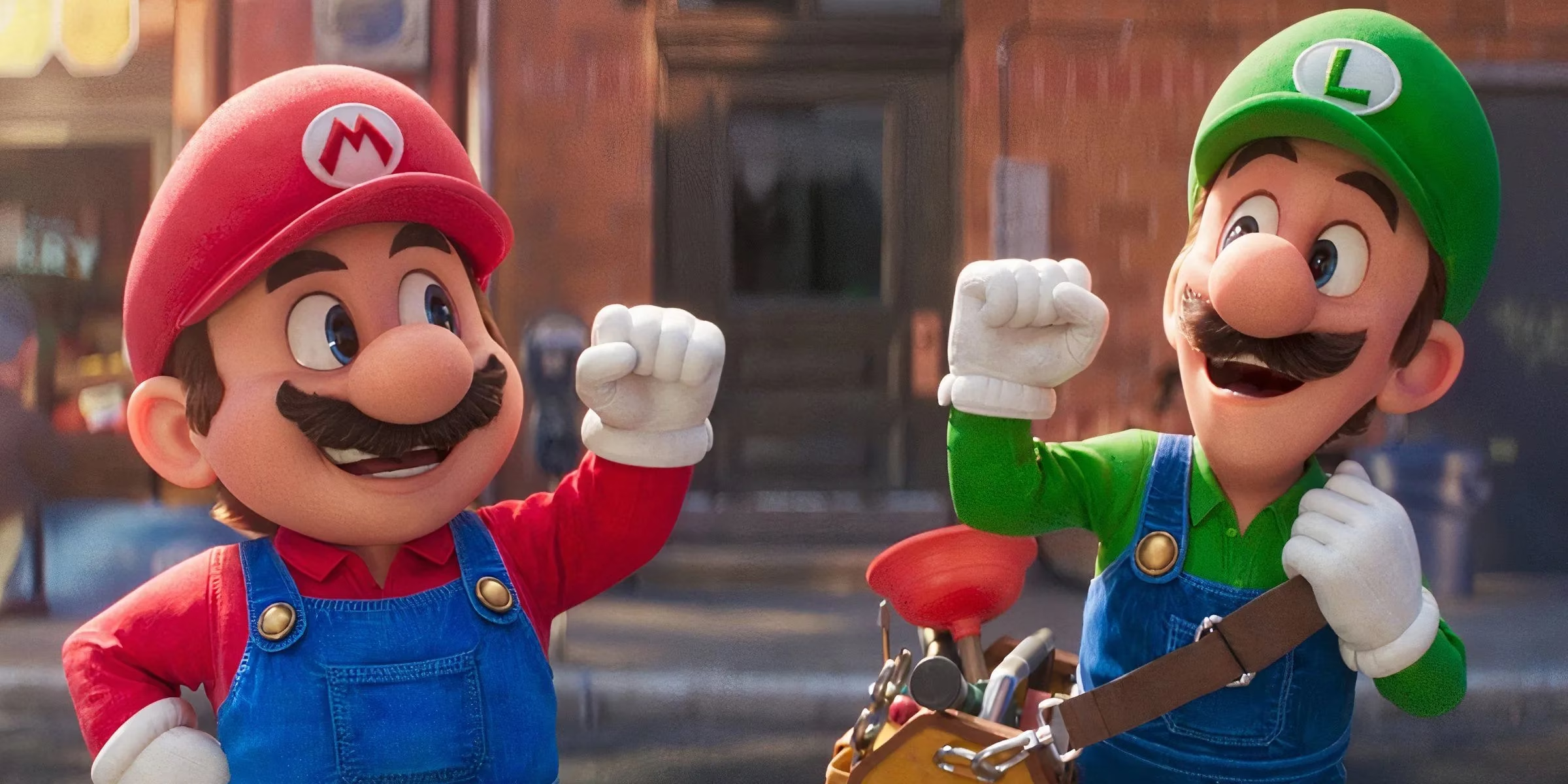
If the music was a misstep copied, the deployment of star power proved to be a lesson misunderstood. Super Mario Bros. did have one unequivocal triumph: Jack Black's performance as Bowser. It was a vocal tour de force, a character-driven marvel that balanced tradition with Black's own unique verve. This was highlighted further when contrasted with more subdued performances like Chris Pratt's Mario. Black's in-character piano ballad, "Peaches," didn't just land; it became a viral sensation, a perfect fusion of performance and meme. It was organic, character-centric, and wildly successful.
Seeing this, A Minecraft Movie—also featuring Jack Black in a lead role—saw not an artistic high point to aspire to, but a viral recipe to replicate. The result? A performance that was unhinged and sporadic. Re-teaming with director Jared Hess (Nacho Libre), Black seemed encouraged to riff and improvise without restraint. While undeniably entertaining in a vacuum, his portrayal of Steve felt untethered from the film's needs, an energetic sideshow that did little to serve the narrative. The attempt to manufacture another "Peaches"-moment was even more glaring. "Steve's Lava Chicken" stopped the film's already faltering momentum dead, a blatant, almost insulting plea for internet virality that rang hollow. It was alchemy attempted without the crucial ingredient: genuine inspiration.
| Element Lifted | In Super Mario Bros. Movie | In A Minecraft Movie | The Result |
|---|---|---|---|
| Nostalgic Needle Drops | Unmotivated 80s pop songs | Unmotivated 80s pop songs | 🤨 Jarring, drowns out original score |
| Jack Black's Role | Character-driven, iconic song ("Peaches") | Unhinged improvisation, forced song ("Lava Chicken") | 🎭 Entertaining but narratively hollow |
| Fan Service Approach | Speed-run through iconic game moments | Lengthy, namedropping Easter egg showcases | 🧱 Squandered potential, feels like a checklist |
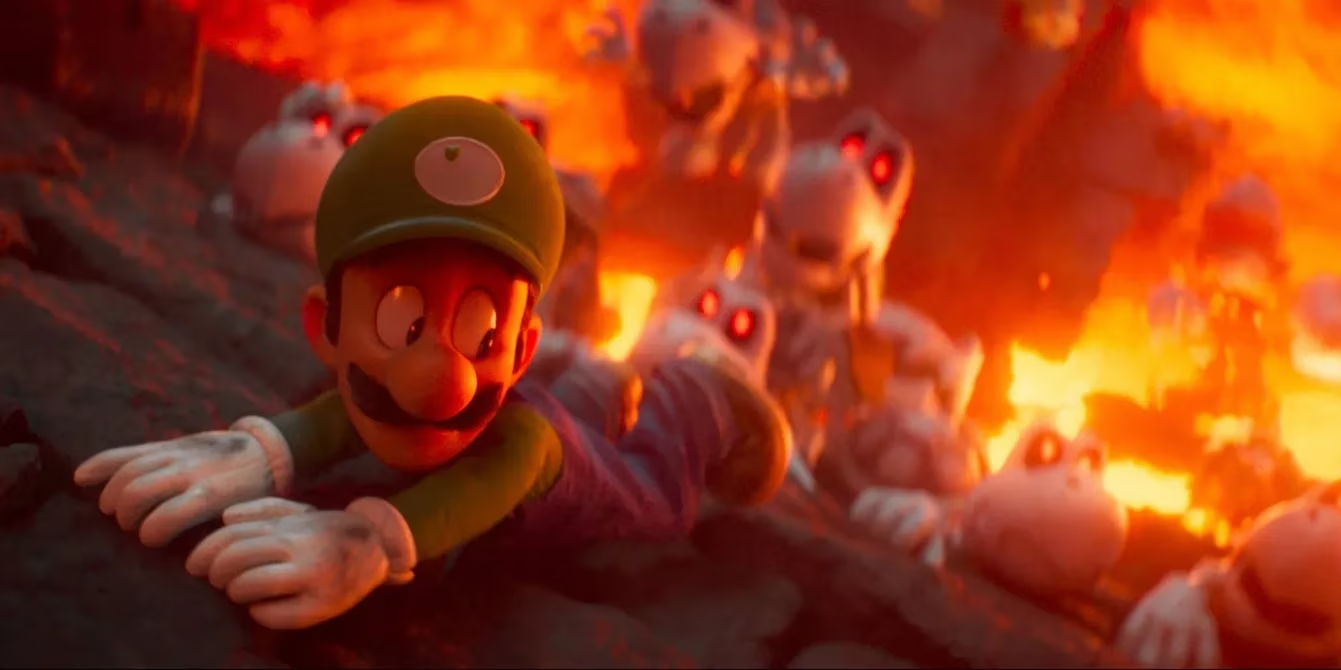
Yet, the most damaging lesson absorbed was about what audiences truly desire. Both films operated under the assumption that recognition equals satisfaction. Super Mario Bros., in its rush to establish a cinematic universe, speed-ran through legendary game moments—from Donkey Kong to haunted mansions to Mario Kart—giving none the cinematic weight they deserved. These were not story beats; they were passing references, winks that sacrificed depth for breadth. The potential for rich, standalone films was squandered for fleeting applause.
A Minecraft Movie observed this and saw only the applause. Its makers seemingly concluded that the referential winks were the content. Vast stretches of runtime were devoted to Jack Black's Steve literally calling out game elements by name, creating what felt like a feature-length YouTube Easter Egg compilation. Scenes would elongate, pausing not for character or plot, but seemingly to cue audience recognition. Was this filmmaking, or was it a reactive, crowd-pleasing algorithm? The approach was egregious, cribbed directly from the Super Mario Bros. playbook, and it laid bare a cynical view of the audience as mere recognizers of icons, not seekers of story.
In the end, A Minecraft Movie stands in 2026 as a cautionary tale in the evolving saga of video game adaptations. It is a film that confused blueprint with blueprinting, mistaking the superficial trappings of another's success for the foundation of its own. It asked all the wrong questions:
-
❓ Can we copy the music that worked elsewhere?
-
❓ Can we force a viral moment?
-
❓ Can we fill the screen with enough references?
It never asked the essential ones: What is the heart of Minecraft's endless, creative world? What story does this block want to tell? The film became a hollow monument, not to the game's pioneering spirit, but to the peril of creative mimicry. It built its world not with the careful placement of meaningful blocks, but with the haphazard, noisy clutter of borrowed parts, leaving behind not a legacy, but a ghostly echo of what might have been.