
The Minecraft Movie Phenomenon: How Viral Marketing Redefines Cinema for a New Generation
The Minecraft Movie's box office success and innovative marketing redefine video game adaptation films, captivating younger audiences in 2025.
The Minecraft Movie's unprecedented box office success during its opening weekend has become a defining cultural moment of 2025. The video game adaptation shattered expectations by creating a unique interactive experience that resonated with younger audiences, transforming traditional moviegoing into a participatory social event. This phenomenon represents more than just commercial triumph—it highlights a fundamental shift in how studios approach film marketing and audience engagement in an era dominated by digital content consumption.
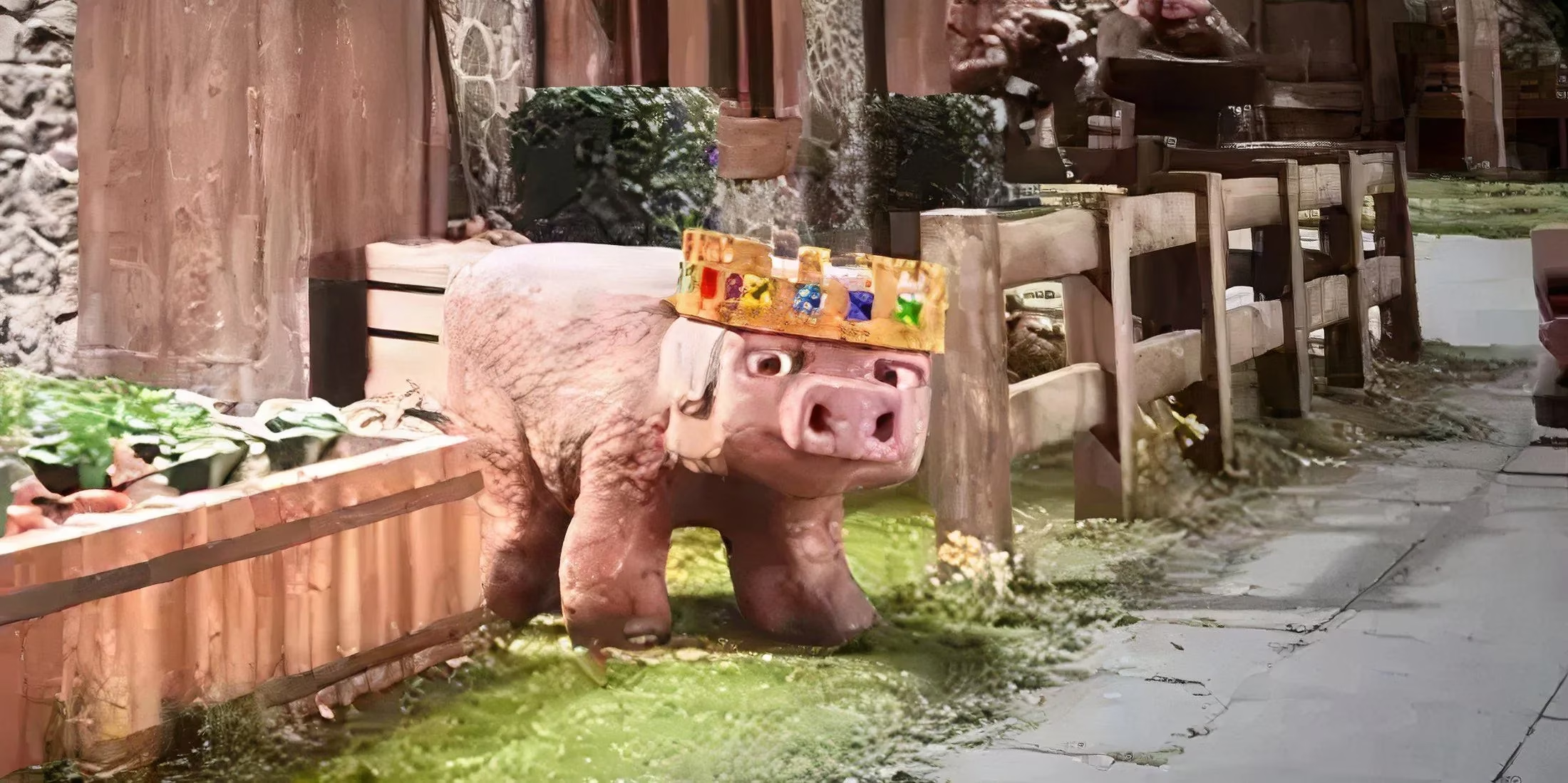
Marketing films in the current entertainment landscape presents significant challenges, as Warner Bros. has discovered through contrasting outcomes. While The Minecraft Movie stands poised to become one of the year's highest-grossing releases, the studio's other ambitious projects have faced financial difficulties. Titles like Joker: Folie à Deux and Mickey 17 resulted in substantial losses, while upcoming productions such as Sinners and Superman have already sparked financial speculation before their releases. This dichotomy underscores the unpredictable nature of contemporary film economics and the increasing importance of connecting with specific audience demographics.
Cinemas have explored numerous strategies to attract regular patronage in recent months, yet surprisingly little attention has been paid to their most significant competitor: social media platforms. The current entertainment consumption patterns among younger generations differ dramatically from previous eras, creating new challenges for traditional theatrical exhibition.
The Evolution of Entertainment Competition
Historically, the film industry has adapted to technological challenges through innovation. When television became ubiquitous in households during the 1950s, studios responded with enhanced cinematic experiences like 3D technology and experimental formats such as Smell-o-vision, aiming to offer something beyond what home entertainment could provide. More recently, the industry has confronted the streaming revolution, with platforms delivering high-budget productions directly to viewers' homes, leading many to question the necessity of theatrical experiences altogether.
However, the current landscape presents an even more complex challenge. Younger audiences aren't primarily consuming streaming content as their main form of entertainment; instead, they're immersed in digital ecosystems. Their entertainment consumption includes:
📱 Social Media Scrolling - Constant engagement with bite-sized content
🎬 YouTube Viewing - Preference for creator-driven, often shorter-form videos
🔴 Live Streaming - Real-time interaction with content creators
This generation has grown up surrounded by attention-grabbing, short-form digital content on mobile devices, fundamentally altering their entertainment expectations and attention spans.
The Minecraft Movie's Marketing Revolution
The film's marketing strategy directly targeted this new audience dynamic with remarkable effectiveness. Rather than relying on traditional promotional methods, Warner Bros. created what essentially functions as a live, interactive meme-filled reaction experience. This approach has transformed the theatrical experience into something that mirrors the digital environments where younger audiences already spend their time.
During opening weekend, theaters witnessed unprecedented audience participation, with young viewers reciting dialogue in unison and engaging in coordinated responses at specific moments. This phenomenon represents an accelerated version of the cult following that developed around classics like The Rocky Horror Picture Show, but compressed into a single weekend rather than evolving over decades. The marketing team essentially evangelized the film among digital-native audiences, creating an experience that felt both familiar and novel.
The Paradox of Modern Moviegoing
This development presents what might be described as a cinematic monkey's paw scenario. On one hand, younger audiences clearly need theatrical experiences that resonate with their cultural sensibilities to create formative moviegoing memories that will sustain cinema culture. The Minecraft Movie has successfully achieved this by speaking directly to their experiences and expectations.
On the other hand, this approach potentially compromises traditional cinematic values. The film represents a logical progression in audience-cinema relations that began with productions like Avengers: Endgame and Spider-Man: No Way Home, which incorporated deliberate pauses to accommodate audience reactions. However, The Minecraft Movie takes this interaction to unprecedented levels, raising questions about whether this comes at the expense of narrative cohesion and cinematic integrity.
Implications for Theatrical Exhibition
The viral marketing campaign's success is undeniable, demonstrating an ability to mobilize younger demographic groups that have increasingly abandoned traditional cinema. The strategy has proven particularly effective because it:
✅ Speaks their language - Uses memes, reaction culture, and participatory elements
✅ Creates community - Fosters shared experiences both in theaters and online
✅ Generates organic promotion - Encourages user-generated content and social sharing
✅ Bridges digital and physical - Connects online behavior with offline experiences
However, this approach prompts serious consideration about the future of theatrical exhibition. If films must increasingly cater to audience participation at the expense of traditional cinematic values, what does this mean for the art form itself? The Minecraft Movie phenomenon suggests several potential futures for cinema:
| Potential Outcome | Positive Aspects | Concerns |
|---|---|---|
| Interactive Cinema | Increased audience engagement, new revenue streams | May compromise narrative depth and directorial vision |
| Generational Divide | Tailored experiences for different demographics | Could fragment cinema culture and shared experiences |
| Hybrid Experiences | Combines traditional storytelling with interactive elements | Risk of pleasing neither traditionalists nor new audiences |
| Social Media Integration | Leverages existing platforms for promotion and engagement | May prioritize virality over cinematic quality |
Cultural Context and Future Implications
The success of The Minecraft Movie cannot be separated from broader cultural shifts in entertainment consumption. An entire generation has grown up with digital devices as primary entertainment sources, often at the expense of traditional imaginative play. These audiences have developed relationships with online entertainers who speak directly to them in authentic, unfiltered ways. The film's marketing successfully translated this dynamic to the cinematic experience, creating something that feels native to their digital upbringing.
This development raises fundamental questions about entertainment value and cultural preservation. While bringing younger audiences back to theaters represents a significant achievement, the industry must consider whether this comes at too high a cost to cinematic tradition. The Minecraft Movie has demonstrated that viral marketing can create box office phenomena, but the long-term sustainability of this approach remains uncertain.
As the film industry continues to evolve in response to changing audience behaviors, The Minecraft Movie will likely be remembered as a watershed moment—the point where cinematic marketing fully embraced the realities of digital-native audiences. Whether this represents the beginning of a new cinematic era or a temporary phenomenon remains to be seen, but its impact on how studios conceptualize audience engagement is already undeniable. The challenge moving forward will be balancing innovation with preservation, ensuring that cinema continues to evolve while maintaining the essential qualities that have made it a beloved art form for generations.