
The Nightmare Reborn: A Ghast That Turns the Nether into a Living Horror
A chilling Minecraft Ghast fan redesign reimagines the Nether mob as a flea-like nightmare with six hairy legs and a vertical mouth.
In the late summer of 2026, the Minecraft community found itself once again staring into the void of player creativity—this time through a fan redesign so unsettling it seemed to blur the line between blocky fantasy and genuine nightmare fuel. The image, resurfacing on a quiet subreddit dedicated to mob concept art, depicted a Ghast unlike anything even veteran Nether explorers had dared imagine. Its creator, known only as TastyDeer1131, had taken a mob already synonymous with the echoing wail of dread and reshaped it into something that felt less like a video game enemy and more like a memory you wish you could unsee.
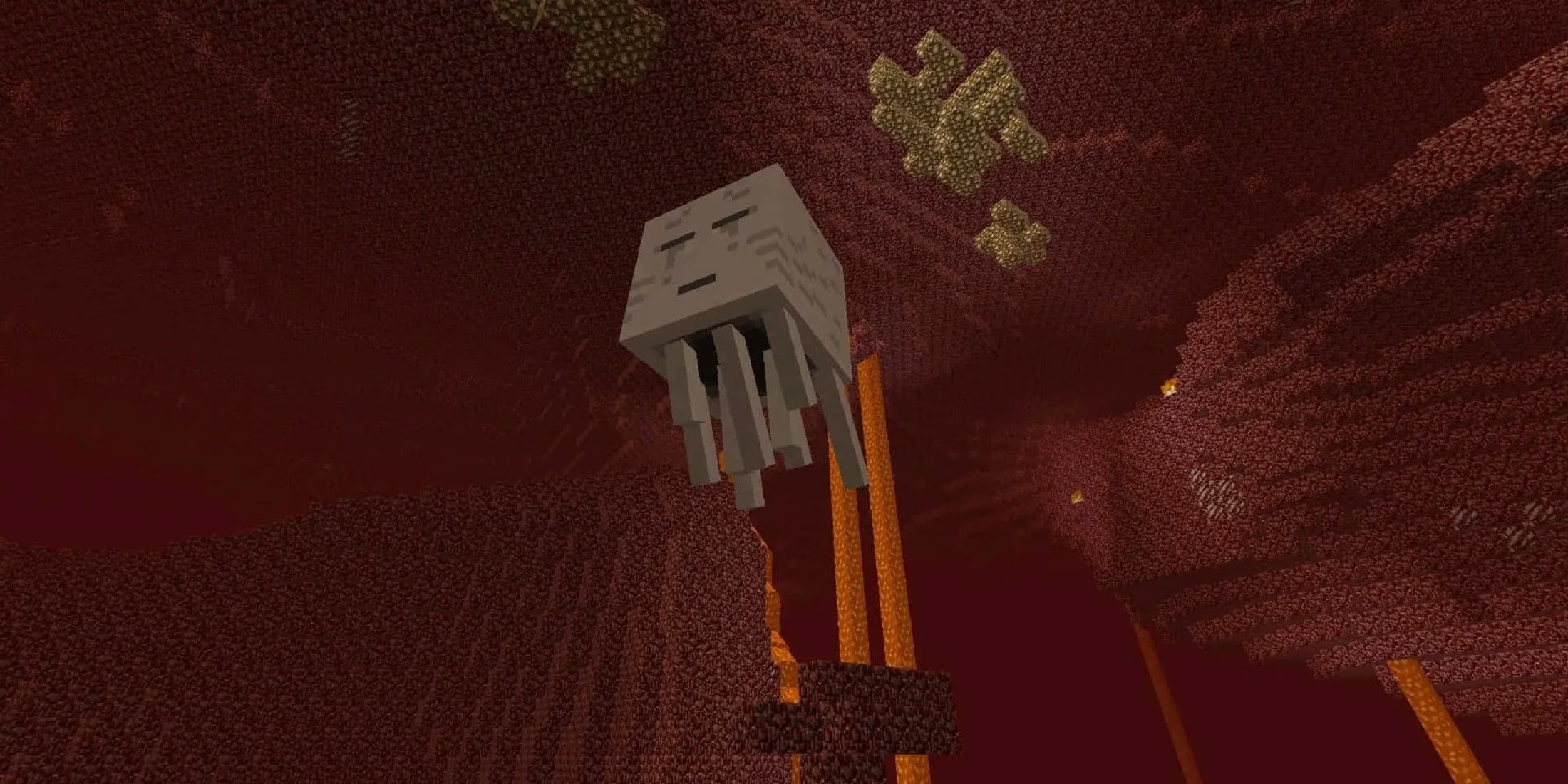
For those who first stepped into the Nether during the alpha days of 2011, the Ghast was always a curious monstrosity—a pale, floating head with the blank, unsettling expression of a lost soul, dragging squid-like tentacles through the crimson haze. It was the first mob to announce its presence not with footsteps, but with a distant, mournful cry that rolled across the lava oceans like a foghorn of despair. But TastyDeer1131’s vision dismantled every scrap of whimsy from that original design. Where Mojang gave us a melancholic ghost, this artist gave us a parasite swollen to nightmare proportions.
The new Ghast was drawn as a giant white flea, suspended in the air as if the very atmosphere of the Nether had thickened into a broth of terror. Its body, once a simple block, had become an engorged, translucent sac, the kind you might see on a tick that has fed too long—a grotesque balloon of malice. Six jointed legs dangled beneath, each one fringed with coarse, pixelated hairs that terminated in tiny brown chitinous claws, twitching as if tasting the hot Nether air. These limbs were not the passive, drifting tentacles of old; they were active, questing appendages that seemed to search for something to latch onto. When the creature turned its back to the viewer in a second image, the horror deepened: the bulbous body concealed the head entirely, transforming the Ghast into a blind, drifting egg sac, biding its time before swiveling to reveal its true face.
And that face was a masterstroke of dread. Instead of the empty, rectangular eyes and fixed frown of the vanilla Ghast, this one bore thick, swollen ocular organs that bulged with a wet, glistening malice—like clots of crimson gel trapped behind a thin membrane. Below them, a vertical slash of a mouth ran from what should have been the chin all the way up to the forehead, a ragged red canyon lined with two needle-like fangs. When the mouth was closed, it vanished into the pale flesh, but it could split open to scream, revealing a gullet the color of raw meat. The whole visage resembled a mask of melted wax, frozen mid-scream, as if someone had captured a moment of pure agony and hung it in the sulfurous skies.
One could almost hear the community’s collective shiver ripple through the servers.
The implications for gameplay were as chilling as the art itself. In the hands of a modder, this Ghast model would not simply replace textures; it would rewrite the psychological contract a player makes when stepping through a ruined portal. The existing Ghast’s ranged attack—spitting explosive fireballs with a plaintive whine—became something else entirely when imagined coming from this creature. It would no longer feel like a ghostly guardian testing your reflexes. It would feel like a predator that had already claimed this dimension as its nest, and you were merely a trespasser trespassing on its breeding ground. The six legs would sway opposite its movement, not with the gentle undulation of a jellyfish, but with the alert, rhythmic twitching of a spider testing its web. If it ever descended to the Nether floor—though Ghasts rarely do, preferring to clip through the netherrack like phantoms through walls—those fangs would scrape the ground, leaving grooves in the soul sand, a silent promise of what would happen should a player get too close.
The fan art also invited a deeper conversation about what makes a mob truly frightening. For over fifteen years, the Ghast had been a static icon of Nether peril, its fear factor soothed by familiarity and its oddly pitiful death sound. TastyDeer1131 understood that real fear lives in the unfamiliar, in the transformation of the known into the uncanny. They took a creature players had learned to sidestep like a whack-a-mole balloon and turned it into something parasitic and relentless, a “dream flea” that had drunk too deeply from the nightmare sea of the Nether itself. This was not just a reskin; it was a reincarnation.
Clues in TastyDeer1131’s Reddit post suggested this was only the beginning. They hinted at redesigning the entire roster of Minecraft mobs, and by 2026, teasers had surfaced for a larger project—tentatively called the “Parasomnia Mod.” A few early-access videos, shaky and filmed in survival mode, showed glimpses of a reworked Zombie with moss-covered, elongated fingers and a Creeper that seemed to pulse with a heartbeat before detonating. The community buzzed with speculation. Some modders had already begun integrating the flea-Ghast into custom horror map packs, where the creature’s new model, combined with dynamic sound design, reduced even seasoned players to fumbling for their fire resistance potions. One streamer, known for flawless speedruns, froze in the middle of a Nether fortress run when the redesigned mob let out a distorted, wetter version of the classic cry—a sound one viewer described as “a torn speaker submerged in blood.”
Yet, the most poignant reaction came from the lore theorists. They wove tales around this new design, positing that the Ghast was never a ghost but a larval form of something far larger, and that what players had seen for years was merely the infant stage. The flea-like body, they argued, was the adolescent molt, and the dangling legs were the first signs of a transition into a grounded, crawling horror that would one day breach the overworld. It was fan fiction, but it spread through discords like mycelium, infecting the collective imagination.
The flea-Ghast, as it came to be called, was never officially acknowledged by Mojang—no update in 2026 brought such a beast to the vanilla game. But that hardly mattered. In the sprawling, player-driven ecosystem of Minecraft, a single piece of concept art can echo louder than a thousand official changelogs. TastyDeer1131’s creation had become a symbol of the game’s enduring power: a canvas where one person’s nightmare could populate countless others’ worlds, making the familiar furnace of the Nether burn just a little colder, and every distant wail a reason to look over your shoulder twice.