
Two Years On: How Minecraft Bedrock Add-Ons Are Reshaping Cross-Platform Play
Minecraft Bedrock Add-Ons bring Java-like modding, narrowing the gap with new items, creatures, and mechanics.
The Minecraft Bedrock landscape has changed dramatically since the long-awaited arrival of Add-Ons on February 20, 2024. What was once a walled garden limited to texture packs, skins, and world templates has gradually opened up to a new era of player-driven expansion. Two years later, in 2026, the system that many feared would lock creativity behind paywalls has instead sparked a remarkable wave of cross-platform content that finally brings Bedrock closer to its Java counterpart than ever before.
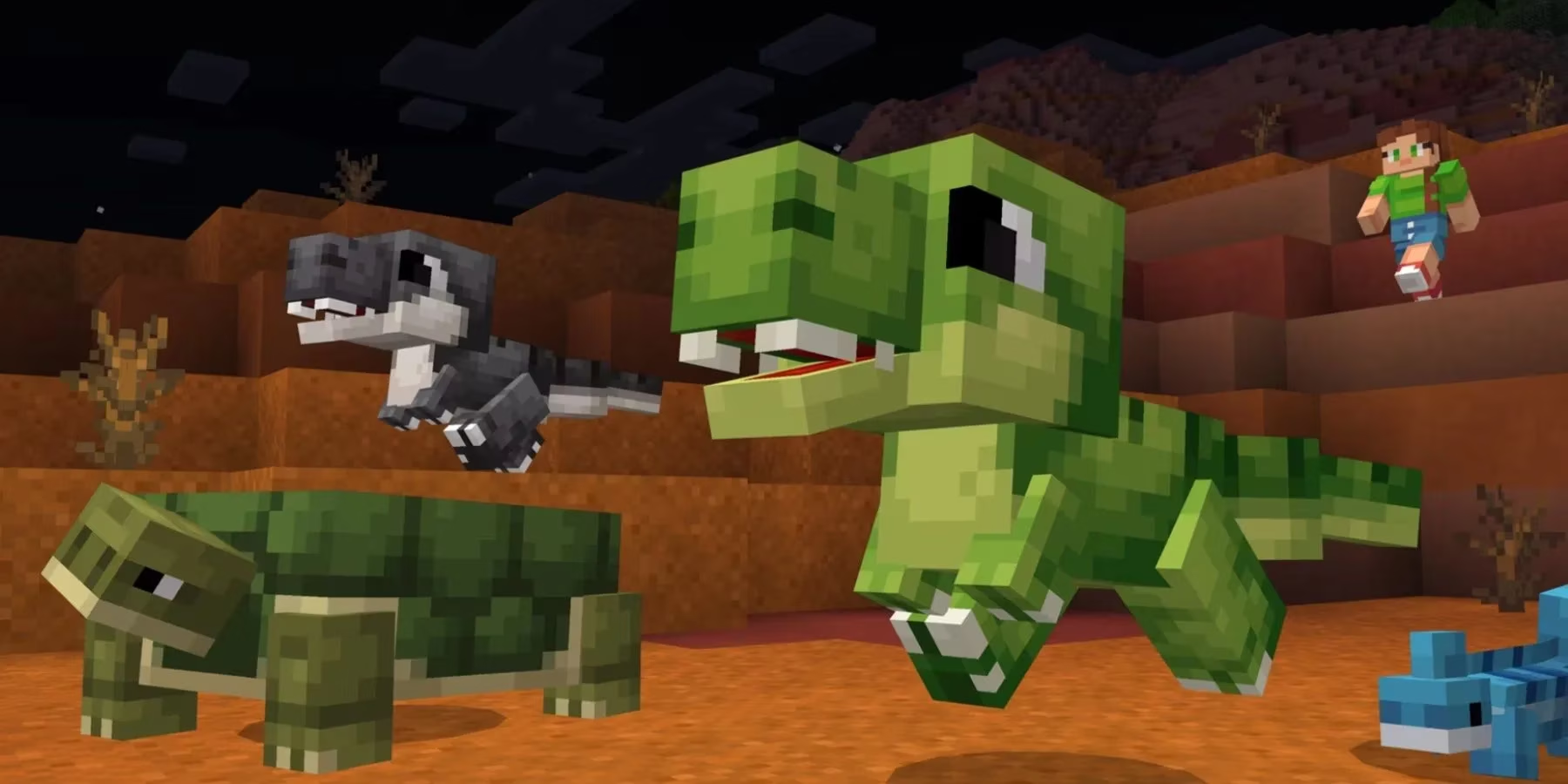
For years, the most glaring difference between Minecraft Java and Bedrock editions was the latter's near-total absence of true modding support. While Java players enjoyed thousands of mods that could overhaul everything from mobs to whole dimensions, Bedrock users were confined to the curated Minecraft Marketplace. The offerings there—though polished—had a crucial limitation: they were overwhelmingly cosmetic. World templates, skin packs, and the occasional free promotional item simply couldn't replicate the transformative power of a Java mod. Creators could sell experiences, but they couldn't sell new gameplay systems that seamlessly integrated into existing worlds. That changed when Add-Ons arrived.
Add-Ons function in much the same way as traditional Java mods. Players can inject new items, creatures, blocks, and mechanics directly into their survival or creative worlds. The immediate trade-off is that achievements are disabled once an Add-On is loaded, a familiar compromise that Java users have accepted for over a decade. The real payoff, however, has been the explosion of imaginative content. Within months of launch, the Marketplace saw packs like 'More TNT!', dynamic weather systems, fantasy mobs, and even lightweight tech mods. In 2026, the catalogue resembles a sprawling bazaar where free and paid packs coexist, covering everything from dinosaur companions to gravity-defying vehicles.
🔄 Java vs Bedrock: The Gap Narrows
The historical advantage of Java's modding ecosystem cannot be overstated. Mods propelled Minecraft's social media fame—showcasing Massive Mobs, Lucky Blocks, and mutant creepers that became cultural icons in their own right. These creations kept the game fresh for veterans and attracted new players through YouTube series that still endure. Bedrock players, meanwhile, had to contend with quirks like unusual redstone mechanics and a lack of world-customisation features that even legacy console editions once offered. Add-Ons haven't magically fixed every disparity—redstone remains a stubborn point of divergence—but they have given Bedrock communities the tools to build their own viral moments.
By mid-2025, community hubs outside of Minecraft's official ecosystem began cataloguing Add-Ons that worked in tandem with Bedrock's unique features. Possable armor stands, white-leaved trees, and those special cauldron mechanics suddenly became canvases for content creators who had only ever built on Java. The result was a hybrid creativity that no single version had seen before. A 2026 glance at Bedrock video feeds shows build challenges, survival series, and adventure maps that freely blend platform-native quirks with modded elements—a blend that would have been unthinkable in 2023.
📊 The Marketplace Evolution
| Year | Key Milestone |
|---|---|
| 2024 | Add-Ons launch; initial wave of free and paid packs |
| 2025 | Partner program expands; community-made Add-On tools appear |
| 2026 | Cross-version parity discussions intensify; free modding toolchain improves |
Despite the fanfare, the shadow of 'paid mods' has never fully lifted. The Minecraft Marketplace already generated enormous revenue before Add-Ons arrived, and critics argued that charging for what Java players got for free was a cynical move. The Partner Program initially made true grassroots modding harder—creators had to jump through hoops to distribute Add-Ons, and the tools weren't as open as Java's Forge or Fabric. In 2026, the needle has moved somewhat. Dedicated community members have developed unofficial conversion layers and free distribution platforms that sit outside the Marketplace, although these still require technical savvy. Microsoft and Mojang have slowly loosened their grip by offering in-game browsing for free Add-Ons and allowing direct downloads from trusted third-party sites on certain platforms. Yet, the fundamentally different business model of Bedrock means a full Java-like free modding utopia remains elusive.
👍 What Players Love
-
Instant discovery: the Marketplace's integrated UI lets players find and install Add-Ons without file manipulation.
-
Cross-platform magic: an Add-On built for Bedrock works on consoles, mobile, and PC—something Java can't match.
-
Quality control: curated content means less risk of malware or broken worlds, a real concern in Java's wild west.
👎 What Still Frustrates
-
The paywall: many of the most ambitious Add-Ons require Minecoins, fragmenting the player base.
-
Delayed updates: when Minecraft updates, Add-Ons can break, and creators must wait for approval to push fixes.
-
Limited scope: deep technical mods that rewrite core engine code are still Java's exclusive domain.
Looking ahead to the rest of 2026, the trajectory suggests further convergence. Rumours swirl that a future Minecraft Live will announce scripting APIs that bring Add-Ons closer to Java modding power. The vibrant community built around the Lucky Block—still endlessly remixed—now exists on both editions, a symbolic bridge between the two worlds. For the first time, a player on a phone can experience the same modded chaos that a PC veteran enjoyed a decade ago.
Minecraft's Add-Ons didn't just fill a gap; they redefined what the Bedrock version could be. While parity with Java may never be absolute, the creative dam has burst. The fun of Java's mods has indeed been replicated, mixed with Bedrock's own strengths, and poured into millions of devices. As the sun rises on another year of block-building, one thing is clear: the days of Bedrock being the 'inferior' version for mod lovers are finally over.