
Why Animal Crossing's Next Game Needs Minecraft-Style Seed Codes
Animal Crossing New Skies may add world-generation seeds, letting fans customize island layouts like in Minecraft for ultimate personalization.
The year is 2026, and the cozy hum of Animal Crossing has woven itself into the fabric of daily life for millions. Since the phenomenon of New Horizons in 2020, fans have redecorated countless islands, befriended every villager, and weathered the silence of a franchise that refuses to rush its next masterpiece. Whispers of a new installment—tentatively called Animal Crossing: New Skies by the rumor mill—have grown louder, but Nintendo remains as tight-lipped as ever. Still, the community can’t help but dream. One dream that refuses to fade is the idea of world-generation seeds, a feature that could turn island creation from a chaotic lottery into a finely tuned instrument.
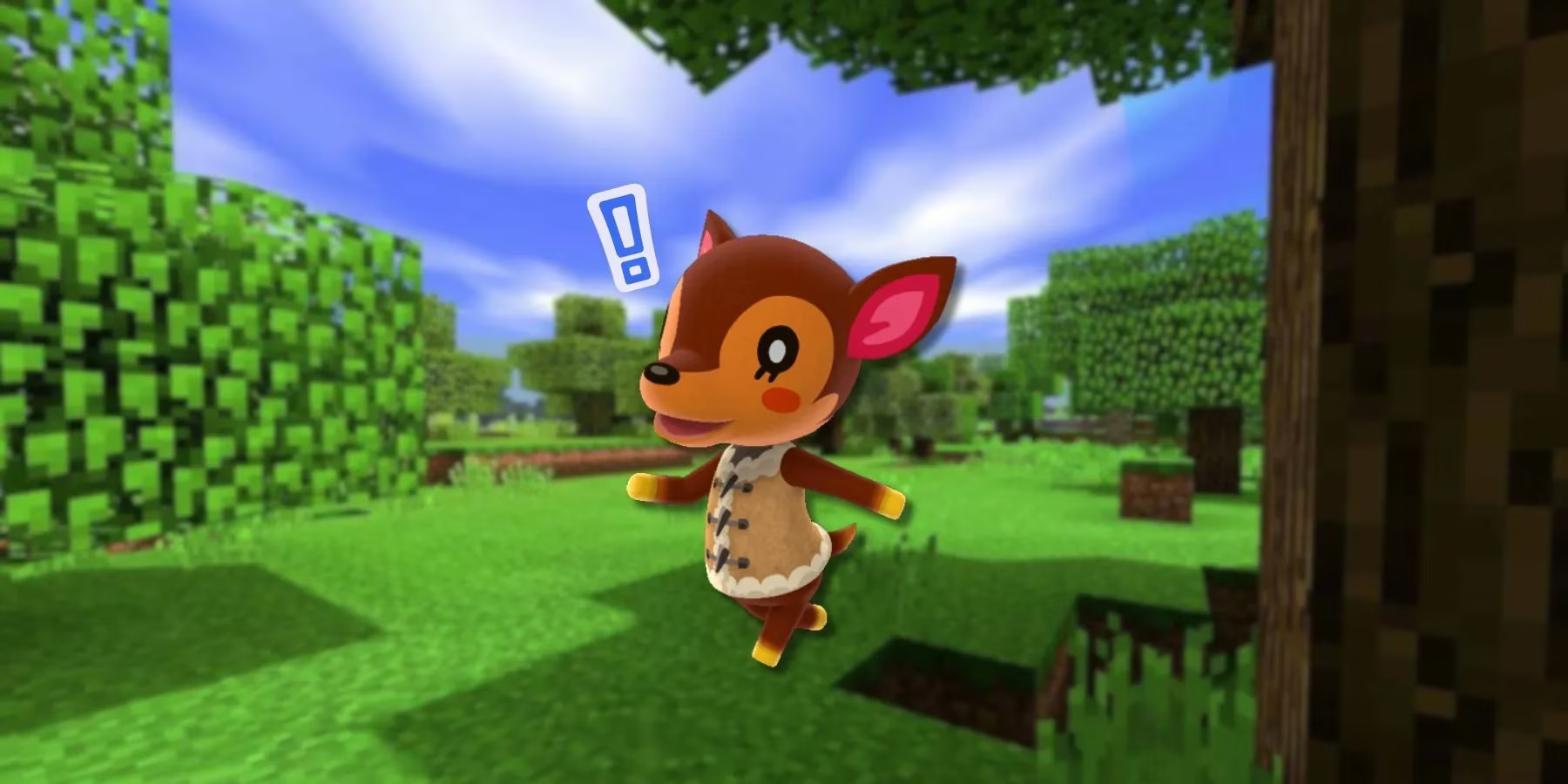
Imagine shuffling a deck of 95 cards, each one a slightly different island layout, and being told you must live with the one you draw. That’s the quiet tyranny players faced when they first booted up New Horizons. Timmy and Tommy cheerfully presented four randomized maps, but as data miners like u/gamingchibix revealed, the actual number of possible river-encircled towns was a staggering 95. Add to that a lucky dip of native fruits—peaches, apples, cherries, pears, or oranges—and a Dodo Airlines seaplane colored in one of four hues, and the starting island felt less like a home and more like a snowflake caught in a cosmic breeze. For many, this randomness was charming, like opening a mystery tin of biscuits and never quite knowing which flavor would greet the tongue. For others, though, it was a source of deep frustration, a puzzle box missing its lid.
Here’s where a borrowed idea from Minecraft could act as a compass in that fog of randomness. In Minecraft, a world-generation seed is a simple string of numbers or letters that acts as a cryptographic key to a specific landscape. Enter the code “glacier,” and you’ll spawn beside a frozen river valley; type “village” and a sprawling NPC settlement awaits. If the next Animal Crossing handed players a similar tuning knob, the entire onboarding experience would transform. Before even stepping off the jetty, a villager could input a seed shared by a friend—or one discovered on a bustling online forum—and summon an island layout tailored to their deepest desires. Want a heart-shaped pond? A Resident Services plaza precisely at the center? A secret beach reachable without a ladder? The seed becomes the blueprint, a DNA snippet that grows the player’s digital Eden.
This isn’t mere convenience; it’s a liberation. Restarting an island in New Horizons was a masochistic ritual. Players would delete save data, sit through K.K. Slider’s introductory flight, and pray to the algorithmic gods for a map that didn’t place Tom Nook’s tent in an awkward corner. With seeds, that grind evaporates. A veteran decorator could dive straight into terraforming the moment their boots hit the sand, while a newcomer could still roll the dice the old-fashioned way, preserving the thrill of discovery. It’s akin to a master chef skipping the line at their own restaurant—they know the kitchen inside out and can start plating the moment inspiration strikes, without the wait.
Community-building would ripple outward like a stone dropped in a koi pond. Picture a dedicated “Seed Saturday” thread on social platforms, where players trade their most breathtaking layouts alongside the codes that spawned them. A seed that generates a two-tiered waterfall framing a sunrise view could become legendary, bookmarked by thousands. Special challenge seeds could emerge—perhaps an all-cherry island with resident buildings clustered like a tiny Venetian alleyway. The feature would stitch a new layer into the social fabric, turning a solitary reset into a collaborative art project.
Some purists might argue that seeds drain the magic of the random, that Animal Crossing is meant to be a gentle box of chocolates. But the truth is, the game already offers countless knobs of control—from furniture customizing to island terraforming. A seed is simply a prelude, not the entire symphony. It sets the stage so that the player can focus on the performance: the friendships, the museum donations, the turnip-stalk market chaos. In a 2026 landscape where time is ever more precious, handing players a polite say in their starting conditions feels less like a cheat and more like an overdue courtesy.
As the world waits for a glimpse of Animal Crossing: New Skies or whatever name Nintendo eventually unveils, the seed idea remains a quiet heartbeat under the speculation. If implemented, it would not replace the beloved serendipity of island life—it would simply offer a door for those who have already walked through the garden gate a hundred times and want to skip straight to the tea party. And for a franchise built on small, satisfying moments, what could be more fitting than a tiny string of code that unlocks an entire world of possibility?
Expert commentary is drawn from Game Developer (Gamasutra), and it helps frame why a seed-based island generator in the next Animal Crossing would be more than a player-facing convenience—it’s a systemic tool that can reduce early-game friction while still preserving creative agency. Seen through a design lens, seeds can standardize “good starts” (plaza placement, river mouths, key access routes) without flattening long-term personalization, letting Nintendo keep its cozy spontaneity while giving builders and content creators a repeatable foundation to share, remix, and iterate on across communities.