
Why Grind in Games Rarely Hits the Mark
Gaming industry grind in 2026 drains joy from Persona 3 Reload and Suicide Squad: Kill the Justice League, stifling true engagement.
Let’s be real for a second: in 2026, the gaming industry is more obsessed with ‘engagement’ than ever. Whether it’s a live-service shooter that demands your daily login or a single-player epic stretched to triple its natural length, the unspoken rule seems to be that players must be kept inside the game at all costs. And the cheapest, most common way to achieve that? Good old-fashioned grind. I’ve sunk hundreds of hours into titles built on this treadmill, and after all this time, I’m convinced that grind, in its raw form, drains the soul out of even the most polished experiences. Let’s break down a few examples that have stayed with me over the years.
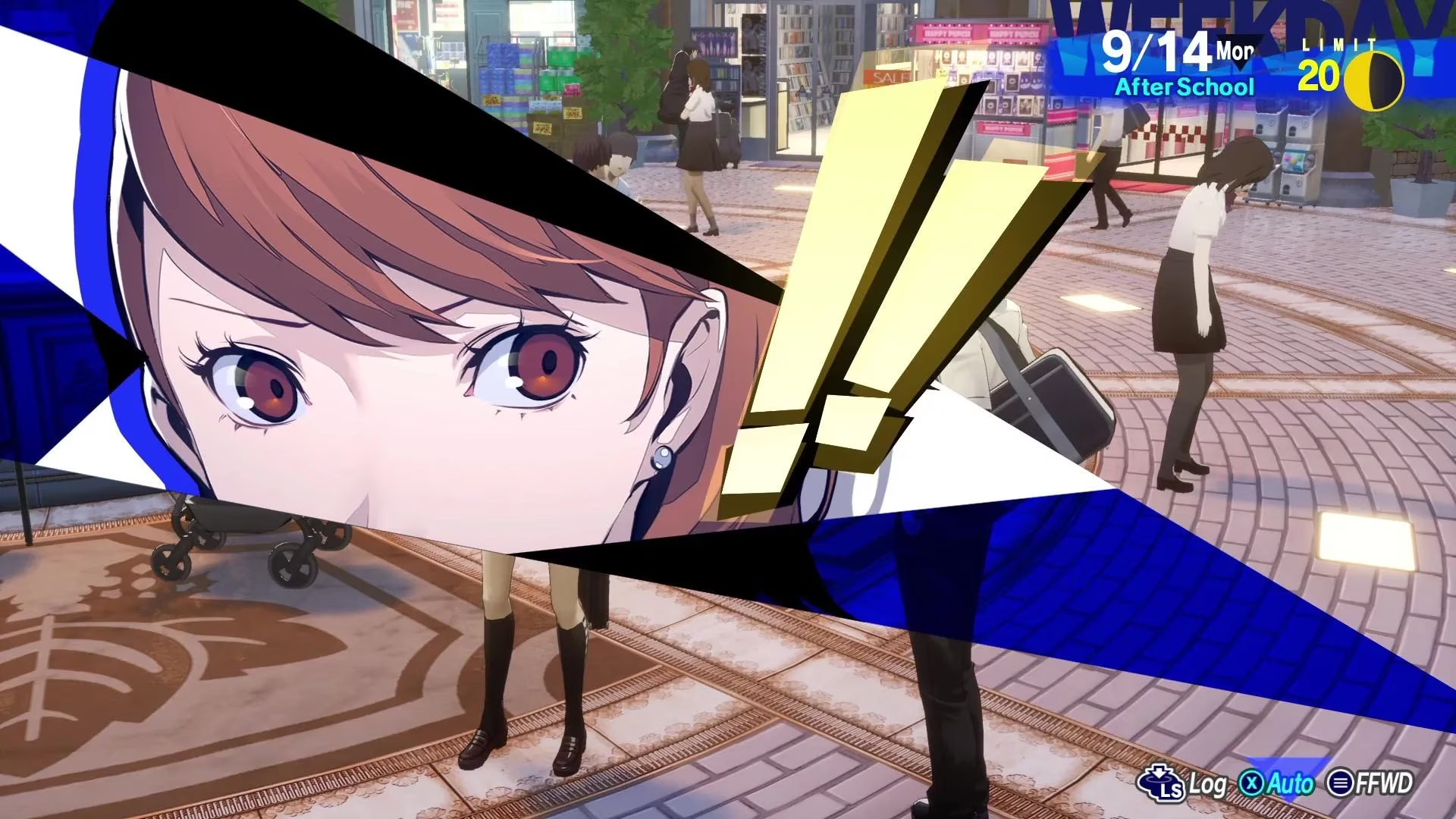
Take Persona 3 Reload, for instance. As an ATLUS fan, I adored the stylish menus, the turn-based combat with its slick quality-of-life upgrades, and that unforgettable soundtrack. The fighting itself? Pure joy. But then there’s Tartarus. Oh, Tartarus. That towering deathtrap of hundreds of nearly identical floors is a masterclass in how grind can poison an otherwise brilliant game. You spend hours slicing through shadows just to reach the next checkpoint, not because the narrative demands it, but because the true ending is gated behind sheer stamina. The problem isn’t the combat—it’s that the grind doesn’t feed into any deeper system. It’s just a barrier, a time tax that pulls you away from the social links and story beats you actually care about. When you’re mashing through battles against reskinned enemies just to see the payoff, the game starts to feel less like a journey and more like a shift at work.
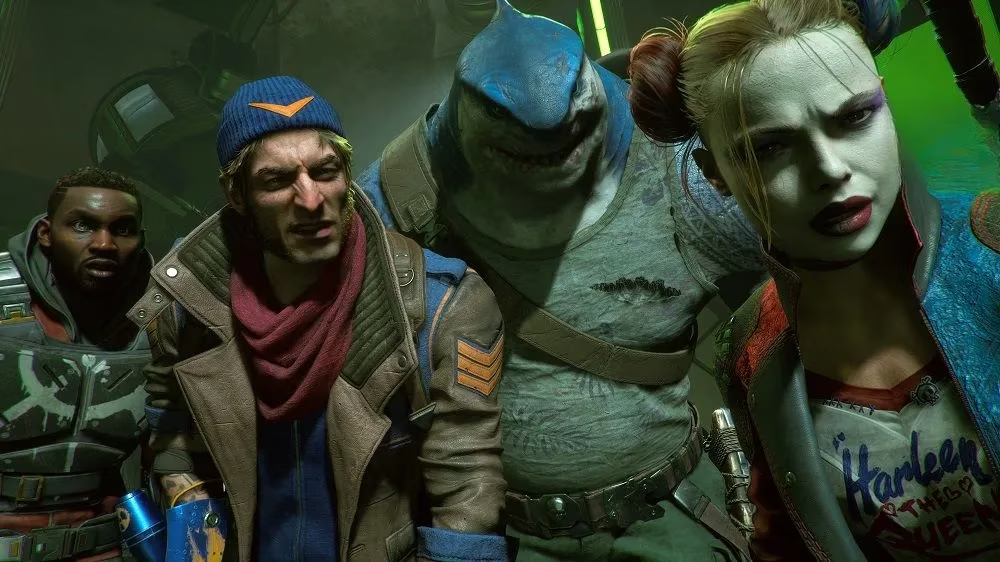
If Persona 3 Reload shows how grind can sour a good thing, then Suicide Squad: Kill the Justice League is the cautionary tale of what happens when grind is the entire thing. I still remember the launch window back in 2024, and even now, in 2026, it’s held up as a textbook example of how not to design a looter shooter. The game drops you into Metropolis and immediately asks you to shoot the same purple-eyed goons, complete the same “protect the point” objectives, and juggle the same traversal moves for dozens upon dozens of hours. There’s barely any evolution. Near the end, it throws some modifiers at you, but they only tweak damage numbers—never the mission structure. You’re still grinding the same loop: play missions to get better gear so you can play slightly harder versions of the same missions. It’s a hamster wheel with no PvP arena to flex your loadout, no emergent gameplay that makes you feel clever. Just raw, undiluted repetition. The backlash was so fierce that it’s no surprise the game struggled to retain a player base. I tried to stick with it, honestly, but every session left me feeling like I’d wasted an evening.
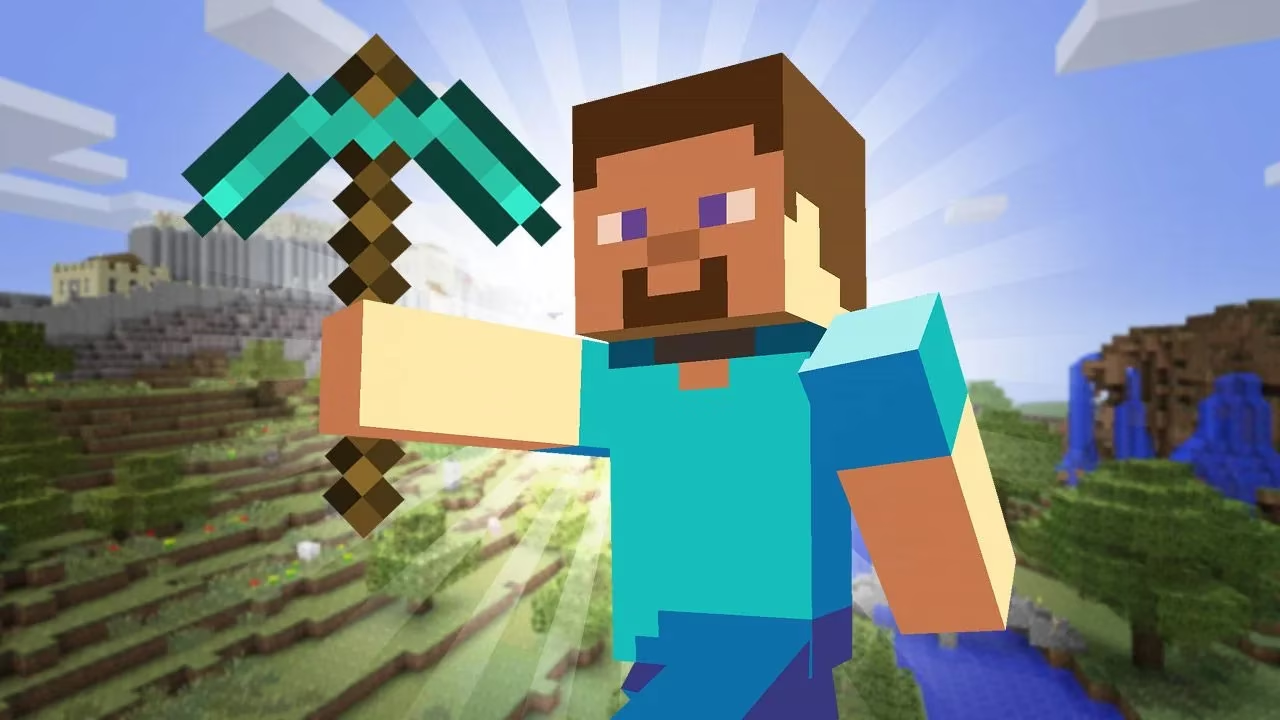
Now, here’s where things get interesting. At first glance, Minecraft seems like the polar opposite of a grind-heavy game. You’re building, exploring, and shaping entire worlds. But if you squint, the core loop is absolutely packed with grind. Need a massive castle? You’ll be digging out thousands of stone blocks. Want a beacon? Prepare to mine obsidian and fight the Wither, which means grinding for skulls. The difference is that Minecraft has, since its early days, woven grind so seamlessly into the fabric of progression that you barely notice it. I can spend five hours strip-mining in a straight line, and it feels good. Why? Because every single block broken yields constant, visible progress toward a goal I set myself. There’s no arbitrary gatekeeper telling me I can’t craft that enchanting table until I reach level 50. I just do the work, and the payoff unfolds in real time. Often, the grind itself sparks serendipity—a lava pool that leads to a new cave system, or the discovery of a spawner I can turn into a farm. The repetitious act of gathering resources feeds directly into my creative ambitions, so I’m never just going through the motions. I’m building towards something, literally and figuratively.
So, after all these years and countless gaming marathons, is grind ever actually fun? By itself, absolutely not. The more a game shoves grind in your face as a replacement for genuine variety or narrative momentum, the faster it burns you out. Suicide Squad proved that a triple-A budget can’t save a design philosophy built entirely on the treadmill. Persona 3 Reload reminded me that even beloved classics can stumble when grind becomes a chore rather than a supporting act. But when grind is tucked behind layers of player agency and meaningful systems—when it’s a engine that drives creativity rather than a wall that blocks it—it transforms into something genuinely compelling. Minecraft remains the gold standard because it trusts players to make their own fun and uses grind as the fuel, not the destination. Here’s hoping more devs in 2026 and beyond take that lesson to heart, because I’m tired of games that mistake busywork for content.
At the end of the day, this is just one gamer’s hot take. Maybe you thrive on the meditative rhythm of an endless gear chase, and all power to you. But for me, grind without context is just a fancy way of wasting time, and I’d rather spend my gaming hours on something that respects them.